
The development and changes of the materials for the iron tapping ditch
author: XINTAI
2025-06-24

The tar-filled iron tapping channel, like the iron tapping outlet, had not yet been recognized as a refractory material by the first half of the 1950s. With the increase of iron tapping volume and the frequency of iron water treatment such as desulfurization in the iron tapping ditch, its durability has gradually attracted attention. In the 1970s, the material of the iron tapping ditch was studied from two aspects: the construction methods and materials related to the relationship between repair frequencies. In particular, the large iron tapping ditch, which is of great significance, became the main object.
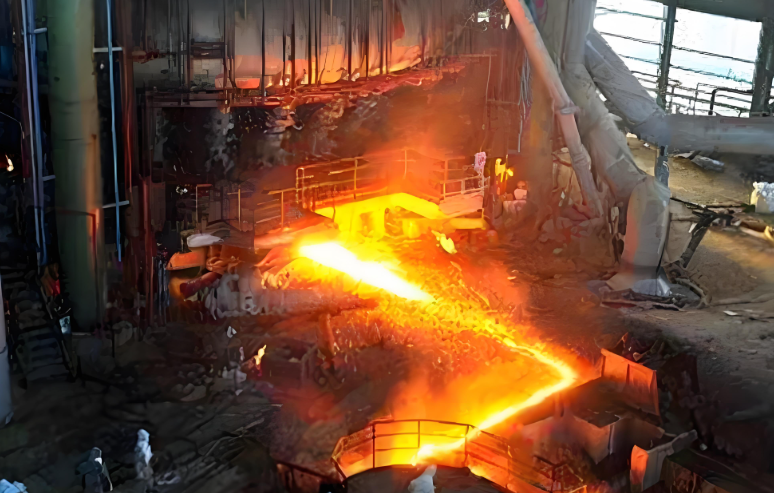
In the 1950s, the material of the iron tapping ditch was made by adding water to a mixture of clay and coke powder and manually tamping and tying. Especially since the 1960s, it seems that some of them have also used coal tar in the binding materials. During the 1960s, their durability was improved by adding silicon carbide, electrolytic alumina, graphite and other methods. The substances that govern durability, apart from the mechanical wear and chemical erosion caused by molten iron, slag, etc. during use, can be considered that the cracking resulting from shrinkage will further increase the effect of promoting wear and tear. Therefore, the material composition of the iron tapping channel appropriately contains components such as SiC, C, and Si3N, which can ensure the stability of the thermal volume.
In particular, the effect of SiC on the oxidation resistance of carbon bricks, which improves the stability of the hot volume, has been empirically confirmed to be very good. Meanwhile, it is possible to achieve a construction process that is homogeneous and has a dense structure in a short time, and it is also possible to explore the adoption of methods that are easy to construct. In the second half of the 1960s, there were also factories manufacturing automatic knotting devices for exchanging large iron tapping channels.
The VF process method developed in 1975 (which forms the inner lining of the channel by providing vibration in the forming mold) has added new highlights and opportunities to the material of the iron tapping channel and its construction method, which is of great significance (Figure). Subsequently, the SVP method for vibration molding with non-aqueous dry materials as the object was developed.

Then, a more convenient and widely applicable N-CAST process guide rod method was discovered. This process method is a pouring construction method carried out by systematically using the technology of low-moisture iron sheet materials based on the flow and solidification characteristics caused by colloidal substances. Since the development of this technological method in 1970, the iron tapping ditch construction method has become the mainstream, and similar construction methods have also begun to gain popularity. Additionally, this technological method, which was originally used for holding steel drums, has also been expanded to be applied to iron tapping ditches. Through the application of the casting process method, it can be said that it should fully meet the changing process of the single consumption of refractory materials in the main trenches of various companies. This iron tapping trench construction technology, along with its materials, has been widely promoted to overseas countries.
Seven common construction methods for blast furnace iron tapping channels
How to maintain a lime kiln? Maintenance methods for various parts of the lime kiln
Related Article

Refractory materials are the main building materials of glass melting furnaces, and they have a decisive impact on the quality of glass, energy consumption and even product costs. The development of glass melting technology largely depends on the advancement of refractory material manufacturing technology and the improvement of quality.
Selection of kiln type structure and lining refractory materials for glass melting furnaces

The cover of the electric furnace is a spherical structure with electrode holes and smoke exhaust holes. The outer ring part is called the main furnace cover, and the middle part is called the small furnace cover (also known as the triangular area). When loading materials, the furnace cover can be moved away.
Factors affecting the service life of refractory materials used for electric furnace covers

Overburning and lumping are common phenomena in the lime production process. They not only affect product quality but, in severe cases, can have a fatal impact on the production process, refractory materials of the kiln body and other equipment. This article analyzes the causes of overburning and tumor formation, general treatment methods for tumor formation, and preventive measures, effectively avoiding the occurrence of tumor formation.
Common causes of lumps in lime kilns and their solutions

A kiln is a space capable of generating high temperatures, and the materials that make up this space are called kiln construction materials. The construction materials should include two major categories: refractory materials and thermal insulation materials (or heat insulation materials). In addition, to enhance the structural strength of the kiln body, the materials used for furnace construction should also include common building materials (such as ash bricks, etc.) and metal materials, etc.
Don't know how to build a kiln or furnace? This article is enough