
Selection of kiln type structure and lining refractory materials for glass melting furnaces
author: XINTAI
2025-08-12

The furnace type structure of the glass melting furnace
For large float lines, the composition of a glass furnace typically consists of an L-shaped hanging wall (usually made of silica bricks), a melting section (where electrically fused bricks are used in direct contact with the molten glass, and silica bricks or electrically fused bricks are used in the upper part), a neck clamping section (usually made of silica bricks), and a cooling section including an ear pool (where corundum material is usually used in direct contact with the molten glass). It is composed of parts such as silica bricks or corundum that do not come into contact with molten glass, annealing kilns, and regenerative chambers (made of clay, high alumina, and directly bonded magnesia-chrome bricks).
For large float lines, the composition of a glass furnace typically consists of an L-shaped hanging wall (usually made of silica bricks), a melting section (where electrically fused bricks are used in direct contact with the molten glass, and silica bricks or electrically fused bricks are used in the upper part), a neck clamping section (usually made of silica bricks), and a cooling section including an ear pool (where corundum material is usually used in direct contact with the molten glass). It is composed of parts such as silica bricks or corundum that do not come into contact with molten glass, annealing kilns, and regenerative chambers (made of clay, high alumina, and directly bonded magnesia-chrome bricks).
The usage conditions and refractory material selection of the main parts of the glass melting furnace
1. Arched roof
The top of the arches (including the arch corners) in the melting and cooling sections of the glass melting furnace is often exposed to an operating temperature of 1600℃. The refractory materials used in this area are subject to high temperatures, heavy loads, as well as the scouring effect of alkali vapor and additives. Therefore, the materials used for the top must have high refractoriness, high load-softening temperature, and good creep resistance. Moreover, it features a low thermal conductivity, no contamination of the glass liquid by corrosive substances at high temperatures, a small bulk density, and good high-temperature strength.
High-quality and high-purity silica bricks precisely possess the above characteristics:
(1). The load temperature is high, approaching the refractoriness.
(2). Good stability and high strength at high temperatures;
(3). As the main component, SiO2, has a content of over 96%, which is the same as the main components of glass, the corrosive substances at high temperatures basically do not contaminate the glass liquid.
(4). Low price.
Therefore, at present, in large glass arches, high-purity and high-quality silica bricks have become the first choice for various glass manufacturers.
The chemical erosion caused by the high-temperature chemical reaction between the flying materials and the alkali vapor and the refractory materials, as well as the crystal form transformation and the change in the compactness of the microstructure due to temperature and phase migration, are the main reasons for the damage of the arch top bricks. The research results show that the alteration process of high-quality glass kiln silica bricks used for the arch top under high temperature is basically phase transformation and impurity migration, with extremely slight chemical erosion and melting effects. The result of phase change and self-purification gradually alters the performance of the working zone, and its high-temperature performance is improved.

2. Pool walls
(Parts not in contact with the glass fluid) (parts in contact with the glass fluid)
(1) Parts in contact with the glass liquid
The parts of the pool walls in the melting and cooling sections that come into direct contact with the molten glass are subject to chemical erosion caused by the high-temperature molten glass and mechanical and physical scouring due to the flow of the molten glass. The most important requirements for refractory materials in this area are to have good resistance to the erosion of molten glass and not to contaminate the molten glass. Electric fused zirconia corundum bricks, α-β corundum bricks and β corundum bricks are commonly used for masonry both at home and abroad. The high-temperature performance and resistance to molten glass of electrically fused zirconia corundum bricks are excellent. This is because it has obtained a eutectic of zircon and α-Al2O3 with extremely good erosion resistance that is impossible to achieve with sintered refractory materials. Therefore, it is particularly suitable as a wall brick for the melting section pool. The main crystal phase of α-β corundum bricks and β corundum bricks is corundum, with the glass phase content being only 1-2%. They have excellent erosion resistance. Compared with electrically fused zirconia corundum bricks, due to the lack of ZrO2 crystals, the viscosity of their reaction layer is low and they are unstable at high temperatures. Therefore, the diffusion speed between the brick surface and the glass liquid is relatively large, and the kiln lining is damaged more quickly. However, when the service temperature is below 1350℃, the erosion resistance of α-β corundum bricks and β corundum bricks is superior to that of fused zirconia corundum bricks. Therefore, α-β corundum bricks and β corundum bricks are relatively ideal refractory materials for parts such as the cooling section (working section).
(2) Parts that do not come into contact with the glass liquid
The parts of the pool walls in the melting and cooling sections that do not come into direct contact with the molten glass (also known as the chest wall) are mainly subject to the scouring effect of alkaline vapor and compounding materials. Depending on the design, some use corundum material, while others use silica bricks. Both of these materials can meet the requirements. For silica bricks, hook bricks and straight bricks are both used in this area.
(Parts not in contact with the glass fluid) (parts in contact with the glass fluid)
(1) Parts in contact with the glass liquid
The parts of the pool walls in the melting and cooling sections that come into direct contact with the molten glass are subject to chemical erosion caused by the high-temperature molten glass and mechanical and physical scouring due to the flow of the molten glass. The most important requirements for refractory materials in this area are to have good resistance to the erosion of molten glass and not to contaminate the molten glass. Electric fused zirconia corundum bricks, α-β corundum bricks and β corundum bricks are commonly used for masonry both at home and abroad. The high-temperature performance and resistance to molten glass of electrically fused zirconia corundum bricks are excellent. This is because it has obtained a eutectic of zircon and α-Al2O3 with extremely good erosion resistance that is impossible to achieve with sintered refractory materials. Therefore, it is particularly suitable as a wall brick for the melting section pool. The main crystal phase of α-β corundum bricks and β corundum bricks is corundum, with the glass phase content being only 1-2%. They have excellent erosion resistance. Compared with electrically fused zirconia corundum bricks, due to the lack of ZrO2 crystals, the viscosity of their reaction layer is low and they are unstable at high temperatures. Therefore, the diffusion speed between the brick surface and the glass liquid is relatively large, and the kiln lining is damaged more quickly. However, when the service temperature is below 1350℃, the erosion resistance of α-β corundum bricks and β corundum bricks is superior to that of fused zirconia corundum bricks. Therefore, α-β corundum bricks and β corundum bricks are relatively ideal refractory materials for parts such as the cooling section (working section).
(2) Parts that do not come into contact with the glass liquid
The parts of the pool walls in the melting and cooling sections that do not come into direct contact with the molten glass (also known as the chest wall) are mainly subject to the scouring effect of alkaline vapor and compounding materials. Depending on the design, some use corundum material, while others use silica bricks. Both of these materials can meet the requirements. For silica bricks, hook bricks and straight bricks are both used in this area.
3. Regenerative chamber
(1) The arch and side walls of the regenerative chamber
The inner surfaces of the regenerative chamber arch and side walls are eroded by high temperatures, dust and alkali vapor. From top to bottom, the degree of erosion gradually weakens. The selection of refractory materials is determined based on the different temperatures and degrees of erosion endured by the top of the regenerative chamber arch, side walls, middle and lower sections. The arch top and side walls are generally made of silica bricks and high-quality silica bricks, while the middle section side walls are usually made of high alumina bricks and low porosity clay bricks. Low-porosity clay bricks and common clay bricks are selected for the lower section. In recent years, depending on the design, the use of alkaline bricks such as direct-bonded magnesia-chrome bricks, common magnesia-chrome bricks, and magnesia-alumina bricks in the middle and upper sections of the side walls has also achieved good application results.
(2) Grid type
Due to the fact that all the bricks of the grid body are under high-temperature load, dust and alkali vapor, the degree of erosion is more severe than that of the arch and side walls, and the usage conditions are more demanding. The blockage and collapse of the grid body are often one of the reasons for the cold repair of the glass kiln during shutdown. Therefore, it is required that the refractory materials of the lattice body have high mechanical strength, low creep rate, strong resistance to changes in temperature and atmosphere as well as alkali erosion, do not adhere to dust, and have a slow damage rate. At the top of the grid body: It is at the highest temperature, reaching 1400-1500℃, and is most severely eroded by alkali vapor and dust. Generally, fused and bonded magnesia bricks are selected. Due to the relatively low content of silicate in the fused re-bonded magnesia brick products, the periclase crystals are fully developed and have grown. Direct bonding is formed between periclases, which delays and inhibits the gradual growth rate of periclase crystals under the action of alkaline vapor, making it less likely for the brick body to crack or powderize.
The upper part of the grid body: The temperature at this location can reach 1100-1400℃. Generally, using 95 electric bricks combined with magnesia bricks is sufficient.
Middle part of the grid body The temperature range is 800-1100℃. Within this temperature range, alkali metal sulfates condense, and the magnesium and calcareous lattice bodies are severely eroded by SO3 and Na2O and undergo chemical reactions, accompanied by significant expansion of the brick body, resulting in severe damage. Therefore, magnesia bricks are not suitable for this area. Instead, direct-bonded magnesia-chrome bricks, magnesia-alumina spinel bricks, magnesia-olidite bricks, and magnesia-zirconium bricks should be selected.
The lower part of the grid body: This section operates at a low temperature, bears a heavy load, and is less eroded by alkali. However, due to its proximity to the flue, it is directly affected by cold air. Therefore, it is necessary to have good resistance to sudden temperature changes and a low cost. Therefore, low-porosity clay bricks are generally used.
(1) The arch and side walls of the regenerative chamber
The inner surfaces of the regenerative chamber arch and side walls are eroded by high temperatures, dust and alkali vapor. From top to bottom, the degree of erosion gradually weakens. The selection of refractory materials is determined based on the different temperatures and degrees of erosion endured by the top of the regenerative chamber arch, side walls, middle and lower sections. The arch top and side walls are generally made of silica bricks and high-quality silica bricks, while the middle section side walls are usually made of high alumina bricks and low porosity clay bricks. Low-porosity clay bricks and common clay bricks are selected for the lower section. In recent years, depending on the design, the use of alkaline bricks such as direct-bonded magnesia-chrome bricks, common magnesia-chrome bricks, and magnesia-alumina bricks in the middle and upper sections of the side walls has also achieved good application results.
(2) Grid type
Due to the fact that all the bricks of the grid body are under high-temperature load, dust and alkali vapor, the degree of erosion is more severe than that of the arch and side walls, and the usage conditions are more demanding. The blockage and collapse of the grid body are often one of the reasons for the cold repair of the glass kiln during shutdown. Therefore, it is required that the refractory materials of the lattice body have high mechanical strength, low creep rate, strong resistance to changes in temperature and atmosphere as well as alkali erosion, do not adhere to dust, and have a slow damage rate. At the top of the grid body: It is at the highest temperature, reaching 1400-1500℃, and is most severely eroded by alkali vapor and dust. Generally, fused and bonded magnesia bricks are selected. Due to the relatively low content of silicate in the fused re-bonded magnesia brick products, the periclase crystals are fully developed and have grown. Direct bonding is formed between periclases, which delays and inhibits the gradual growth rate of periclase crystals under the action of alkaline vapor, making it less likely for the brick body to crack or powderize.
The upper part of the grid body: The temperature at this location can reach 1100-1400℃. Generally, using 95 electric bricks combined with magnesia bricks is sufficient.
Middle part of the grid body The temperature range is 800-1100℃. Within this temperature range, alkali metal sulfates condense, and the magnesium and calcareous lattice bodies are severely eroded by SO3 and Na2O and undergo chemical reactions, accompanied by significant expansion of the brick body, resulting in severe damage. Therefore, magnesia bricks are not suitable for this area. Instead, direct-bonded magnesia-chrome bricks, magnesia-alumina spinel bricks, magnesia-olidite bricks, and magnesia-zirconium bricks should be selected.
The lower part of the grid body: This section operates at a low temperature, bears a heavy load, and is less eroded by alkali. However, due to its proximity to the flue, it is directly affected by cold air. Therefore, it is necessary to have good resistance to sudden temperature changes and a low cost. Therefore, low-porosity clay bricks are generally used.
4. Selection of high-quality glass kiln silica bricks
(1). High-purity raw materials The raw materials for manufacturing silica bricks can be classified into crystalline silica and cemented silica based on their crystalline state. Generally, from the perspective of raw material selection, it is better to choose crystalline silica with higher purity (SiO2>99%), lower impurity content, and being hard and dense as the raw material for products. This is because cemented silica has a higher impurity content, lower refractoriness, and is not hard and dense enough, making it unsuitable for use. From the perspective of phase transformation, cemented silica is a type of soft silica that, due to the influence of its cementing material, is prone to transform into phosphoquartz, rather than the cristolite required for high-quality silica bricks used in glass kilns. Crystalline silica precisely meets these requirements.
(2). Obvious cristobalcization: From the perspective of mineral composition, high-quality silica bricks are mainly composed of cristobalcium, phosphoquartz and a small amount of residual quartz, among which cristobalcium is the main component. For silica bricks with cristobalite as the main crystal phase, the starting temperature of load-softening is the temperature at which cristobalite is damaged, while for silica bricks with phosphoquartz as the main crystal phase, the load-softening temperature is the temperature at which phosphoquartz is largely converted into cristobalite. Since the former temperature is 20-30℃ higher than the latter, the starting temperature of load-softening for silica bricks with cristobalite as the main crystal phase can reach as high as 1690℃. Close to its refractoriness, as bricks for glass kilns, it has relatively significant advantages.
In addition, the high-purity structure of cristobalite endows cristobalite-type silica bricks with higher erosion resistance than other silica bricks. Moreover, the low content of residual quartz endows silica bricks with good volume stability, thereby extending their service life. However, the amount of cristobalite content should not be overly emphasized and used as an indicator for assessment.
a. The silica brick with square quartz as the main crystal phase, before 300℃, the volume expansion of crisquarite is 2.8%, and the volume expansion of phosphorus quartz is only about 0.5%, the volume stability is poor, in the glass kiln with gas or heavy oil direct baking process, because of the high flame temperature, because it is easy to cause the silica brick spalling or cracking and affect the service life of the kiln.b. We took samples from the dismantled glass kiln for analysis. From the usage results, it can be seen that from the inner side to the surface layer of the furnace, it is usually composed of four zones: the cristobalite zone, the phosphoquartz zone, the silicate accumulation zone, and the original brick zone. On the inner side, due to the "self-purification" effect of the silica bricks, there is a section of cristobalite zone, usually over 60 millimeters, which is better resistant to the erosion of alkaline vapor. Next come the phosphoquartz band and the silicate accumulation band, which are formed due to the migration of R2O and other low-melting impurities from the inside out under the effect of high temperature. From this perspective, there is no need to overly emphasize the content of cristobalite. Linear expansion and re-firing linear change rate, like true density, are macroscopic manifestations of the phase composition of silica bricks. The purpose of controlling these indicators is to indirectly measure the phase composition.
(3). Low melt index: The melt index (Al2O3+2R2O) is an indicator that an increasing number of users need to consider when choosing high-quality glass kiln silica bricks. This standard originated from abroad, but there are the same requirements in our current national standard. Luonai's high-quality glass kiln silica bricks are made from high-purity crystalline silica as raw material, with a silicon content of over 99%. By adopting a reasonable particle size gradation, the products feature high purity, high strength, and high density. During the firing process of silica bricks, Al2O3 and R2O act as mineralizing agents. When their content is too low, less liquid phase is produced during the firing process, weakening the ability to promote the transformation of quartz and failing to achieve the sintering purpose. This affects the strength, porosity and true specific gravity of the products, and the products are prone to network cracks. However, when the mineralizer is used in excessive amounts, the refractoriness is significantly reduced, and the phosphorus quartization is relatively severe. Under the conditions of CaO <2.0%, Fe2O3<0.5%, flux index: Al2O3+2R2O<0.5%, SiO2≥96%, the enhanced firing system can reduce the residual quartz content to less than 1.0%, thereby obtaining high-quality silica bricks for glass kilns.
(4). Selection of external dimensions: Through the microcomputer-controlled electronic batching system, the accuracy of batching is fully guaranteed, and the stability of particle size gradation is also ensured, laying a good foundation for the regularity of product appearance. Through strict inspection of the appearance dimensions of semi-finished products and double control of dry and wet blanks, the accuracy of the finished product dimensions was ensured.
In China, in the silica large arch masonry of glass kilns, the brick joints are a prominent weak link and the starting point of alkali vapor drilling erosion. The damage to glass kilns mainly manifests in the form of "rat holes", and there are two reasons for this:
a. According to the current equipment and technical conditions of silica brick production, it is difficult to control the distortion and square degree of the brick within 1mm in the process of mechanism forming and firing, especially in mass production, which is bound to make it difficult to control the masonry ash joint within 1mm, providing conditions for alkali steam drilling. In view of this, it is recommended that users of glass kilns have the silica brick manufacturers carry out secondary processing on the finished bricks (except for the working surface).
b. It is required to use special high quality silica pyroclay to masonry large crown, providing both good construction performance and bonding strength, as well as superior high-temperature strength than silicon brick, so as to fasten the brick joints together, and form a closed structure when the large crown is covered with a thermal insulation layer, thus prolonging the service life.
(1). High-purity raw materials The raw materials for manufacturing silica bricks can be classified into crystalline silica and cemented silica based on their crystalline state. Generally, from the perspective of raw material selection, it is better to choose crystalline silica with higher purity (SiO2>99%), lower impurity content, and being hard and dense as the raw material for products. This is because cemented silica has a higher impurity content, lower refractoriness, and is not hard and dense enough, making it unsuitable for use. From the perspective of phase transformation, cemented silica is a type of soft silica that, due to the influence of its cementing material, is prone to transform into phosphoquartz, rather than the cristolite required for high-quality silica bricks used in glass kilns. Crystalline silica precisely meets these requirements.
(2). Obvious cristobalcization: From the perspective of mineral composition, high-quality silica bricks are mainly composed of cristobalcium, phosphoquartz and a small amount of residual quartz, among which cristobalcium is the main component. For silica bricks with cristobalite as the main crystal phase, the starting temperature of load-softening is the temperature at which cristobalite is damaged, while for silica bricks with phosphoquartz as the main crystal phase, the load-softening temperature is the temperature at which phosphoquartz is largely converted into cristobalite. Since the former temperature is 20-30℃ higher than the latter, the starting temperature of load-softening for silica bricks with cristobalite as the main crystal phase can reach as high as 1690℃. Close to its refractoriness, as bricks for glass kilns, it has relatively significant advantages.
In addition, the high-purity structure of cristobalite endows cristobalite-type silica bricks with higher erosion resistance than other silica bricks. Moreover, the low content of residual quartz endows silica bricks with good volume stability, thereby extending their service life. However, the amount of cristobalite content should not be overly emphasized and used as an indicator for assessment.
a. The silica brick with square quartz as the main crystal phase, before 300℃, the volume expansion of crisquarite is 2.8%, and the volume expansion of phosphorus quartz is only about 0.5%, the volume stability is poor, in the glass kiln with gas or heavy oil direct baking process, because of the high flame temperature, because it is easy to cause the silica brick spalling or cracking and affect the service life of the kiln.b. We took samples from the dismantled glass kiln for analysis. From the usage results, it can be seen that from the inner side to the surface layer of the furnace, it is usually composed of four zones: the cristobalite zone, the phosphoquartz zone, the silicate accumulation zone, and the original brick zone. On the inner side, due to the "self-purification" effect of the silica bricks, there is a section of cristobalite zone, usually over 60 millimeters, which is better resistant to the erosion of alkaline vapor. Next come the phosphoquartz band and the silicate accumulation band, which are formed due to the migration of R2O and other low-melting impurities from the inside out under the effect of high temperature. From this perspective, there is no need to overly emphasize the content of cristobalite. Linear expansion and re-firing linear change rate, like true density, are macroscopic manifestations of the phase composition of silica bricks. The purpose of controlling these indicators is to indirectly measure the phase composition.
(3). Low melt index: The melt index (Al2O3+2R2O) is an indicator that an increasing number of users need to consider when choosing high-quality glass kiln silica bricks. This standard originated from abroad, but there are the same requirements in our current national standard. Luonai's high-quality glass kiln silica bricks are made from high-purity crystalline silica as raw material, with a silicon content of over 99%. By adopting a reasonable particle size gradation, the products feature high purity, high strength, and high density. During the firing process of silica bricks, Al2O3 and R2O act as mineralizing agents. When their content is too low, less liquid phase is produced during the firing process, weakening the ability to promote the transformation of quartz and failing to achieve the sintering purpose. This affects the strength, porosity and true specific gravity of the products, and the products are prone to network cracks. However, when the mineralizer is used in excessive amounts, the refractoriness is significantly reduced, and the phosphorus quartization is relatively severe. Under the conditions of CaO <2.0%, Fe2O3<0.5%, flux index: Al2O3+2R2O<0.5%, SiO2≥96%, the enhanced firing system can reduce the residual quartz content to less than 1.0%, thereby obtaining high-quality silica bricks for glass kilns.
(4). Selection of external dimensions: Through the microcomputer-controlled electronic batching system, the accuracy of batching is fully guaranteed, and the stability of particle size gradation is also ensured, laying a good foundation for the regularity of product appearance. Through strict inspection of the appearance dimensions of semi-finished products and double control of dry and wet blanks, the accuracy of the finished product dimensions was ensured.
In China, in the silica large arch masonry of glass kilns, the brick joints are a prominent weak link and the starting point of alkali vapor drilling erosion. The damage to glass kilns mainly manifests in the form of "rat holes", and there are two reasons for this:
a. According to the current equipment and technical conditions of silica brick production, it is difficult to control the distortion and square degree of the brick within 1mm in the process of mechanism forming and firing, especially in mass production, which is bound to make it difficult to control the masonry ash joint within 1mm, providing conditions for alkali steam drilling. In view of this, it is recommended that users of glass kilns have the silica brick manufacturers carry out secondary processing on the finished bricks (except for the working surface).
b. It is required to use special high quality silica pyroclay to masonry large crown, providing both good construction performance and bonding strength, as well as superior high-temperature strength than silicon brick, so as to fasten the brick joints together, and form a closed structure when the large crown is covered with a thermal insulation layer, thus prolonging the service life.
Factors affecting the service life of refractory materials used for electric furnace covers
Related Article

The cover of the electric furnace is a spherical structure with electrode holes and smoke exhaust holes. The outer ring part is called the main furnace cover, and the middle part is called the small furnace cover (also known as the triangular area). When loading materials, the furnace cover can be moved away.
Factors affecting the service life of refractory materials used for electric furnace covers

Overburning and lumping are common phenomena in the lime production process. They not only affect product quality but, in severe cases, can have a fatal impact on the production process, refractory materials of the kiln body and other equipment. This article analyzes the causes of overburning and tumor formation, general treatment methods for tumor formation, and preventive measures, effectively avoiding the occurrence of tumor formation.
Common causes of lumps in lime kilns and their solutions

A kiln is a space capable of generating high temperatures, and the materials that make up this space are called kiln construction materials. The construction materials should include two major categories: refractory materials and thermal insulation materials (or heat insulation materials). In addition, to enhance the structural strength of the kiln body, the materials used for furnace construction should also include common building materials (such as ash bricks, etc.) and metal materials, etc.
Don't know how to build a kiln or furnace? This article is enough
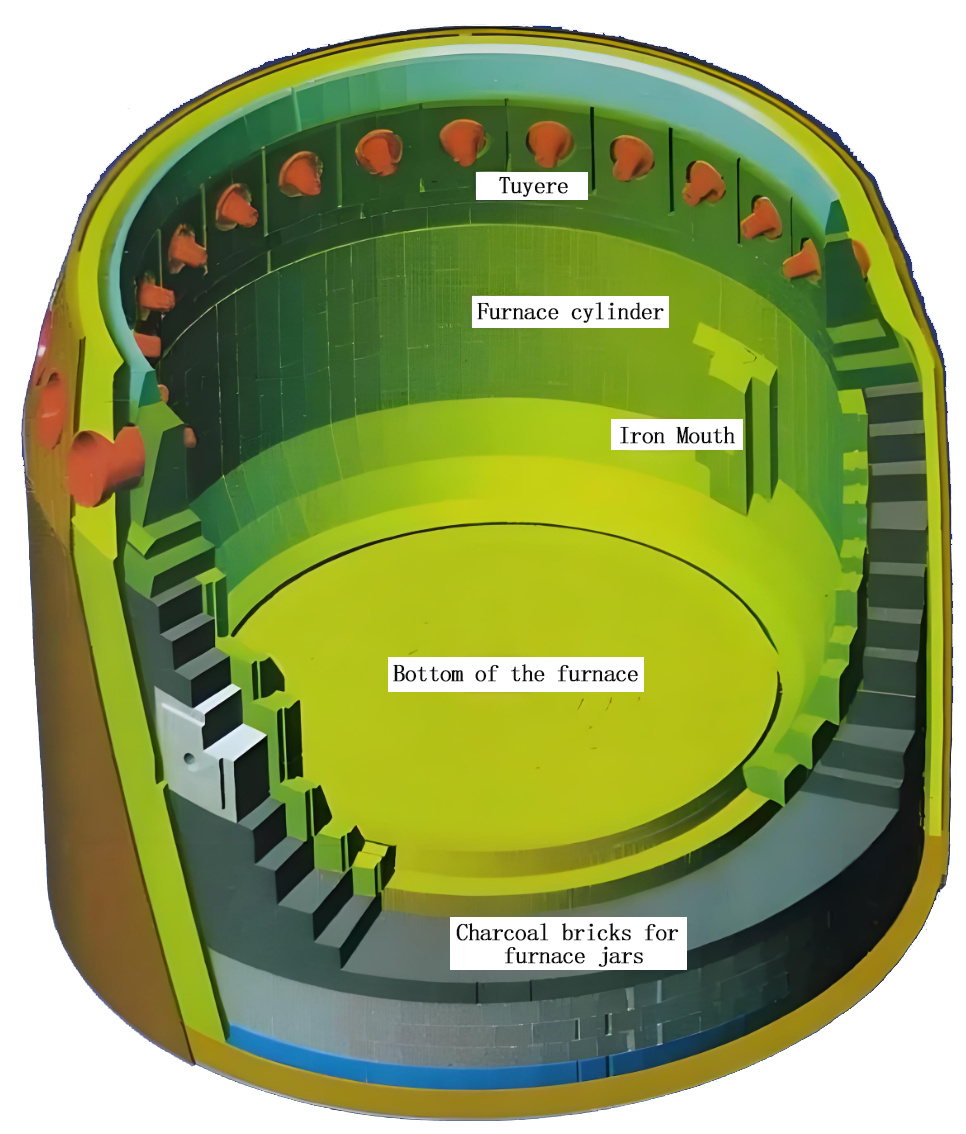
Burn-through of the hearth and bottom of the furnace is the most serious safety accident in blast furnace ironmaking production, which can cause significant loss of life and property to the enterprise and even terminate the production of the first generation of blast furnace service.
Analysis of the Erosion Mechanism of Blast Furnace Hearth and Bottom