
Analysis of the Erosion Mechanism of Blast Furnace Hearth and Bottom
author: XINTAI
2025-07-10
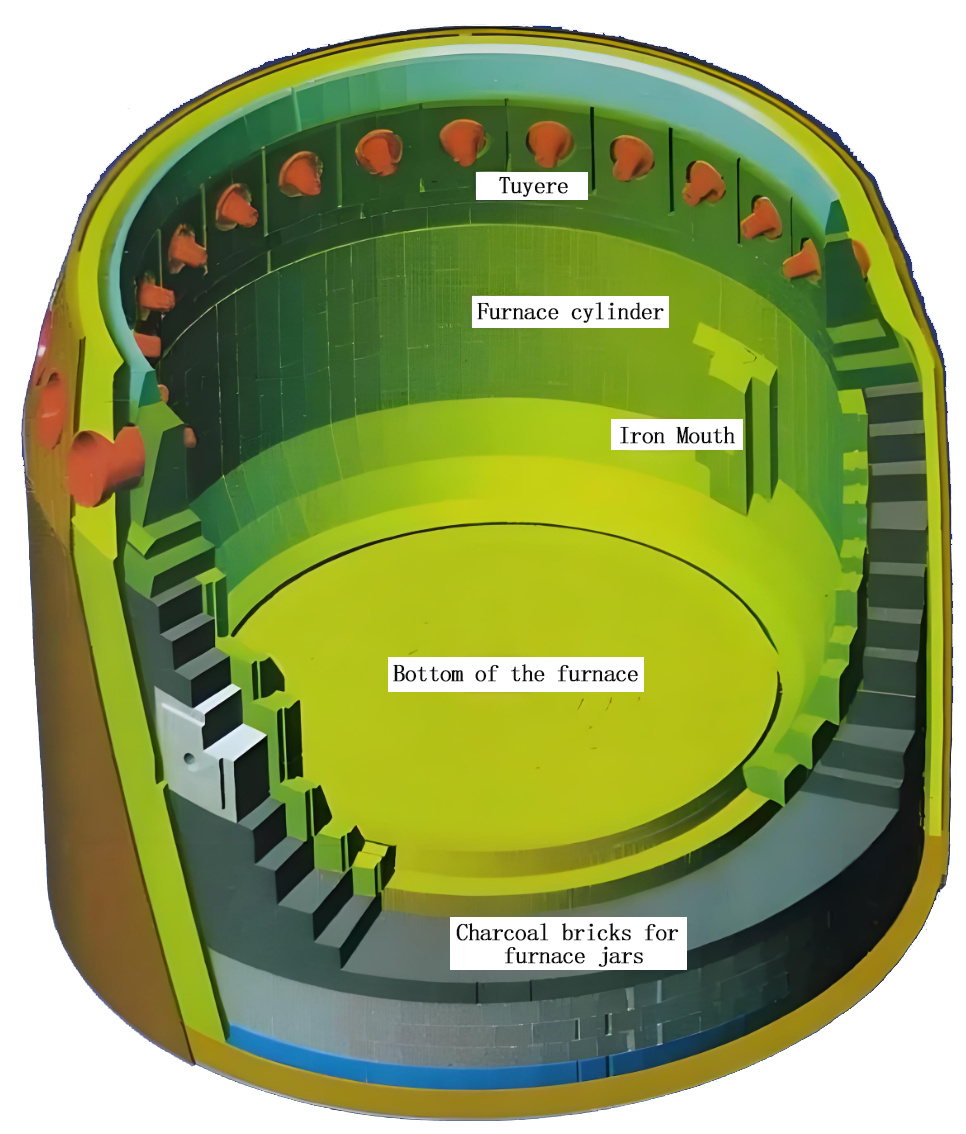
1. Mechanical erosion
Thermal stress
The temperature of the liquid slag iron in contact with the hot surface of the refractory materials in the furnace cylinder is generally above 1350℃. The temperature of the cooling water in contact with the cold surface of the cooling wall is 25 to 45℃. The outer end of the cooling wall is the furnace shell, and its temperature is close to the atmospheric temperature. Therefore, the radial temperature difference between the furnace and the cylinder may be as high as 1300℃, which will generate significant thermal stress. Refractory materials for furnace cylinder linings with a thickness of about 1 meter undergo heat transfer under conditions of high temperature, high pressure and large temperature differences, and are subject to various physical and chemical reactions. Phenomena such as thermal expansion and contraction, fracture and crushing may all occur. The stress distribution in the furnace cylinder and furnace bottom is very complex and belongs to the research content of multiple disciplines. The current research is still far from sufficient.
Mechanical friction and erosion
The circulation of molten iron in the furnace cylinder and the fluctuation of the liquid level of slag and iron will both cause friction and erosion to the hot surface of the refractory materials in the furnace lining. At high temperatures, the wear resistance of refractory materials will decrease, affecting their service life. The inner lining protective layer (slag skin) formed at the contact surface with slag iron will also fall off from time to time. If the slag skin falls off in one go, the refractory materials of the furnace lining will once again be subjected to mechanical friction and erosion.
The circulation of molten iron in the furnace cylinder and the fluctuation of the liquid level of slag and iron will both cause friction and erosion to the hot surface of the refractory materials in the furnace lining. At high temperatures, the wear resistance of refractory materials will decrease, affecting their service life. The inner lining protective layer (slag skin) formed at the contact surface with slag iron will also fall off from time to time. If the slag skin falls off in one go, the refractory materials of the furnace lining will once again be subjected to mechanical friction and erosion.
Static pressure and shear action
The density of liquid molten iron is approximately 7.6t/m³. The depth of the molten iron in the furnace tank plus the depth of the dead iron layer, the accumulated depth of the liquid molten iron can reach several meters. In addition, the hot air pressure inside the furnace is very high. The combination of these factors causes the static pressure on the refractory materials at the bottom of the furnace to be as high as several gigapascals. For the carbon bricks located at the interface between the furnace cylinder and the furnace bottom, the above-mentioned static pressure exerts a shearing effect. The compressive strength of carbon bricks at room temperature is generally 20 to 40MPa, while the flexural strength at room temperature is 7 to 15MPa. At high temperatures, the strength of refractory materials is lower than that at room temperature. The pressure they can withstand is close to their own capacity, making them prone to cracking under pressure. Once refractory materials break or develop cracks, high-temperature and high-pressure liquid molten iron may seep into the brick joints or the pores of refractory materials. As molten iron penetrates the refractory material, the contact surface between the molten iron and the refractory material rapidly expands, and the carbon particles will be surrounded by the molten iron, accelerating the speed at which they melt into the molten iron. The above-mentioned erosion of the refractory materials in the furnace lining is the penetration erosion of molten iron. To reduce the penetration and erosion of molten iron into the furnace bottom, it is very important to use carbon bricks with high thermal conductivity, micro-porous structure and high resistance to molten iron erosion, precisely grind and process them, and strictly control the size of the brick joints during masonry.
The density of liquid molten iron is approximately 7.6t/m³. The depth of the molten iron in the furnace tank plus the depth of the dead iron layer, the accumulated depth of the liquid molten iron can reach several meters. In addition, the hot air pressure inside the furnace is very high. The combination of these factors causes the static pressure on the refractory materials at the bottom of the furnace to be as high as several gigapascals. For the carbon bricks located at the interface between the furnace cylinder and the furnace bottom, the above-mentioned static pressure exerts a shearing effect. The compressive strength of carbon bricks at room temperature is generally 20 to 40MPa, while the flexural strength at room temperature is 7 to 15MPa. At high temperatures, the strength of refractory materials is lower than that at room temperature. The pressure they can withstand is close to their own capacity, making them prone to cracking under pressure. Once refractory materials break or develop cracks, high-temperature and high-pressure liquid molten iron may seep into the brick joints or the pores of refractory materials. As molten iron penetrates the refractory material, the contact surface between the molten iron and the refractory material rapidly expands, and the carbon particles will be surrounded by the molten iron, accelerating the speed at which they melt into the molten iron. The above-mentioned erosion of the refractory materials in the furnace lining is the penetration erosion of molten iron. To reduce the penetration and erosion of molten iron into the furnace bottom, it is very important to use carbon bricks with high thermal conductivity, micro-porous structure and high resistance to molten iron erosion, precisely grind and process them, and strictly control the size of the brick joints during masonry.
Upward buoyancy
In addition to being subjected to significant static pressure and shear force, the refractory materials at the bottom of the furnace are also affected by the buoyancy of the molten iron. The bulk density of refractory materials is generally 1.5 to 3.0t/m³, which is only a fraction of that of molten iron. Refractory materials tend to float on top of molten iron relatively easily. The bottom of the furnace usually has a certain diameter near the furnace shell, and the refractory materials are prevented from floating up by the compression and friction of the brick structure. This force acts on the brick lining, making the refractory materials fragile and prone to deformation. As long as a certain part or a small area is eroded, it may cause a large amount of refractory materials to float and be damaged.
In addition to being subjected to significant static pressure and shear force, the refractory materials at the bottom of the furnace are also affected by the buoyancy of the molten iron. The bulk density of refractory materials is generally 1.5 to 3.0t/m³, which is only a fraction of that of molten iron. Refractory materials tend to float on top of molten iron relatively easily. The bottom of the furnace usually has a certain diameter near the furnace shell, and the refractory materials are prevented from floating up by the compression and friction of the brick structure. This force acts on the brick lining, making the refractory materials fragile and prone to deformation. As long as a certain part or a small area is eroded, it may cause a large amount of refractory materials to float and be damaged.
2. Chemical erosion
Carburizing and melting erosion of molten iron
Under modern blast furnace conditions, the carbon content of pig iron for steelmaking is approximately between 4.5% and 5.4% per cubic meter. However, there is still a lack of data on the maximum amount it can reach. The carbon content of pig iron is related to factors such as the volume, pressure and smelting intensity of the blast furnace. Pig iron is an unsaturated solution of iron-carbon melt containing carbon. As long as there is molten iron in the furnace tank, the carburizing reaction will not stop. The carbon in carburizing reactions can come from coke, pulverized coal and carbon bricks. Among the carbon bricks, the graphitized carbon bricks and semi-graphitized carbon bricks, once they come into contact with molten iron, their carburization reaction proceeds very quickly, that is, the melting loss of the carbon bricks in the furnace cylinder is very fast.
Under modern blast furnace conditions, the carbon content of pig iron for steelmaking is approximately between 4.5% and 5.4% per cubic meter. However, there is still a lack of data on the maximum amount it can reach. The carbon content of pig iron is related to factors such as the volume, pressure and smelting intensity of the blast furnace. Pig iron is an unsaturated solution of iron-carbon melt containing carbon. As long as there is molten iron in the furnace tank, the carburizing reaction will not stop. The carbon in carburizing reactions can come from coke, pulverized coal and carbon bricks. Among the carbon bricks, the graphitized carbon bricks and semi-graphitized carbon bricks, once they come into contact with molten iron, their carburization reaction proceeds very quickly, that is, the melting loss of the carbon bricks in the furnace cylinder is very fast.
REDOX erosion
There are various types of oxidation reactions in the furnace cylinder, which are rather complex. For instance, water leakage from cooling equipment such as air outlets can cause water-gas reactions, leading to carbon brick oxidation, carbon loss, powdering, and cracking, ultimately resulting in a decrease in strength. The oxidation-reduction reactions of elements such as potassium, sodium, lead and zinc at the lower part of the blast furnace are the main causes of the common loose bands or annular cracks in carbon bricks. There is a relatively consistent understanding among people that carbon bricks are damaged by various oxidation processes.
There are various types of oxidation reactions in the furnace cylinder, which are rather complex. For instance, water leakage from cooling equipment such as air outlets can cause water-gas reactions, leading to carbon brick oxidation, carbon loss, powdering, and cracking, ultimately resulting in a decrease in strength. The oxidation-reduction reactions of elements such as potassium, sodium, lead and zinc at the lower part of the blast furnace are the main causes of the common loose bands or annular cracks in carbon bricks. There is a relatively consistent understanding among people that carbon bricks are damaged by various oxidation processes.
The above-mentioned mechanical erosion and chemical erosion act simultaneously on the furnace cylinder and the furnace bottom, making it difficult to distinguish which factor comes first and which follows, and which is more important. It can only be said that under certain conditions, one type of erosion is dominant while the other is secondary, and it can be controlled according to specific conditions.
Don't know how to build a kiln or furnace? This article is enough
The design and selection of refractory materials for the bottom and interior of non-ferrous metal smelting furnaces
Related Article

Refractory materials are the main building materials of glass melting furnaces, and they have a decisive impact on the quality of glass, energy consumption and even product costs. The development of glass melting technology largely depends on the advancement of refractory material manufacturing technology and the improvement of quality.
Selection of kiln type structure and lining refractory materials for glass melting furnaces

The cover of the electric furnace is a spherical structure with electrode holes and smoke exhaust holes. The outer ring part is called the main furnace cover, and the middle part is called the small furnace cover (also known as the triangular area). When loading materials, the furnace cover can be moved away.
Factors affecting the service life of refractory materials used for electric furnace covers

Overburning and lumping are common phenomena in the lime production process. They not only affect product quality but, in severe cases, can have a fatal impact on the production process, refractory materials of the kiln body and other equipment. This article analyzes the causes of overburning and tumor formation, general treatment methods for tumor formation, and preventive measures, effectively avoiding the occurrence of tumor formation.
Common causes of lumps in lime kilns and their solutions

A kiln is a space capable of generating high temperatures, and the materials that make up this space are called kiln construction materials. The construction materials should include two major categories: refractory materials and thermal insulation materials (or heat insulation materials). In addition, to enhance the structural strength of the kiln body, the materials used for furnace construction should also include common building materials (such as ash bricks, etc.) and metal materials, etc.
Don't know how to build a kiln or furnace? This article is enough