
Production process of tempered glass in glass melting kilns
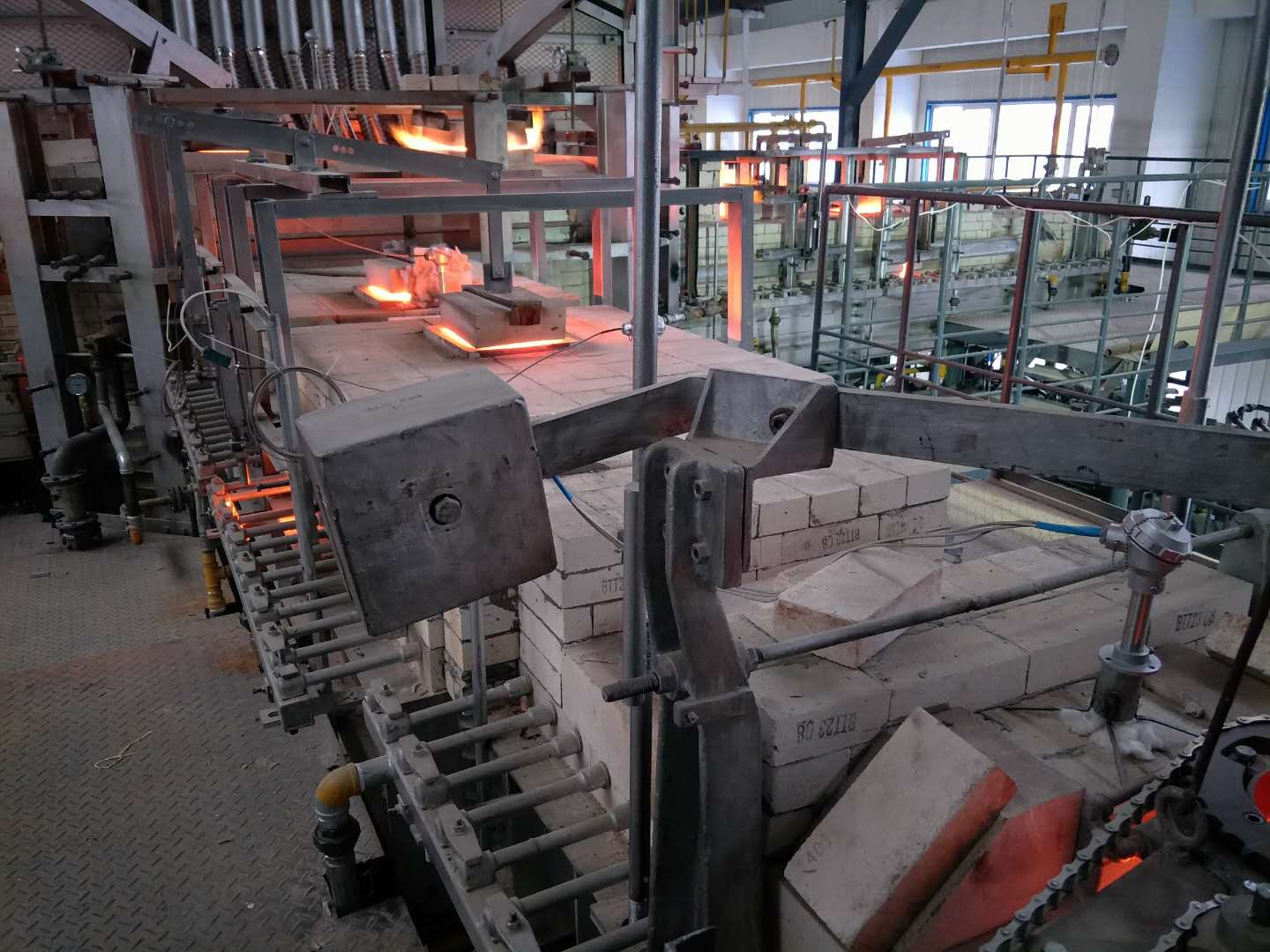
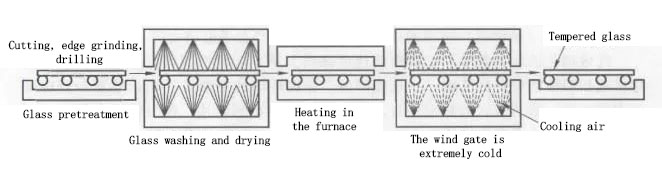
Toughened glass production process: the main points of the production process of tempered glass is heating and quenching. Flat tempered heating must be quickly heated to the glass sheet close to the softening temperature of the glass, so that the residual stress in the glass completely disappeared. The glass must not be deformed during the heating process, and the optimal heating temperature is 5-20℃ below the softening temperature. Bending tempered glass needs to be heated to the softening temperature, so that the glass is attached to the mold. The heating time of the glass is generally 40s/mm thickness, and the glass is required to be heated without deformation and scratches, and the appearance of the glass does not change. Vertical method in the specified range of clamp marks and appearance changes caused by the exception. After the glass is heated to the set temperature, it must be led out of the heating furnace as soon as possible and quenched quickly.
The basic requirement for glass quenching is fast and uniform in order to obtain a uniform distribution of stresses as well as a certain tempering strength. In order to achieve uniform cooling of the glass, the equipment should have evacuated hot air passages and be able to remove the debris generated by quenching as quickly as possible. Vertical tempered glass from the heating furnace to the wind grille process should be stung to shorten the wind grille wind pressure should be uniform, the glass should be located on both sides of the center of the wind grille on the vertical plane, the cooling wind uniformly blowing to the glass surface, the air supply system should have enough cooling strength and can quickly adjust the cooling wind. According to the different thickness of the glass using different cooling air pressure, 5mm thickness of the glass cooling air pressure is generally 4.0-5.0kPa; 6mm thick glass air pressure is generally 3.7-4.5kPa.
Cooling process characteristics of horizontal reciprocating tempering method: glass is quenched and cooled in reciprocating state, cooling air for quenching is adjusted in different sections, air grill roller conveyor adopts inclined winding of high temperature resistant glass fiber rope, and glass and roller conveyor form point contact. The gap between the spiral of the fiber rope provides a more uniform air flow area for the cooling of the lower part of the glass, which enhances the toughening effect of the glass.
Physical tempering also includes liquid-cooled tempering and particle tempering, the difference between liquid-cooled tempering and air-cooled tempering is that liquid is used instead of air to quench and cool the heated glass, due to the specific heat capacity and heat transfer coefficient of the liquid is much larger than that of air, so the cooling intensity is large. Liquid-cooled tempering medium temperature is generally 200-250 ℃, tempering time increases with the thickness of the product.
How to maintain a lime kiln? Maintenance methods for various parts of the lime kiln
Issues to be noted during operations such as tripping, temperature rise, and material feeding in rotary kilns
Related Article


