
Industrial kiln refractory brick replenishment principles and precautions
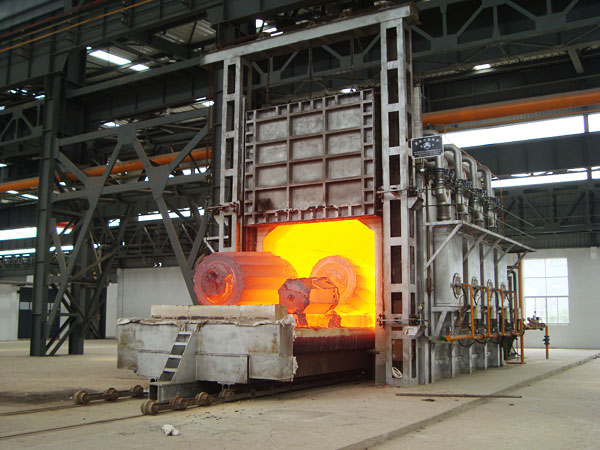
But at the same time will be due to the influence of external conditions lead to some refractory bricks appear local broken phenomenon, then this time we need to maintain and repair these refractory bricks. Generally we know that the refractory bricks produced by industrial kilns mainly refer to the magnesium-chromium bricks and spinel bricks digging and repairing.
Here's what you need to look out for when patching your tiles:
1. Replacement bricks must be used with the same manufacturer and the same batch of old bricks;
2. As far as possible to use and the old bricks with the same overhaul of the remaining loose bricks (Note: damp or damaged bricks are strictly prohibited to make);
3. New and old bricks must be played on the contact surface of the fire clay;
4. New and old bricks can not be played between the interface surface of the iron plate;
5. Locking brick brick brick seams can not be played on the iron plate on both sides of the brick, the two rings of bricks adjacent to the iron plate to each other to the staggered side of the same block of bricks can not be played on both sides of the iron plate
6. Iron plate must be completely hit into the brick joints;
7. The first few rings of brick sealing must be inserted from the side of the brick mouth, the last ring of bricks using the front of the brick sealing;
8. Strictly in accordance with the design of the brick masonry ratios, shall not be arbitrarily altered masonry ratios;
9. Expansion joints in the excavation of bricks shall not be torn out of the cardboard, excavation of bricks must be wet masonry (the fire clay slurry fullness should be 95% or more, it is strictly prohibited to appear in the big end of the brick there is no fire clay, the small end of the fire clay, if such a situation occurs, the brick must be wet masonry (fire clay), the brick must be wet masonry. Fire clay, if such a situation occurs, should be promptly dismantled re-laying;
10. Digging and patching as far as possible not to use (or reduce the use of) processing bricks.

Principles of digging and patching of refractory bricks
Open the brick from the weakest point of the brick, but not at the same time digging brick more than three rings. If it is a continuous multi-ring digging, in order to prevent the overall loosening of the brick, you must first dig and patch 2 rings before you can continue to dig and patch back. When digging bricks, pay attention to observe the tightness of the whole ring of bricks, if the overall loosening of the bricks, immediately stop digging and patching, with the locking brick iron plate will be loosened on both sides of the ring of bricks inserted tightly, after tightening to confirm that it is not loosened before continuing to dig and patch the operation.
The role of roller kiln kiln flaps and firewalls
Glass furnace energy saving tips: 5 insulation technology to help you reduce costs and increase efficiency
Related Article


