
Impact of ladle downspouts on the steelmaking industry
author: Archie
2025-03-18
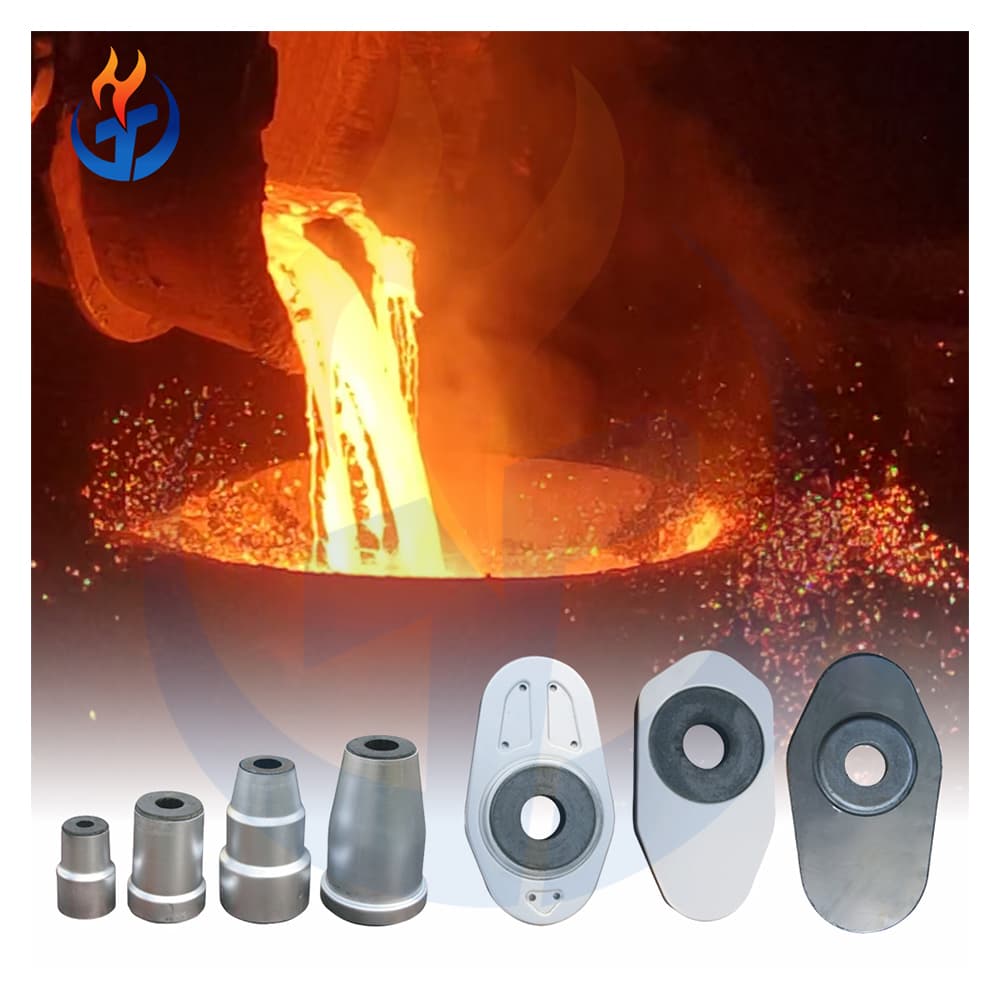
The ladle downspout is a key component in the casting process of continuous casting machine in steel mills, which plays the role of guiding and controlling the flow of steel, and connects with the ladle long spout to prevent the secondary oxidation of steel. However, it is prone to transverse breakage, perforation, steel clamping, steel sticking and other problems in use, which affects the continuous casting production. Its internal temperature of about 1600 ℃, the external temperature is low, resulting in the mouth of the external tensile stress, easy to produce longitudinal cracks; up and down the cooling rate is not consistent, resulting in thermal stress to form ring-shaped cracks, cracks expanding leads to breakage of steel leakage. Therefore, the ladle water outlet needs to have high-temperature resistance to scouring, thermal shock stability, as well as medium temperature strength and high temperature strength to withstand the shear force.
At present, the ladle under the mouth is mainly divided into two kinds of casting molding and machine pressure molding, the domestic mostly aluminium and carbon materials, machine pressure under the mouth of the carbon content is high, fast heat conduction, but the thermal stability and high-temperature bending strength is low. In the context of rising prices of refractory raw materials and compressed procurement costs of steel enterprises, refractory manufacturers need to reduce costs and develop high value-added products under the premise of meeting the requirements of safe use.
Therefore, the experiment introduces mullite and fused silica into the ladle downspout, and develops machine-press moulded ladle downspout.
Response:
The introduction of mullite and fused silica in ladle undercut has little effect on its room temperature flexural strength and compressive strength; the flexural and compressive strength after burning at 1000℃×3h is significantly reduced; the bulk density after burning at room temperature and at 1000℃×3h is reduced and the porosity is increased, which improves the thermo-shock stability of the ladle undercut, reduces the probability of the appearance of cold cracks in the ladle undercut after use, and improves the safety factor of the operation. Reduce the cost of raw materials, improve the economic efficiency of the product. After normal use on 130t and 180t ladles in different steel mills, it reduces the probability of cold cracks in the ladle spout, and the average reaming is 4~4.5mm, which meets the requirements of steel mills, and it can be promoted and applied in the adapted sites.
Analysis of factors affecting the performance of permeable bricks and optimisation measures
Causes of damage to permeable tiles
Related Article
Understanding the erosion mechanisms that cost steel mills millions annually
The Hidden Battle: Why Your Slide Gate Plates Fail Prematurely in Steel Casting

Some common situations, causes and preventive measures of steel penetration, seepage and leakage in ladle sliding plates
Some common situations, causes and preventive measures of steel ladles
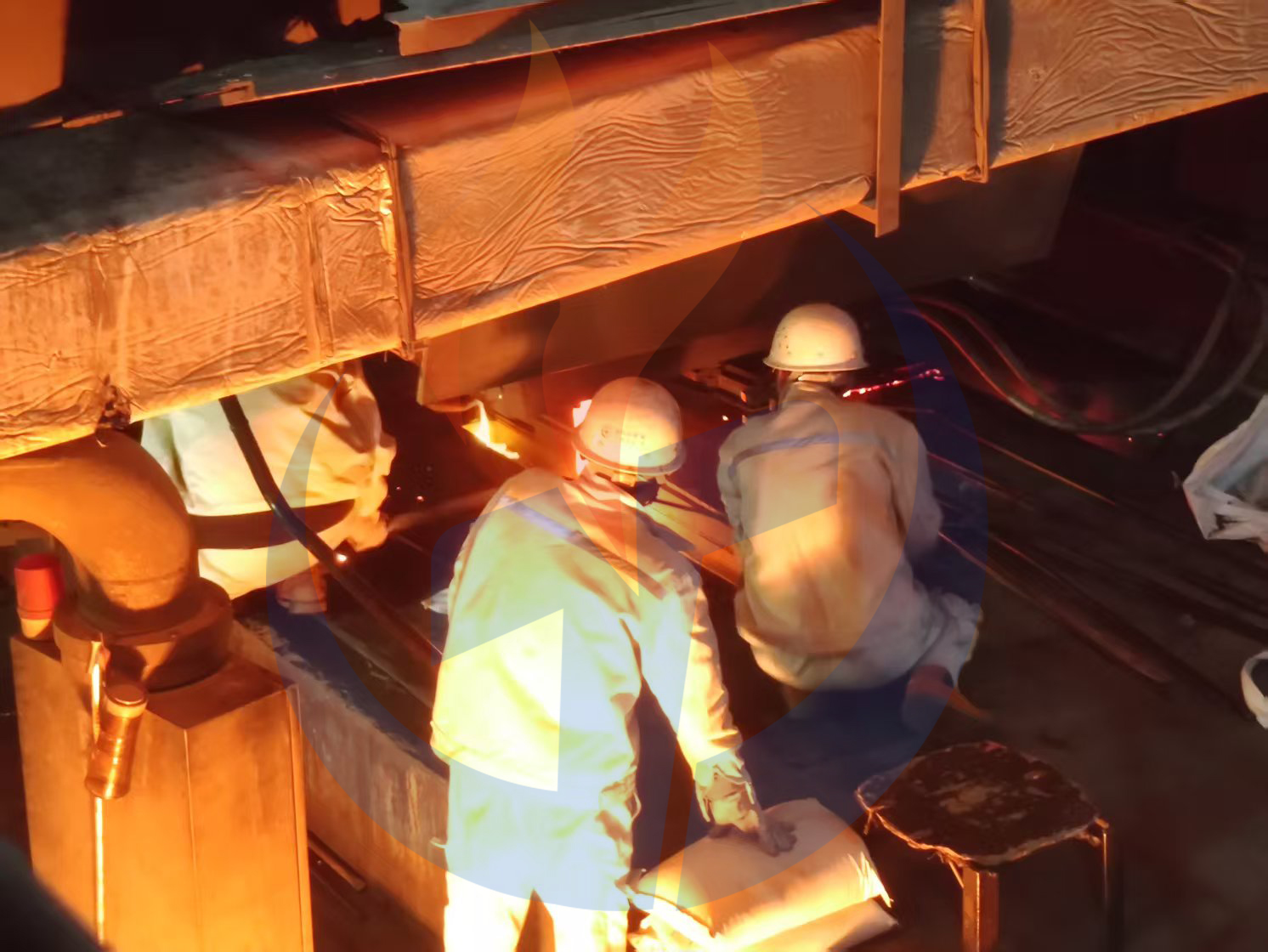
The tundish is a device used for the transition of molten steel between the molten steel ladle and the mold. The tundish plays a role of "connecting the upper and lower parts" after receiving the molten steel flowing into the continuous casting ladle. Its installation position is shown in the figure
What is the function of the tundish?

With the large-scale development of continuous casting equipment, the amount of steel passing through the unit in the long spout has gradually increased, from less than 1t/min originally to more than 7t/min at present. The increase in the amount of steel passing through per unit time has caused a sharp erosion of the inner wall. Therefore, the erosion of the inner wall has become the decisive factor for the long service life of the water outlet.
The main factors affecting the service life of long spouts and the ways to improve their service life