
Some common situations, causes and preventive measures of steel ladles
author: XINTAI
2025-09-09

The factors of steel leakage accidents between ladle sliding plates
1) When casting the molten steel with calcium, the Ca and CaO in the molten steel will react with the Al2O3 and SiO2 in the aluminum-carbon or aluminum-zirconium carbonaceous slide brick to generate substances such as 12CaO·7SiO2 and 2CaO·SiO2·Al2O3 with low melting point. These low melting substances are washed away by the molten steel. This causes the content of Al2O3 and SiO2 on the surface layer of the sliding plate bricks to rapidly decrease, resulting in excessive erosion of the working surface of the sliding plate bricks and causing steel inclusion or leakage between the sliding plate bricks.
1) When casting the molten steel with calcium, the Ca and CaO in the molten steel will react with the Al2O3 and SiO2 in the aluminum-carbon or aluminum-zirconium carbonaceous slide brick to generate substances such as 12CaO·7SiO2 and 2CaO·SiO2·Al2O3 with low melting point. These low melting substances are washed away by the molten steel. This causes the content of Al2O3 and SiO2 on the surface layer of the sliding plate bricks to rapidly decrease, resulting in excessive erosion of the working surface of the sliding plate bricks and causing steel inclusion or leakage between the sliding plate bricks.
2) When the oxygen content in the molten steel is relatively high, it causes the carbon and graphite in the sliding plate to oxidize, forming a decarburization layer. This leads to an increase in the porosity of the working surface of the sliding plate brick, a decrease in strength, and intensifies the mechanical scouring and chemical erosion of the sliding plate brick by the molten steel. The formation of the decarbonization layer The carbon on the surface of the slide plate is oxidized at the pouring temperature (1550-1600℃), forming a decarburization layer. This leads to an increase in the porosity of the working surface of the slide plate and a decrease in its strength. When it comes into contact with the molten steel, FeO, MnO, and [Ca] in the molten steel diffuse and penetrate into the slide plate through the pores.
3) After steel tapping, the temperature of the molten steel in the ladle was too high, with some batches exceeding 1660° C. Without the temperature adjustment through ladle refining outside the furnace, the thermal mechanical erosion and thermal chemical erosion of the refractory materials at the sliding nozzle intensified, leading to the cracking of the sliding nozzle and the leakage of steel due to erosion.
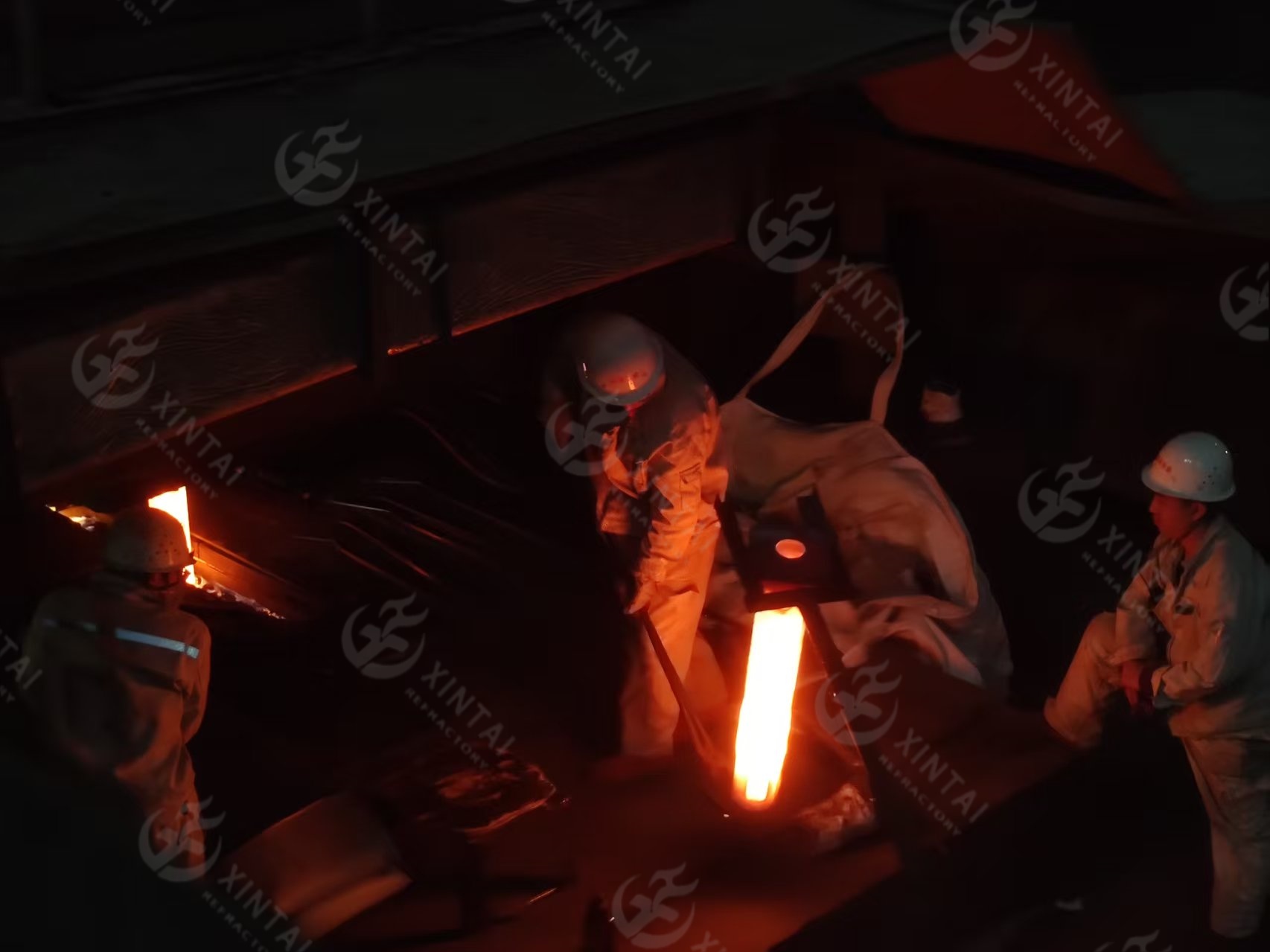
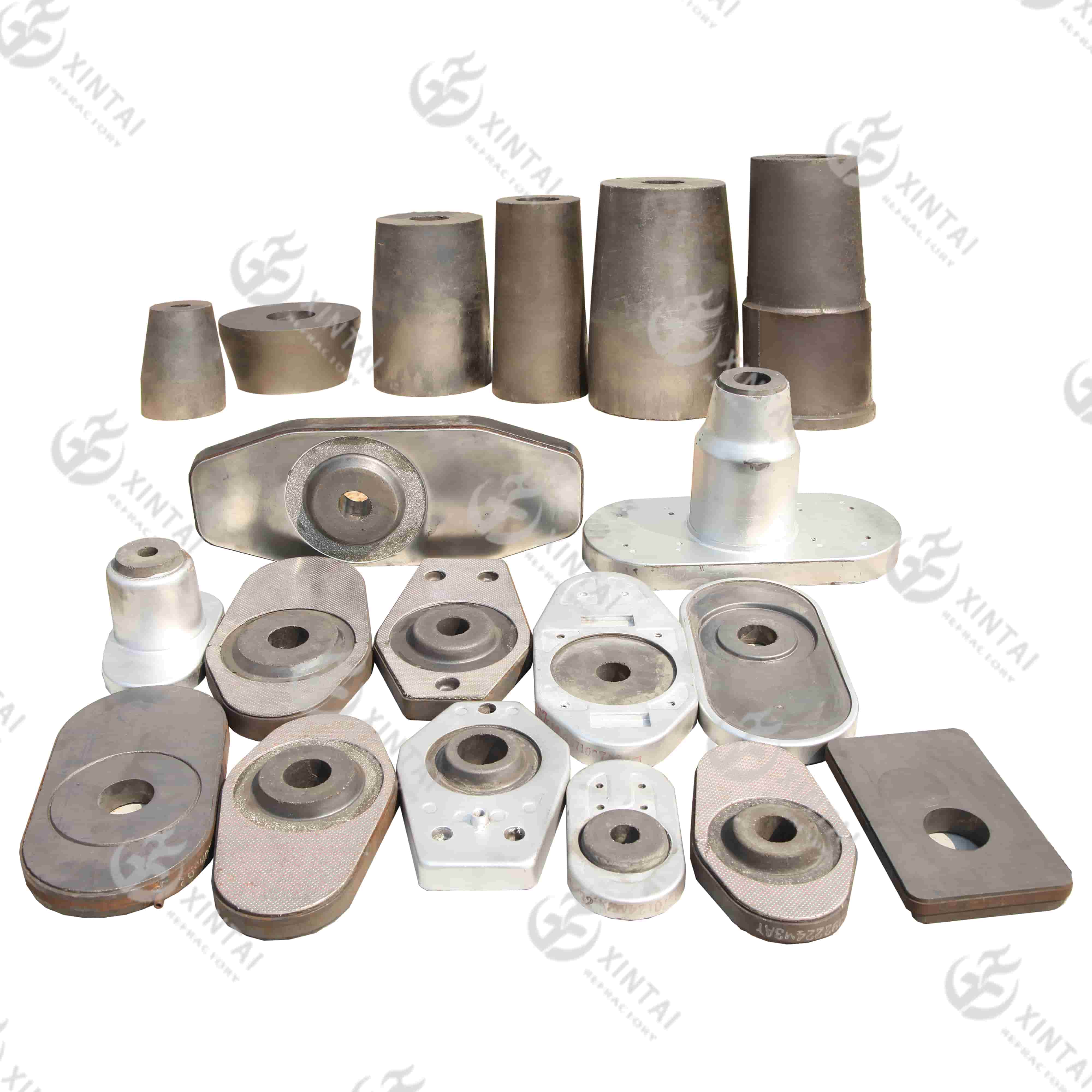
The specific reasons may involve the following several issues
A. Reasons for the sliding nozzle mechanism
A. Reasons for the sliding nozzle mechanism
1) Due to prolonged use at high temperatures or accidental collisions during operation, the sliding mechanism deforms significantly, resulting in uneven force distribution at the interface of the sliding plates. Small gaps may form at areas with smaller force surfaces, which could lead to steel leakage between the sliding plates.
2) The sliding trolley with the lower slide plate installed will gradually develop errors with the upper slide plate mechanism due to long-term loading and unloading of the slide plate, resulting in a tiny gap between the upper and lower slide plates.
3) The springs used in the mechanism may deform and fail even before reaching their service life due to long-term use in high-temperature environments. Under the static pressure of molten steel, gaps may appear between the sliding plates, which may cause steel leakage between the sliding plates. In severe cases, it may lead to steel penetration throughout the entire mechanism.
4) The deformation of the clamping sleeve of the drain opening causes the drain opening to be installed incorrectly, or the mother-child buckle of the sliding trolley of the clamping sleeve of the drain opening wears out due to long-term use, resulting in poor clamping between the drain opening and the lower sliding plate, causing steel leakage.
B. Reasons for skateboarding
1) The flatness of the skateboard surface does not meet the requirements. With low flatness, microwave gaps are formed between the skateboards.
2) There are quality issues with the slide plate. During the casting process, especially on the secondary slide plate of continuous casting, the surface scratches are severe, or horseshoe-shaped molten damage forms at the opening of the slide plate. The molten steel will seep into the deeper scratches. The temperature here is relatively low, and the molten steel will condense and form steel inclusions. If the slide plate is continued to be operated, especially during the long-stroke reciprocating pull in continuous casting, At this point, the gap between the skateboards may increase due to steel clamping, resulting in a steel leakage accident.
C. Reasons for on-site operation
1) The refractory mortar was not well developed and its thickness was inappropriate. If the refractory mortar used for installing the drain is too thin, it will be squeezed out and fail to provide good support. If it is too thick, it cannot spread well. Moreover, when high-pressure compressed air is used to blow the residual mud inside the water outlet, the overly thin refractory mud will be blown out of the gaps, which poses a hidden danger of steel seepage at the water outlet.
2) The dry refractory mortar inside the upper water inlet mechanism was not cleaned up thoroughly, or there was steel slag. There was a small amount of refractory mortar on the sliding plate surface. Due to negligence during use, it was not cleaned up thoroughly. When applying fire mortar to the lower water inlet, there were granular dry refractory mortar residues mixed in the fire mortar, which brought many hidden dangers to production.
3) Problems existing in the operation of continuous casting machines. When the ladle is poured, a large ladle with a long spout is hung on the spout for protection during the pouring process. At this time, it is advisable to avoid pulling the slide plate back and forth with the large ladle and long spout for a long stroke as much as possible. This may cause the spout to loosen due to improper operation, which is highly likely to lead to steel leakage from the spout. The flow rate can be adjusted by using the point operation method instead.
preventive measure
A. Strengthen the acceptance and inspection of the mechanical part of the sliding water outlet
A. Strengthen the acceptance and inspection of the mechanical part of the sliding water outlet
1) For the key parts of the sliding nozzle slide before use to do a good job of cutting, to ensure that the size tolerance of each part meets the requirements.
2) Each time the packaging operation is carried out, the sliding mechanism should be carefully inspected. Deformed or cracked parts should be replaced, and the residual steel and residue in the sliding box should be thoroughly cleaned.
2) Each time the packaging operation is carried out, the sliding mechanism should be carefully inspected. Deformed or cracked parts should be replaced, and the residual steel and residue in the sliding box should be thoroughly cleaned.
B. Select high-quality refractory materials
1) The refractory materials used for the sliding spout should have high high-temperature strength, especially the ladle seat bricks, which should be able to withstand mechanical damage when replacing the spout bricks and the erosion of molten steel, and should be in line with the service life of the ladle lining.
2) Good thermal shock stability and no cracking during use;
3) It has a high load-softening point and good oxidation resistance. During use, the pore size does not deform, and there are no depressions, pitting or roughening phenomena.
C. Optimize operations
1) pay attention to the process control, check the refractory carefully, and ensure the appearance and internal quality of the refractory.
2) Thoroughly clean the residual steel and mud in the inner cavities of the water inlet bricks and seat bricks, fill them with drainage sand to increase the automatic pouring rate of molten steel and prevent oxygen-burning pouring.
2) Thoroughly clean the residual steel and mud in the inner cavities of the water inlet bricks and seat bricks, fill them with drainage sand to increase the automatic pouring rate of molten steel and prevent oxygen-burning pouring.
3) After the molten steel is poured into the ladle, the sliding water inlet should be closed in time to prevent the slag inside the ladle from flowing into the water inlet.
4) Adjust the hardness and dosage of the refractory mortar in a timely manner according to the expansion of the seat brick and the water inlet brick, as well as the depth to which the water inlet brick is recessed into the base reference plate.
5) Accelerate the turnover of ladles and reduce the thermal shock damage to the refractory materials of ladles.
6) Install the skateboard strictly in accordance with the operation points. Clean the debris from the mold frame, the working surface of the skateboard and the back thoroughly. Keep the skateboard fully open when burning oxygen.
7) Strengthen the control of the smelting process, ensure the temperature of the molten steel at the end point, and strictly control the oxygen and calcium content at the end point of the molten steel.
The Hidden Battle: Why Your Slide Gate Plates Fail Prematurely in Steel Casting
What is the function of the tundish?
Related Article
Understanding the erosion mechanisms that cost steel mills millions annually
The Hidden Battle: Why Your Slide Gate Plates Fail Prematurely in Steel Casting
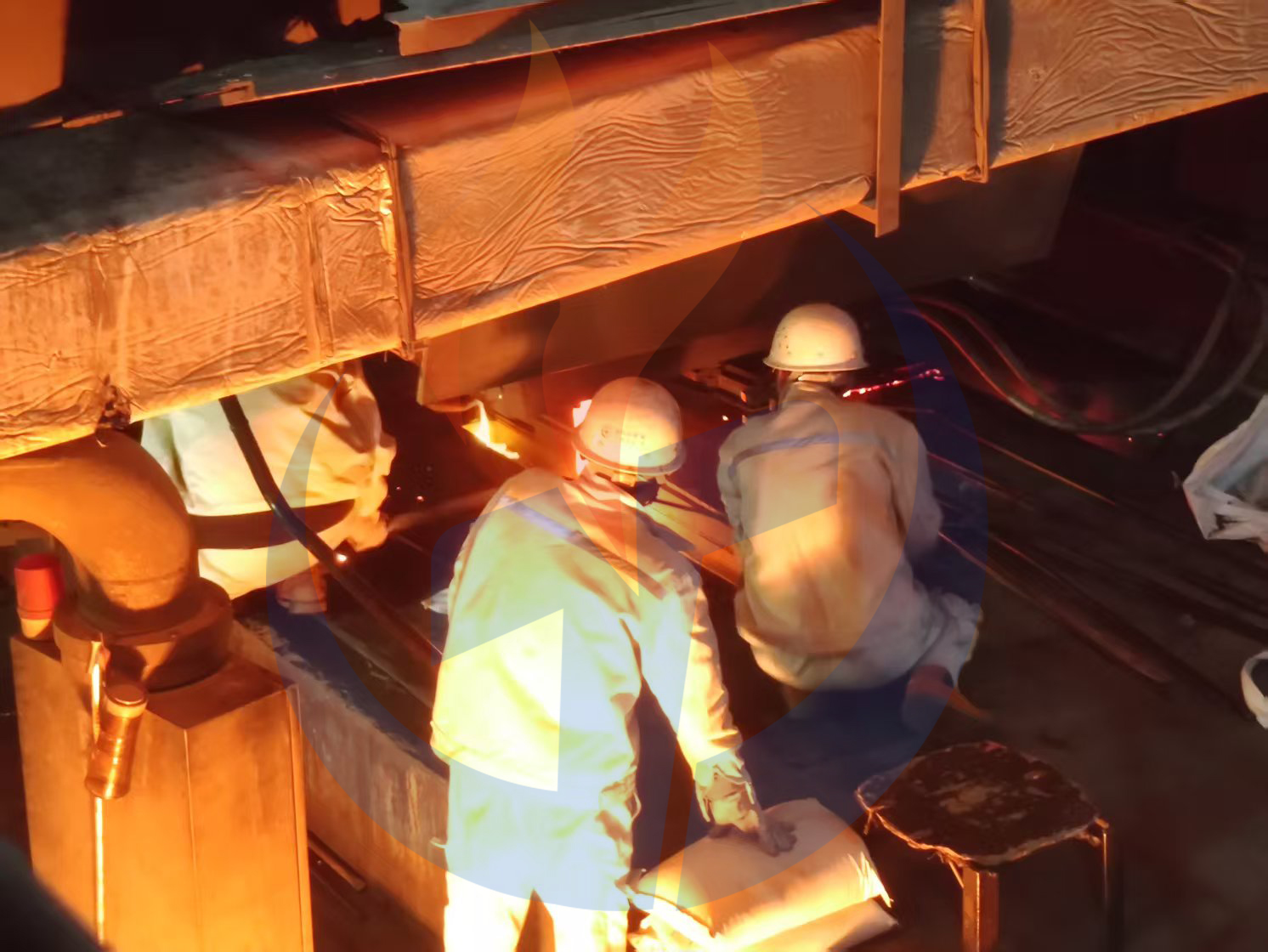
The tundish is a device used for the transition of molten steel between the molten steel ladle and the mold. The tundish plays a role of "connecting the upper and lower parts" after receiving the molten steel flowing into the continuous casting ladle. Its installation position is shown in the figure
What is the function of the tundish?

With the large-scale development of continuous casting equipment, the amount of steel passing through the unit in the long spout has gradually increased, from less than 1t/min originally to more than 7t/min at present. The increase in the amount of steel passing through per unit time has caused a sharp erosion of the inner wall. Therefore, the erosion of the inner wall has become the decisive factor for the long service life of the water outlet.
The main factors affecting the service life of long spouts and the ways to improve their service life

The main function of the molten iron ladle is to transport molten iron to the converter and electric furnace. In the process of transporting molten steel, the lining of the tank is mainly subjected to the following aspects of damage.
Refractories for iron ladle linings can't be destroyed without these 6 factors