
What is the function of the tundish?
author: XINTAI
2025-07-22
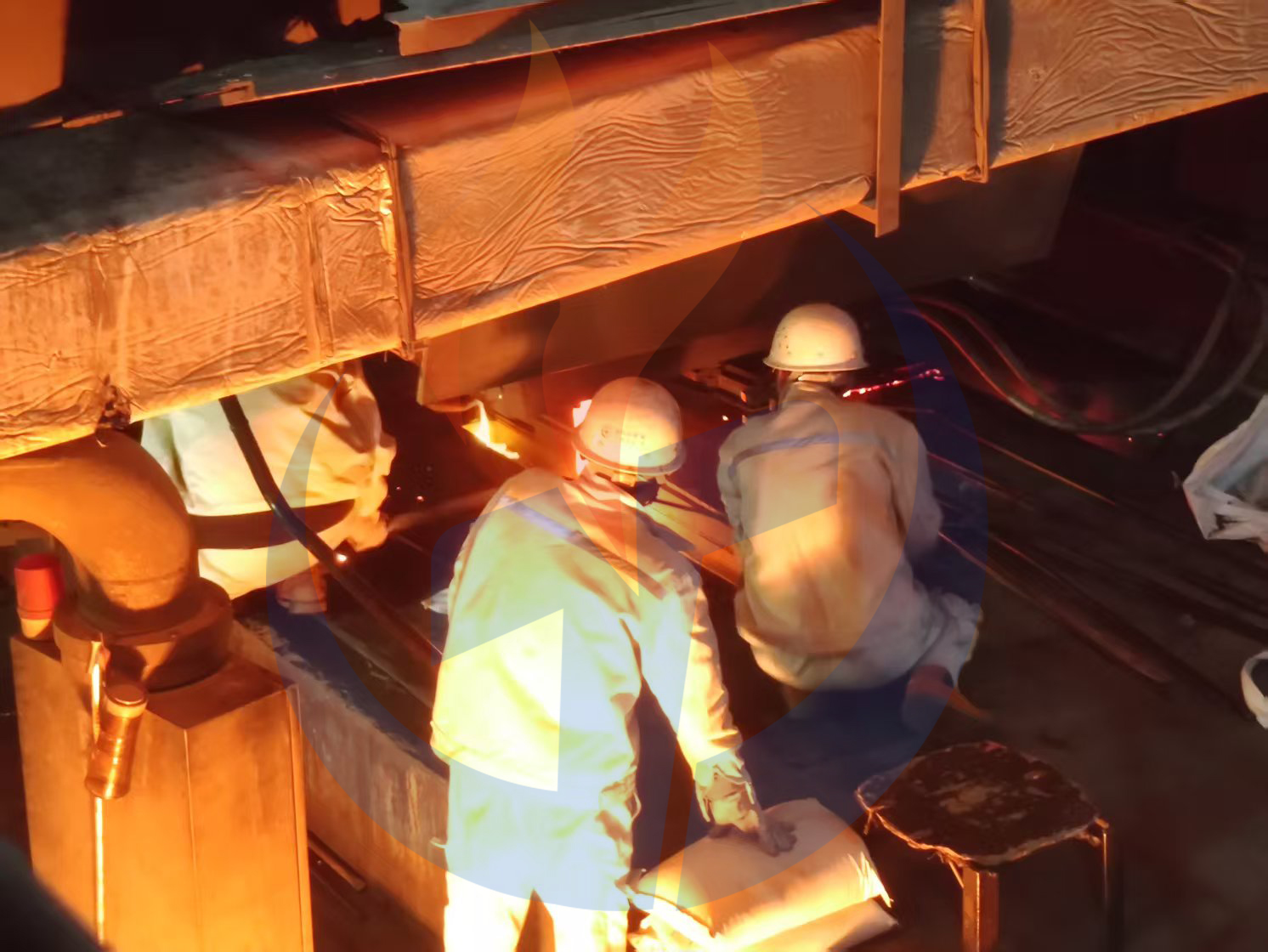
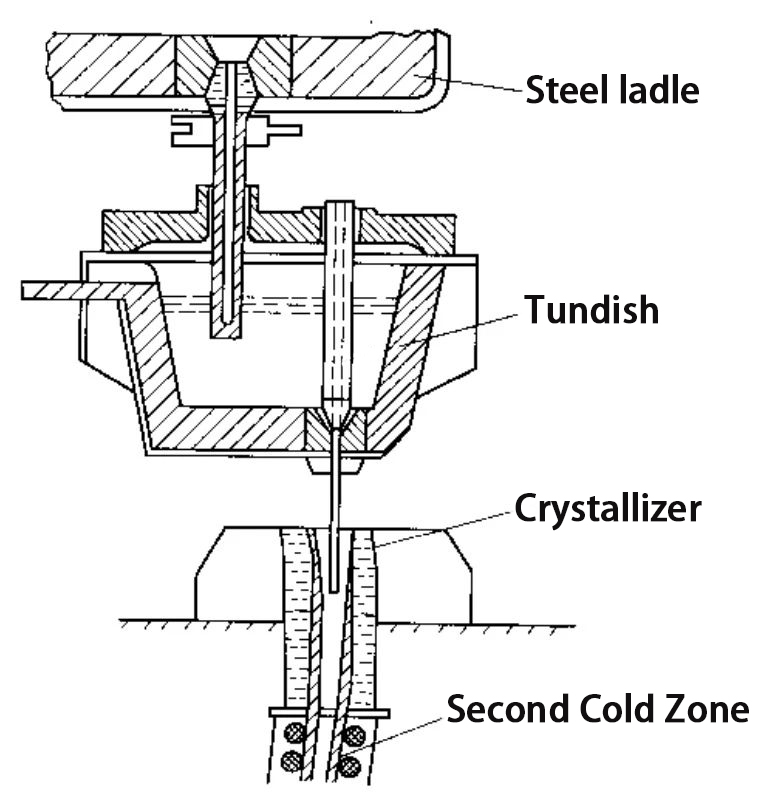
The function of the steelmaking tundish:
The continuous casting tundish was originally used for heat preservation of molten steel, and its main purpose was to distribute and rectify the molten steel. With the successful development and application of tundish's slow cooling technology for molten steel, reheating technology for molten steel, argon gas sealing technology, gas stirring technology and technology for removing non-metallic inclusions from molten steel, continuous casting tundish has become the most important refining container (furnace) in the final stage of the steelmaking process and is developing towards larger sizes. At present, it is possible to control the temperature of molten steel, precisely adjust trace alloy elements and improve calcium treatment of inclusions within tundish, which is also known as tundish metallurgy. With the increasing quality requirements for steel, various ladle refining technologies have been continuously developed accordingly, all with the aim of enhancing its purity and treating molten steel to be "clean". The tundish, located between the continuous casting ladle and the mold, can further purify the molten steel after being refined outside the furnace.
1. Purification function
To produce high-purity clean steel, perforated permeable bricks are installed at the bottom of the tundish or perforated tubular gas distributors are embedded between the working layer and the permanent layer, or perforated bricks are installed on the slag retaining wall for argon blowing, allowing argon bubbles to rise evenly from the bottom and facilitating the removal of inclusions. These devices can eliminate the hydrogenation of molten steel at the initial stage of pouring, reduce the oxide inclusions in steel, alleviate the defects caused by Al₂O₃ inclusions on tinplate, and significantly lower the content of non-metallic inclusions.
To produce high-purity clean steel, perforated permeable bricks are installed at the bottom of the tundish or perforated tubular gas distributors are embedded between the working layer and the permanent layer, or perforated bricks are installed on the slag retaining wall for argon blowing, allowing argon bubbles to rise evenly from the bottom and facilitating the removal of inclusions. These devices can eliminate the hydrogenation of molten steel at the initial stage of pouring, reduce the oxide inclusions in steel, alleviate the defects caused by Al₂O₃ inclusions on tinplate, and significantly lower the content of non-metallic inclusions.
2. Adjustment function
To ensure that the temperature difference between the molten steel in the early, middle and late stages of tundish during the casting process is less than 5℃, approaching the liquidus temperature during casting, and to expand the equiaaxial crystal zone of the billet and reduce central segregation, measures such as adding small pieces of scrap steel to tundish and spraying iron powder can be taken to regulate the temperature of the molten steel.
3. Fine-tuning of ingredients
Aluminum, titanium, boron and other cored wires are fed into the mold through the central hole of the tundish plug rod to achieve fine-tuning of the microalloy composition in the steel. This not only increases the yield of easily oxidized elements but also avoids clogging of the water outlet.
4. Refining function
Double-layer slag is added to the surface of tundish molten steel to absorb the floating inclusions in the molten steel, or calcium line is fed to tundish to change the morphology of Al₂O₃ inclusions to prevent water outlet blockage.
5. Heating function
In tundish, measures such as induction heating and plasma heating can be adopted to accurately control the pouring temperature of molten steel within ±3 to ±5℃. In the early stage of continuous casting, when changing ladles or at the end of pouring, tundish heating is adopted to compensate for the drop in molten steel temperature and keep it close to the target temperature. This is beneficial to the stability of the pouring operation and improves the quality of the cast billet. Meanwhile, during the normal pouring period, appropriate heating can compensate for the natural temperature drop of the molten steel. Heating methods include arc plasma and induction heating, etc. The most commonly used ones in production are induction heating and plasma heating.
Induction heating method. The induction heater is installed at the bottom of the tundish. It can not only heat the molten steel but also stir the molten steel by electromagnetic force to promote the floating of inclusions. For instance, in the 8ttundish plant of Chiba, Japan, induction heating was adopted, and the temperature of the molten steel was controlled at the target temperature of 0 to 5℃ (10 to 20℃ without heating), which reduced the subcutaneous inclusions of the uncast billets by 1/4 to 1/2. The defects of cold-rolled stainless steel plates have been greatly reduced, reaching the level of finished products in the normal pouring state.
(2) Plasma heating method. At tundish, a dedicated arc emitter is used to generate high-temperature plasma to heat molten copper. The advantages of this method are: 1) The plasma generator can be installed above the tundish, and it is convenient to adjust and use. 2) During the heating process, the input power can be adjusted by detecting parameters such as the temperature of the molten steel, the height of the liquid level, and the drawing speed, precisely controlling the temperature of the molten steel to reach the target value. 3) It does not pollute the environment. The effect of this plasma heating can control the target temperature of tundish molten steel within ±1 to ±5℃, allowing tundish to be reused 200 times in a hot state. It reduces the consumption of refractory materials, increases output, and promotes the floating of inclusions, which is conducive to improving quality. tundish molten steel has a complete liquid slag covering layer on the surface, which can prevent secondary oxidation and improve the purity of molten steel.
Plasma heating equipment can be installed on both the slab and small billet continuous casting machines tundish.
In tundish, measures such as induction heating and plasma heating can be adopted to accurately control the pouring temperature of molten steel within ±3 to ±5℃. In the early stage of continuous casting, when changing ladles or at the end of pouring, tundish heating is adopted to compensate for the drop in molten steel temperature and keep it close to the target temperature. This is beneficial to the stability of the pouring operation and improves the quality of the cast billet. Meanwhile, during the normal pouring period, appropriate heating can compensate for the natural temperature drop of the molten steel. Heating methods include arc plasma and induction heating, etc. The most commonly used ones in production are induction heating and plasma heating.
Induction heating method. The induction heater is installed at the bottom of the tundish. It can not only heat the molten steel but also stir the molten steel by electromagnetic force to promote the floating of inclusions. For instance, in the 8ttundish plant of Chiba, Japan, induction heating was adopted, and the temperature of the molten steel was controlled at the target temperature of 0 to 5℃ (10 to 20℃ without heating), which reduced the subcutaneous inclusions of the uncast billets by 1/4 to 1/2. The defects of cold-rolled stainless steel plates have been greatly reduced, reaching the level of finished products in the normal pouring state.
(2) Plasma heating method. At tundish, a dedicated arc emitter is used to generate high-temperature plasma to heat molten copper. The advantages of this method are: 1) The plasma generator can be installed above the tundish, and it is convenient to adjust and use. 2) During the heating process, the input power can be adjusted by detecting parameters such as the temperature of the molten steel, the height of the liquid level, and the drawing speed, precisely controlling the temperature of the molten steel to reach the target value. 3) It does not pollute the environment. The effect of this plasma heating can control the target temperature of tundish molten steel within ±1 to ±5℃, allowing tundish to be reused 200 times in a hot state. It reduces the consumption of refractory materials, increases output, and promotes the floating of inclusions, which is conducive to improving quality. tundish molten steel has a complete liquid slag covering layer on the surface, which can prevent secondary oxidation and improve the purity of molten steel.
Plasma heating equipment can be installed on both the slab and small billet continuous casting machines tundish.
6. tundish is developing towards larger sizes
At present, the capacity of the tundish submerged casting machine is gradually increasing. In the 1960s, the capacity of the tundish was 6 tons, and in the 1980s, most of them were above 45 tons. At present, the largest tundish capacity reaches 80t. The advantages of increasing the capacity of tundish are as follows:
(1) Prolonging the residence time of molten steel in the ladle is conducive to the floating of inclusions. (2) When changing the ladle, do not reduce the pulling speed. Keep the tundish pouring stable to prevent the liquid level from falling below the critical value and generating vortices, which may draw the slag into the mold. (3) The steel liquid level remains stable throughout the entire pouring process, which is conducive to the smooth operation. (4) The increased capacity of tundish is conducive to reducing metal loss and lowering operating costs. Large intermediate ladles are more conducive to the production of clean steel, and the surface and internal quality of the products are good.
Some common situations, causes and preventive measures of steel ladles
The main factors affecting the service life of long spouts and the ways to improve their service life
Related Article
Understanding the erosion mechanisms that cost steel mills millions annually
The Hidden Battle: Why Your Slide Gate Plates Fail Prematurely in Steel Casting

Some common situations, causes and preventive measures of steel penetration, seepage and leakage in ladle sliding plates
Some common situations, causes and preventive measures of steel ladles

With the large-scale development of continuous casting equipment, the amount of steel passing through the unit in the long spout has gradually increased, from less than 1t/min originally to more than 7t/min at present. The increase in the amount of steel passing through per unit time has caused a sharp erosion of the inner wall. Therefore, the erosion of the inner wall has become the decisive factor for the long service life of the water outlet.
The main factors affecting the service life of long spouts and the ways to improve their service life

The main function of the molten iron ladle is to transport molten iron to the converter and electric furnace. In the process of transporting molten steel, the lining of the tank is mainly subjected to the following aspects of damage.
Refractories for iron ladle linings can't be destroyed without these 6 factors