
Gas tunnel kiln energy-saving technology transformation
author: Archie
2025-05-29
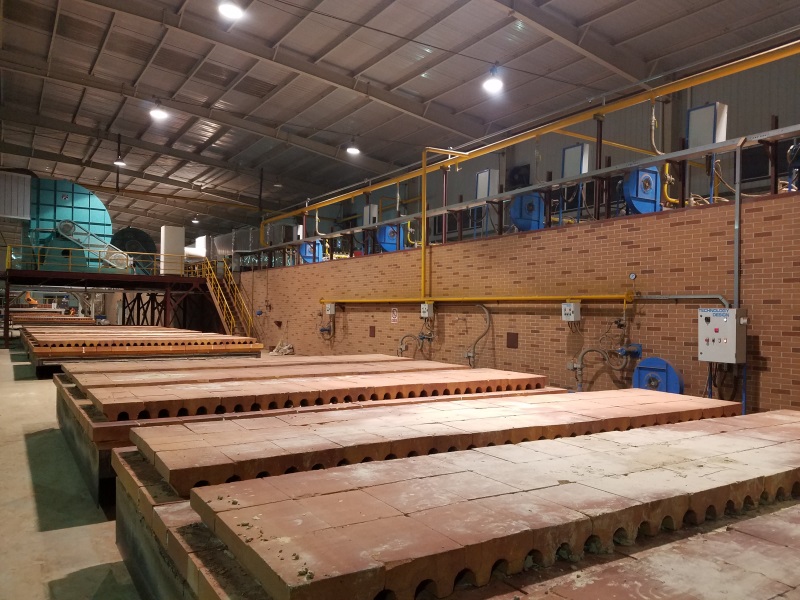
Technical Principles
Gas tunnel kiln for energy-saving technological transformation, optimization of kiln control parameters, the use of new combustion technology and kiln insulation technology, reduce the energy consumption of the firing process, improve the utilization rate of waste heat recovery; drying room for technological transformation, the kiln waste heat instead of liquefied petroleum gas heating; billet formulations optimized to reduce the firing temperature; focus on production line change: focus on solving the billet moulding volume and kiln firing volume mismatch Problems.
Key technologies
(1) Improve the level of automation control of the kiln, the use of ‘automatic synchronisation’ procedure to control the ratio of gas and air, to improve the quality of the kiln billet firing and qualification rate;
(2) Modify the kiln gas supply and combustion system, using a new type of burner, to improve the degree of gasification, so that the kiln to maintain the optimal combustion curve, to improve the effect of gas combustion;
(3) Enhance the insulation performance of the kiln and reduce the heat loss of the kiln;
(4) Lighten the kiln furniture, to avoid the kiln furniture and products out of the kiln to take away too much heat energy;
(5) Optimise the firing cycle, speed up the advancement of kiln cars and shorten the firing time;
(6) Install waste heat recovery system in the kiln cooling belt and exhaust flue, and pump the hot air to the drying room to dry the billet.
(1) Improve the level of automation control of the kiln, the use of ‘automatic synchronisation’ procedure to control the ratio of gas and air, to improve the quality of the kiln billet firing and qualification rate;
(2) Modify the kiln gas supply and combustion system, using a new type of burner, to improve the degree of gasification, so that the kiln to maintain the optimal combustion curve, to improve the effect of gas combustion;
(3) Enhance the insulation performance of the kiln and reduce the heat loss of the kiln;
(4) Lighten the kiln furniture, to avoid the kiln furniture and products out of the kiln to take away too much heat energy;
(5) Optimise the firing cycle, speed up the advancement of kiln cars and shorten the firing time;
(6) Install waste heat recovery system in the kiln cooling belt and exhaust flue, and pump the hot air to the drying room to dry the billet.

Adding heat exchangers to enhance waste heat recovery
Tunnel kiln flues with exhaust gases of up to 1200 degrees Celsius are well worth utilising. However, conventional metal heat exchangers are not able to operate properly for long periods of time in flues with such high temperatures due to the limitations of the materials they are made of. In addition, the large amount of acid in the exhaust gas erodes the heat exchanger from time to time. In this way, the metal heat exchanger is scrapped after one use, and the enterprise wastes part of the expenditure for nothing.
So, does this mean that the heat exchanger in the tunnel kiln is useless? Is it just stand by with a lot of energy can be used in vain loss? The answer is no.
Ceramic heat exchanger can solve these problems, so that waste heat can be reasonably used. The use of ceramic heat exchanger method is direct, simple, fast, efficient, environmental protection, energy saving. The ceramic heat exchanger is placed closer to the flue outlet, higher temperature places, do not need to mix cold air and high temperature protection, when the kiln temperature is 1250 ° C - 1650 ° C, the flue outlet temperature of about 1,000 ° C - 1,350 ° C, the air can be preheated to 300 ° C - 750 ° C, or higher, the use of 300 ° C - 750 ° C hot air and gas to form a mixture for combustion, you can Save 25%-45% or even more energy. It not only improves the working efficiency for the enterprise, but also reduces the production cost.
So, does this mean that the heat exchanger in the tunnel kiln is useless? Is it just stand by with a lot of energy can be used in vain loss? The answer is no.
Ceramic heat exchanger can solve these problems, so that waste heat can be reasonably used. The use of ceramic heat exchanger method is direct, simple, fast, efficient, environmental protection, energy saving. The ceramic heat exchanger is placed closer to the flue outlet, higher temperature places, do not need to mix cold air and high temperature protection, when the kiln temperature is 1250 ° C - 1650 ° C, the flue outlet temperature of about 1,000 ° C - 1,350 ° C, the air can be preheated to 300 ° C - 750 ° C, or higher, the use of 300 ° C - 750 ° C hot air and gas to form a mixture for combustion, you can Save 25%-45% or even more energy. It not only improves the working efficiency for the enterprise, but also reduces the production cost.
Issues to be noted during operations such as tripping, temperature rise, and material feeding in rotary kilns
Five benefits of setting kiln doors in tunnel kilns
Related Article

Refractory materials are the main building materials of glass melting furnaces, and they have a decisive impact on the quality of glass, energy consumption and even product costs. The development of glass melting technology largely depends on the advancement of refractory material manufacturing technology and the improvement of quality.
Selection of kiln type structure and lining refractory materials for glass melting furnaces

The cover of the electric furnace is a spherical structure with electrode holes and smoke exhaust holes. The outer ring part is called the main furnace cover, and the middle part is called the small furnace cover (also known as the triangular area). When loading materials, the furnace cover can be moved away.
Factors affecting the service life of refractory materials used for electric furnace covers

Overburning and lumping are common phenomena in the lime production process. They not only affect product quality but, in severe cases, can have a fatal impact on the production process, refractory materials of the kiln body and other equipment. This article analyzes the causes of overburning and tumor formation, general treatment methods for tumor formation, and preventive measures, effectively avoiding the occurrence of tumor formation.
Common causes of lumps in lime kilns and their solutions

A kiln is a space capable of generating high temperatures, and the materials that make up this space are called kiln construction materials. The construction materials should include two major categories: refractory materials and thermal insulation materials (or heat insulation materials). In addition, to enhance the structural strength of the kiln body, the materials used for furnace construction should also include common building materials (such as ash bricks, etc.) and metal materials, etc.
Don't know how to build a kiln or furnace? This article is enough