
Issues to be noted during operations such as tripping, temperature rise, and material feeding in rotary kilns
2025-06-06
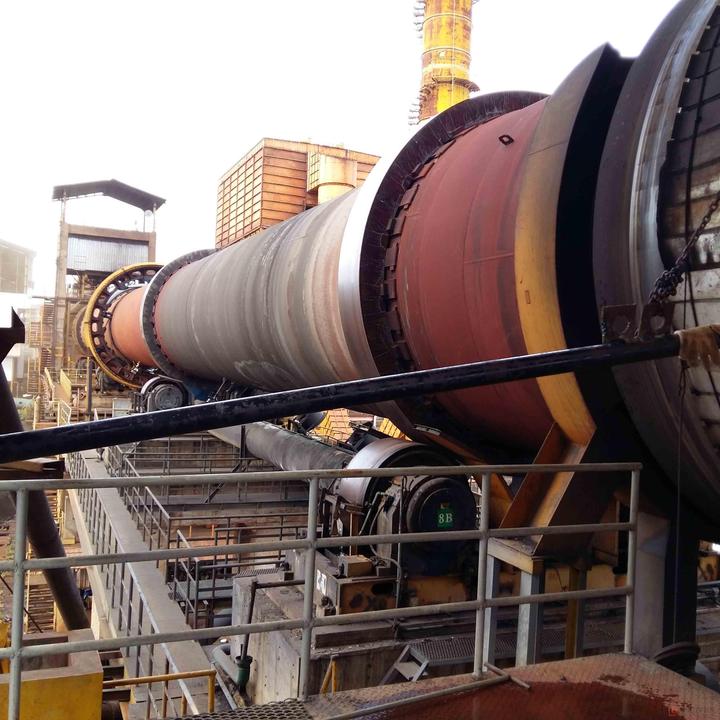
Stop-jump problem
Head coal scale stoppage: Stop the material immediately after more than 2 minutes (the speed should be fast to prevent raw material from escaping).
Tail coal scale shutdown: Depending on the situation, it is necessary to stop feeding for a short period of time, reduce the feeding and use the head coal. Under normal circumstances, 100 to 120 tons can be burned. (Stop the material immediately if it doesn't burn.)
High-temperature fan tripping: Stop the material, reduce the grate and cool the machine air to prevent excessive positive pressure at the kiln head from burning the kiln head equipment and injuring people.
2. One fan trip: The material can be stopped within a few minutes. If it lasts for a long time, the material must be stopped for 10 minutes.
3. Kiln main unit shutdown: Firstly, ensure that the kiln does not deform. Secondly, determine whether to maintain insulation based on the time situation. The high-temperature fan does not need to be stopped within 30 minutes; otherwise, insulation is required, and intermittent coal injection can be adopted.
4. The fan of the grate cooler trips and stops: The further forward it is, the greater the harm. If the front trips and stops for a long time, it must be stopped. For the rear ones, the situation can be considered. Generally, there is no problem at the back. Operate based on the temperature of the grate plate and the on-site observation of the clinker cooling situation.
5. Shutdown of the grate cooler: Reduce the kiln speed. If it is necessary to stop the material for a long time, adjust the grate speed according to the current. If the current is high, push slowly to prevent shutdown and bed pressing. If the three-stage current trips frequently (above 55A for a long time), it is necessary to check whether there are balls at the mouth of the crusher. If the vehicle cannot be driven after a sudden stop, notify the scene and cooperate with the vehicle rotation.
6. Exhaust gas equipment shutdown: Under the condition that it does not affect the feeding, it can be left idle for 4 to 5 hours. When starting, be careful not to let ash escape.
7. Power outage for the entire plant: First, slow down the kiln - open the chimney vent - after power is restored, start the grate cooler fan first (to prevent caking), the primary fan (coal pipe), the kiln inlet fan, and keep the others running normally.
Head coal scale stoppage: Stop the material immediately after more than 2 minutes (the speed should be fast to prevent raw material from escaping).
Tail coal scale shutdown: Depending on the situation, it is necessary to stop feeding for a short period of time, reduce the feeding and use the head coal. Under normal circumstances, 100 to 120 tons can be burned. (Stop the material immediately if it doesn't burn.)
High-temperature fan tripping: Stop the material, reduce the grate and cool the machine air to prevent excessive positive pressure at the kiln head from burning the kiln head equipment and injuring people.
2. One fan trip: The material can be stopped within a few minutes. If it lasts for a long time, the material must be stopped for 10 minutes.
3. Kiln main unit shutdown: Firstly, ensure that the kiln does not deform. Secondly, determine whether to maintain insulation based on the time situation. The high-temperature fan does not need to be stopped within 30 minutes; otherwise, insulation is required, and intermittent coal injection can be adopted.
4. The fan of the grate cooler trips and stops: The further forward it is, the greater the harm. If the front trips and stops for a long time, it must be stopped. For the rear ones, the situation can be considered. Generally, there is no problem at the back. Operate based on the temperature of the grate plate and the on-site observation of the clinker cooling situation.
5. Shutdown of the grate cooler: Reduce the kiln speed. If it is necessary to stop the material for a long time, adjust the grate speed according to the current. If the current is high, push slowly to prevent shutdown and bed pressing. If the three-stage current trips frequently (above 55A for a long time), it is necessary to check whether there are balls at the mouth of the crusher. If the vehicle cannot be driven after a sudden stop, notify the scene and cooperate with the vehicle rotation.
6. Exhaust gas equipment shutdown: Under the condition that it does not affect the feeding, it can be left idle for 4 to 5 hours. When starting, be careful not to let ash escape.
7. Power outage for the entire plant: First, slow down the kiln - open the chimney vent - after power is restored, start the grate cooler fan first (to prevent caking), the primary fan (coal pipe), the kiln inlet fan, and keep the others running normally.
Be careful when heating up
The clean fan of the decomposing furnace can be turned on when the decomposing furnace is at 400℃ to prevent the deformation of the coal pipe. The fan of the kiln head guard plate can generally be turned on when continuous auxiliary transmission is carried out.
2. When igniting the inclined chute fan entering the kiln, it should be turned on to prevent water vapor, wet materials and damage to the canvas.
3. First, start the blower once - when making oil, the air pressure should be higher to prevent the flame from spreading - if the flame is still not good, start the head coal Roots blower, but be careful not to blow out the fire - when the tail temperature is 200-300 ° C, oil and coal can be burned together (note that the temperature can be higher depending on the situation if the kiln is shut down for too long) - when the temperature is 500-600 ° C, the oil can be removed (the oil can be gradually reduced) Do not remove it all at once to prevent fire. The auxiliary transmission should be turned frequently to prevent the temperature from getting too high. - Continuous auxiliary transmission can be done at 600 degrees. - main transmission can be done at 800-900 degrees. -900 degrees. Start the high-temperature fan, and the tail exhaust fan can be started as needed after the first coal is used. Materials can be added when the temperature is reached.
4. The fan of the cooler can be left unused depending on the situation and the amount of material.
5. For hot kilns, the amount of coal used for heating should be increased, and for auxiliary transfer, continuous coal transfer should be approximately 2 to 3 tons. For cold kilns, the opposite is true, with 0.5 tons being sufficient.
6. When igniting, don't make the air flow too strong. It's best to turn off the exhaust pipe.
The clean fan of the decomposing furnace can be turned on when the decomposing furnace is at 400℃ to prevent the deformation of the coal pipe. The fan of the kiln head guard plate can generally be turned on when continuous auxiliary transmission is carried out.
2. When igniting the inclined chute fan entering the kiln, it should be turned on to prevent water vapor, wet materials and damage to the canvas.
3. First, start the blower once - when making oil, the air pressure should be higher to prevent the flame from spreading - if the flame is still not good, start the head coal Roots blower, but be careful not to blow out the fire - when the tail temperature is 200-300 ° C, oil and coal can be burned together (note that the temperature can be higher depending on the situation if the kiln is shut down for too long) - when the temperature is 500-600 ° C, the oil can be removed (the oil can be gradually reduced) Do not remove it all at once to prevent fire. The auxiliary transmission should be turned frequently to prevent the temperature from getting too high. - Continuous auxiliary transmission can be done at 600 degrees. - main transmission can be done at 800-900 degrees. -900 degrees. Start the high-temperature fan, and the tail exhaust fan can be started as needed after the first coal is used. Materials can be added when the temperature is reached.
4. The fan of the cooler can be left unused depending on the situation and the amount of material.
5. For hot kilns, the amount of coal used for heating should be increased, and for auxiliary transfer, continuous coal transfer should be approximately 2 to 3 tons. For cold kilns, the opposite is true, with 0.5 tons being sufficient.
6. When igniting, don't make the air flow too strong. It's best to turn off the exhaust pipe.
Be careful when feeding materials
1. When the temperature of the decomposition furnace rises to 850 degrees, it can be fed, and the chimney is turned off when the elevator current rises.2. For hot kilns, the feeding speed should be as fast as possible to increase the secondary air temperature, while for cold kilns, the opposite is true.
3. The increase in kiln speed and output should be based on the temperature of the flue chamber and the current of the kiln. Only when the temperature and current do not decrease can the output and kiln speed be increased.
4. Before feeding materials, the temperature of the decomposing furnace does not necessarily have to be reached (it can be reached by using the tailings). The main considerations are whether the materials inside the kiln are red and the height of the red zone, as well as whether there is red material on the cooler. The head and tail devices were turned on one after another.
5. After feeding materials, closely monitor the pressure and temperature at all locations. For the above four levels, mainly observe the temperature of the decomposition furnace and the pressure at each level. Specifically: If the pressure of the 3rd and 4th stage discharge pipes changes from negative to positive and the temperature of the decomposition furnace rises sharply, the 3rd and 4th stage air cannons can be fired first. If there is no improvement, stop the material immediately. If only the pressure changes and the temperature is normal, there is no need to be nervous. The absence of pressure in the 1st and 2nd stage discharge pipes can be judged by the temperature at the 3rd and 4th stages and the outlet of the decomposition furnace. Theoretically, the temperature in the flue chamber will rise at level 5. However, the temperature in the flue chamber is often not reflected significantly. Therefore, when the pressure in the material pipe approaches positive pressure, the first step is to contact the site to check if the flap valve is operating. If you cannot get in touch and are not sure, stop the material immediately. As it is very difficult and dangerous to clear the blockage of the preheater, it should be detected in time.
1. When the temperature of the decomposition furnace rises to 850 degrees, it can be fed, and the chimney is turned off when the elevator current rises.2. For hot kilns, the feeding speed should be as fast as possible to increase the secondary air temperature, while for cold kilns, the opposite is true.
3. The increase in kiln speed and output should be based on the temperature of the flue chamber and the current of the kiln. Only when the temperature and current do not decrease can the output and kiln speed be increased.
4. Before feeding materials, the temperature of the decomposing furnace does not necessarily have to be reached (it can be reached by using the tailings). The main considerations are whether the materials inside the kiln are red and the height of the red zone, as well as whether there is red material on the cooler. The head and tail devices were turned on one after another.
5. After feeding materials, closely monitor the pressure and temperature at all locations. For the above four levels, mainly observe the temperature of the decomposition furnace and the pressure at each level. Specifically: If the pressure of the 3rd and 4th stage discharge pipes changes from negative to positive and the temperature of the decomposition furnace rises sharply, the 3rd and 4th stage air cannons can be fired first. If there is no improvement, stop the material immediately. If only the pressure changes and the temperature is normal, there is no need to be nervous. The absence of pressure in the 1st and 2nd stage discharge pipes can be judged by the temperature at the 3rd and 4th stages and the outlet of the decomposition furnace. Theoretically, the temperature in the flue chamber will rise at level 5. However, the temperature in the flue chamber is often not reflected significantly. Therefore, when the pressure in the material pipe approaches positive pressure, the first step is to contact the site to check if the flap valve is operating. If you cannot get in touch and are not sure, stop the material immediately. As it is very difficult and dangerous to clear the blockage of the preheater, it should be detected in time.
Raw material processing
1. Reduce kiln speed - Decrease production - Reduce exhaust. The output and kiln speed should be determined based on the size of the material leakage. If it is extremely severe, the material should be stopped immediately.
2. The amount of head coal should not be increased more and more depending on the situation. Generally, it is added, and the temperature of the decomposition furnace should be controlled higher.
3. In front of the grate speed, it should be pushed to the fastest speed as much as possible to push out the raw material powder. When it is almost the same, it should be reduced and the air doors of each chamber should be reduced.
4. You can appropriately increase the internal air volume and reduce the external air volume.
1. Reduce kiln speed - Decrease production - Reduce exhaust. The output and kiln speed should be determined based on the size of the material leakage. If it is extremely severe, the material should be stopped immediately.
2. The amount of head coal should not be increased more and more depending on the situation. Generally, it is added, and the temperature of the decomposition furnace should be controlled higher.
3. In front of the grate speed, it should be pushed to the fastest speed as much as possible to push out the raw material powder. When it is almost the same, it should be reduced and the air doors of each chamber should be reduced.
4. You can appropriately increase the internal air volume and reduce the external air volume.
Production process of tempered glass in glass melting kilns
Gas tunnel kiln energy-saving technology transformation
Related Article

Refractory materials are the main building materials of glass melting furnaces, and they have a decisive impact on the quality of glass, energy consumption and even product costs. The development of glass melting technology largely depends on the advancement of refractory material manufacturing technology and the improvement of quality.
Selection of kiln type structure and lining refractory materials for glass melting furnaces

The cover of the electric furnace is a spherical structure with electrode holes and smoke exhaust holes. The outer ring part is called the main furnace cover, and the middle part is called the small furnace cover (also known as the triangular area). When loading materials, the furnace cover can be moved away.
Factors affecting the service life of refractory materials used for electric furnace covers

Overburning and lumping are common phenomena in the lime production process. They not only affect product quality but, in severe cases, can have a fatal impact on the production process, refractory materials of the kiln body and other equipment. This article analyzes the causes of overburning and tumor formation, general treatment methods for tumor formation, and preventive measures, effectively avoiding the occurrence of tumor formation.
Common causes of lumps in lime kilns and their solutions

A kiln is a space capable of generating high temperatures, and the materials that make up this space are called kiln construction materials. The construction materials should include two major categories: refractory materials and thermal insulation materials (or heat insulation materials). In addition, to enhance the structural strength of the kiln body, the materials used for furnace construction should also include common building materials (such as ash bricks, etc.) and metal materials, etc.
Don't know how to build a kiln or furnace? This article is enough