
What should I do when my tunnel kiln needs an overhaul?
author: Archie
2025-05-13
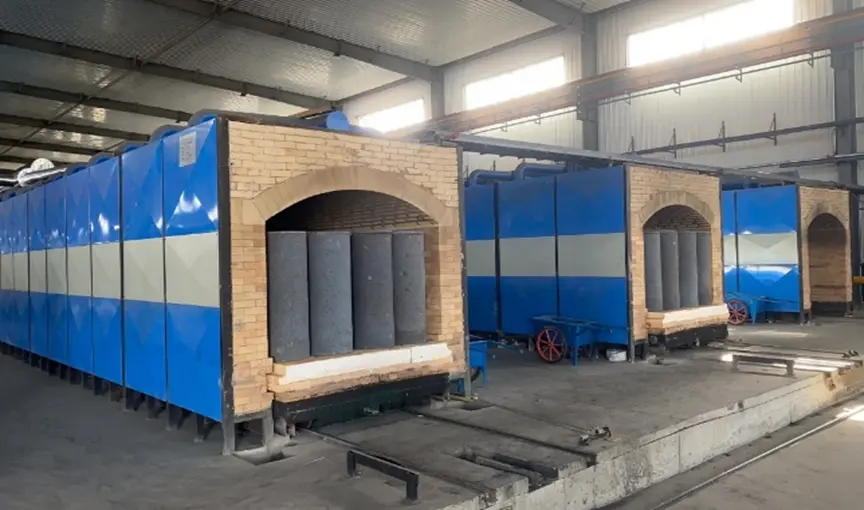
Kiln chamber
If 70% or more of the kiln chamber is damaged or if more than 50% of the vault is loose, it is best to remove all the bricks and rebuild them. Fewer can be partially repaired. Partial repair should first remove the loose bricks, for broken bricks should still be embedded in the wall half of the brick all hollowed out, blowing clean floating ash. Mud should be mixed with calcium chloride, magnesium chloride and iron and steel slag composite refractory mud, mud particle size should be less than 1mm medium consistency, mixed with the use. Repair, the original masonry to be repaired surface and repair bricks are not allowed to get wet, the first to be repaired and will be used for masonry brick are smeared with a layer of the above slurry, and then the brick kneaded and squeezed up, so that each other to ensure that the grey joints are more than 95% fullness, grey joints less than 5mm. for the hollowing out of the part of the brick half, it should also be in the brick holes and bricks smeared with slurry, only to rub the bricks in place side stuffing.
If 70% or more of the kiln chamber is damaged or if more than 50% of the vault is loose, it is best to remove all the bricks and rebuild them. Fewer can be partially repaired. Partial repair should first remove the loose bricks, for broken bricks should still be embedded in the wall half of the brick all hollowed out, blowing clean floating ash. Mud should be mixed with calcium chloride, magnesium chloride and iron and steel slag composite refractory mud, mud particle size should be less than 1mm medium consistency, mixed with the use. Repair, the original masonry to be repaired surface and repair bricks are not allowed to get wet, the first to be repaired and will be used for masonry brick are smeared with a layer of the above slurry, and then the brick kneaded and squeezed up, so that each other to ensure that the grey joints are more than 95% fullness, grey joints less than 5mm. for the hollowing out of the part of the brick half, it should also be in the brick holes and bricks smeared with slurry, only to rub the bricks in place side stuffing.
Kiln wall
For the kiln wall, each repair area should not be greater than 2 square metres, the arch should not be greater than 1.5 square metres, in order to protect the safety of the damaged surface is too large, can be divided into 2 times to repair, the joint of the two repair should be rubbing mouth. If only the kiln chamber wall in contact with the flame part of the serious damage, and the big arch of the secondary arch intact, and basically no deformation, you can not have to dig up the kiln roof, but directly from the kiln chamber for repair, to ensure safety, should be carried out in stages. Each time along the kiln room longitudinal demolition of 1.2 ~ 1.5m wide one, from both sides of the foot of the brick one by one ‘sticky’ up, each brick should be on top of not demolished vice arch, and each other staggered seams, the last lock arch brick should be wooden hammer into, in case of locking the arch of the brick location does not meet the size of a brick, not allowed to cut the bricks, can only be used with the cutter to cut a whole brick embedded in In. If the kiln room is completely dismantled for overhaul, the relevant dimensions of the original kiln should be measured first, recorded, and then constructed according to the procedure. During construction, firstly, the foundation elevation should be checked, tolerance +5 (-10) mm. the refractory materials used should meet the quality requirements, no moisture, should be classified and stored, and anti-freezing. The refractoriness, consistency and chemical composition of the mud should be compatible with the refractory products used, the particle size of the mud material should be less than 1mm. ordinary sintered bricks, should be selected above the first grade of bricks, and should give priority to gangue bricks, the second for the shale bricks, it is best not to use clay bricks. Grey seam must be full, straight wall grey seam should be less than 5mm, arch should be less than 3mm, refractory brick grey seam should be less than 2mm. along the longitudinal kiln room must be left with expansion joints, expansion joints for ordinary sintered brick masonry width for every 1m long masonry to stay 5 ~ 6mm, for high alumina brick 7 ~ 8mm. expansion joints should be located to avoid the kiln door and the hafengkou. Expansion joints should be even and straight, clean, in order to fill the flexible refractory materials, such as aluminium silicate fibre, the expansion joints of the inner and outer layers should be staggered, not through.
For the kiln wall, each repair area should not be greater than 2 square metres, the arch should not be greater than 1.5 square metres, in order to protect the safety of the damaged surface is too large, can be divided into 2 times to repair, the joint of the two repair should be rubbing mouth. If only the kiln chamber wall in contact with the flame part of the serious damage, and the big arch of the secondary arch intact, and basically no deformation, you can not have to dig up the kiln roof, but directly from the kiln chamber for repair, to ensure safety, should be carried out in stages. Each time along the kiln room longitudinal demolition of 1.2 ~ 1.5m wide one, from both sides of the foot of the brick one by one ‘sticky’ up, each brick should be on top of not demolished vice arch, and each other staggered seams, the last lock arch brick should be wooden hammer into, in case of locking the arch of the brick location does not meet the size of a brick, not allowed to cut the bricks, can only be used with the cutter to cut a whole brick embedded in In. If the kiln room is completely dismantled for overhaul, the relevant dimensions of the original kiln should be measured first, recorded, and then constructed according to the procedure. During construction, firstly, the foundation elevation should be checked, tolerance +5 (-10) mm. the refractory materials used should meet the quality requirements, no moisture, should be classified and stored, and anti-freezing. The refractoriness, consistency and chemical composition of the mud should be compatible with the refractory products used, the particle size of the mud material should be less than 1mm. ordinary sintered bricks, should be selected above the first grade of bricks, and should give priority to gangue bricks, the second for the shale bricks, it is best not to use clay bricks. Grey seam must be full, straight wall grey seam should be less than 5mm, arch should be less than 3mm, refractory brick grey seam should be less than 2mm. along the longitudinal kiln room must be left with expansion joints, expansion joints for ordinary sintered brick masonry width for every 1m long masonry to stay 5 ~ 6mm, for high alumina brick 7 ~ 8mm. expansion joints should be located to avoid the kiln door and the hafengkou. Expansion joints should be even and straight, clean, in order to fill the flexible refractory materials, such as aluminium silicate fibre, the expansion joints of the inner and outer layers should be staggered, not through.
Straight wall
When laying straight wall, it should set up ‘skin number pole’, pull the line horizontally, and the fullness of grey joints is more than 95%, and it should be constructed at the same time with the air duct. The surface of the straight wall under the arched brick should be levelled according to the design elevation, and the surface should be flat and the arched feet on both sides should be aligned with the centre line of the kiln, and the size should be accurate.
When laying straight wall, it should set up ‘skin number pole’, pull the line horizontally, and the fullness of grey joints is more than 95%, and it should be constructed at the same time with the air duct. The surface of the straight wall under the arched brick should be levelled according to the design elevation, and the surface should be flat and the arched feet on both sides should be aligned with the centre line of the kiln, and the size should be accurate.
Vault
When laying the arch top, the first thing to do is to make a good arch tyre, the size of the arch tyre should be in line with the design of the kiln, the tyre surface is smooth, and the supporting arch tyre should be accurately positioned and firmly, and the arch can only be laid after passing the inspection. Masonry arch bricks should be placed on the arch according to the design of the line on the tyre, to find out the eye of the fire and other reserved position, so as to avoid mistakes. The arch built with shaped bricks should be pre-arranged first and numbered on the bricks, and the bricks should be laid in order. When the two arches intersect, it is appropriate to record the ring masonry (such as the kiln door and the big arch joints) should be laid from both ends of the arch foot, at the same time, symmetrical to the middle of the bricklaying, arch bricks radial brick joints, the radius of the arch should be coincidental to the direction of the radius of the arch. Locking bricks should be symmetrically distributed according to the centre line of the arch, when the span of the arch is less than 3mm, with a locking brick, the span is greater than 3m, with three locking bricks, greater than 6m with five locking bricks. The depth of the locking brick into the arch should be 2/3 to 3/4 of the length of the brick, and the depth of the locking brick into the same arch ring layer should be the same. Punching into the lock brick, must use a wooden hammer, with hammer should be padded with wooden blocks, when more than one lock brick, both sides of the symmetry of the lock brick should be punched in evenly at the same time. The centre of the locking brick can be cut if the size does not fit, but no chopping of the brick is allowed. Braced wall should be bitten with straight wall and constructed at the same time. The eye of fire should be vertical with accurate position and can be cast in place with heat-resistant concrete. Backfill should be dry fine soil, particle size not more than 3mm, every fill 200mm thick tamping once, both sides of the arch should be symmetrical backfill tamping at the same time. Hafeng gate and gate seat of the bonding surface should be cut and processed, the gate should be up and down flexibly, correctly closed.
When laying the arch top, the first thing to do is to make a good arch tyre, the size of the arch tyre should be in line with the design of the kiln, the tyre surface is smooth, and the supporting arch tyre should be accurately positioned and firmly, and the arch can only be laid after passing the inspection. Masonry arch bricks should be placed on the arch according to the design of the line on the tyre, to find out the eye of the fire and other reserved position, so as to avoid mistakes. The arch built with shaped bricks should be pre-arranged first and numbered on the bricks, and the bricks should be laid in order. When the two arches intersect, it is appropriate to record the ring masonry (such as the kiln door and the big arch joints) should be laid from both ends of the arch foot, at the same time, symmetrical to the middle of the bricklaying, arch bricks radial brick joints, the radius of the arch should be coincidental to the direction of the radius of the arch. Locking bricks should be symmetrically distributed according to the centre line of the arch, when the span of the arch is less than 3mm, with a locking brick, the span is greater than 3m, with three locking bricks, greater than 6m with five locking bricks. The depth of the locking brick into the arch should be 2/3 to 3/4 of the length of the brick, and the depth of the locking brick into the same arch ring layer should be the same. Punching into the lock brick, must use a wooden hammer, with hammer should be padded with wooden blocks, when more than one lock brick, both sides of the symmetry of the lock brick should be punched in evenly at the same time. The centre of the locking brick can be cut if the size does not fit, but no chopping of the brick is allowed. Braced wall should be bitten with straight wall and constructed at the same time. The eye of fire should be vertical with accurate position and can be cast in place with heat-resistant concrete. Backfill should be dry fine soil, particle size not more than 3mm, every fill 200mm thick tamping once, both sides of the arch should be symmetrical backfill tamping at the same time. Hafeng gate and gate seat of the bonding surface should be cut and processed, the gate should be up and down flexibly, correctly closed.
Track
Adjust the track, and take the centre line of the track as the standard, and repair the sand sealing ditch such as the straight wall of the kiln chamber. Adjustment of the track should follow the following provisions: 1, the installation of the track of the strength of the concrete has not reached 70% shall not be constructed. 2, the centre line of the track and the centre line of the tunnel kiln and the level of the rail deviation tolerance ± 1.00mm. 3, rail joint clearance deviation +2.00 (-0.00) mm. 4, rail joints are allowed to allow the height of the difference between the +0.5 (-0) mm, only allowed to the direction of kiln. The relevant dimensions of the kiln chamber during construction should be based on the centre line of the rail and the axial surface elevation.
Adjust the track, and take the centre line of the track as the standard, and repair the sand sealing ditch such as the straight wall of the kiln chamber. Adjustment of the track should follow the following provisions: 1, the installation of the track of the strength of the concrete has not reached 70% shall not be constructed. 2, the centre line of the track and the centre line of the tunnel kiln and the level of the rail deviation tolerance ± 1.00mm. 3, rail joint clearance deviation +2.00 (-0.00) mm. 4, rail joints are allowed to allow the height of the difference between the +0.5 (-0) mm, only allowed to the direction of kiln. The relevant dimensions of the kiln chamber during construction should be based on the centre line of the rail and the axial surface elevation.
Reminder: The kiln must be baked before production after an overhaul.
Five benefits of setting kiln doors in tunnel kilns
How can you easily achieve the tunnel kiln reducing atmosphere firing brick
Related Article

Refractory materials are the main building materials of glass melting furnaces, and they have a decisive impact on the quality of glass, energy consumption and even product costs. The development of glass melting technology largely depends on the advancement of refractory material manufacturing technology and the improvement of quality.
Selection of kiln type structure and lining refractory materials for glass melting furnaces

The cover of the electric furnace is a spherical structure with electrode holes and smoke exhaust holes. The outer ring part is called the main furnace cover, and the middle part is called the small furnace cover (also known as the triangular area). When loading materials, the furnace cover can be moved away.
Factors affecting the service life of refractory materials used for electric furnace covers

Overburning and lumping are common phenomena in the lime production process. They not only affect product quality but, in severe cases, can have a fatal impact on the production process, refractory materials of the kiln body and other equipment. This article analyzes the causes of overburning and tumor formation, general treatment methods for tumor formation, and preventive measures, effectively avoiding the occurrence of tumor formation.
Common causes of lumps in lime kilns and their solutions

A kiln is a space capable of generating high temperatures, and the materials that make up this space are called kiln construction materials. The construction materials should include two major categories: refractory materials and thermal insulation materials (or heat insulation materials). In addition, to enhance the structural strength of the kiln body, the materials used for furnace construction should also include common building materials (such as ash bricks, etc.) and metal materials, etc.
Don't know how to build a kiln or furnace? This article is enough