
Six basic materials that are commonly used as raw materials for refractory materials and thermal insulation materials
author: Archie
2025-03-27
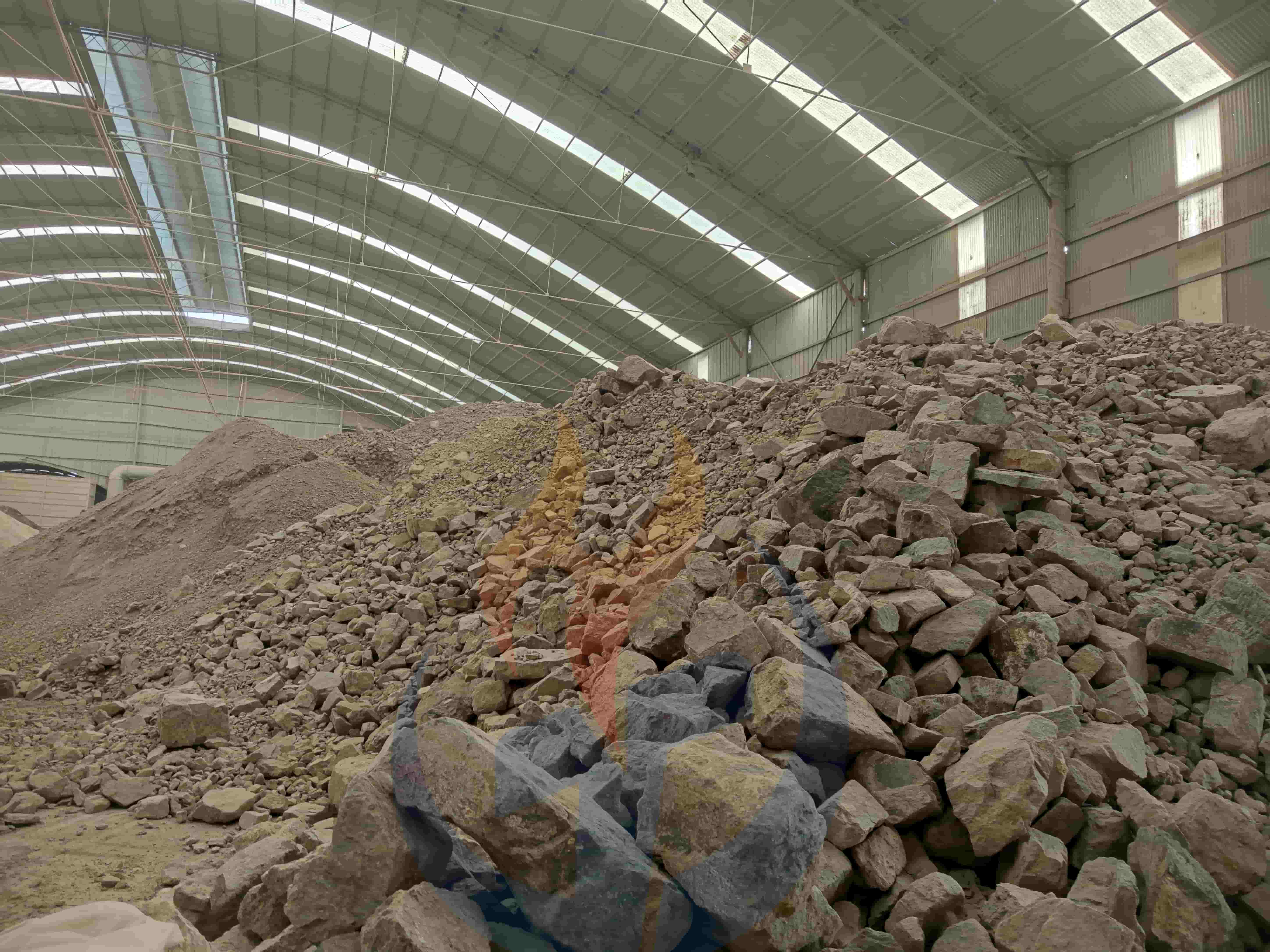
Refractory raw materials are usually divided into aluminium-silicon refractory materials (silica, clay, high alumina, etc.), alkaline refractory materials, heat-insulating refractory materials and other refractory materials.
1.Silicon raw materials
Due to the volume effect of quartz variants, silica bricks are also made directly from silica, which is a collective term for vein quartz, quartzite, flint and sandstone. The main component in silica is SiO2, and all others are impurity components. Silica raw materials for refractory materials have two categories: crystalline crushed stone and cemented silica.
2.Clayey raw materials
Refractory clay is the main raw material for the production of aluminosilicate refractory materials, and its refractoriness is required to be higher than 1580 ° C. A variety of hard clay, soft (semi-soft) clay and clay shale, collectively known as refractory clay. Natural refractory clay, usually clay minerals are mainly kaolinite (Al2O3 - 2SiO2 - 2H2O) as its main component, that is, the main body of hydrous silicate, and mixed with free quartz, pyrrhotite, rutile, and organic compositions of the mixture. This is not a single mineral, and most of the dispersion consists of particles with a diameter of less than 1.2 μm.
3.High aluminium raw material
(1) Bauxite
Bauxite is the main raw material for the production of brown corundum, high alumina clinker with Al2O3 content of 88% ~ 90% is the main raw material for white corundum; production of white corundum, dense corundum and so on with alumina as raw material. Bauxite is also known as high alumina bauxite or bauxite, the main minerals are hydrotalcite (Al2O3 - H2O) and trihydrate alumina (Al2O3 - 3H2O).
Bauxite is the main raw material for the production of brown corundum, high alumina clinker with Al2O3 content of 88% ~ 90% is the main raw material for white corundum; production of white corundum, dense corundum and so on with alumina as raw material. Bauxite is also known as high alumina bauxite or bauxite, the main minerals are hydrotalcite (Al2O3 - H2O) and trihydrate alumina (Al2O3 - 3H2O).
(2) Sintered corundum and electrofused corundum
Artificial production of corundum is the use of industrial alumina or high alumina bauxite as the main raw material, fused in an electric arc furnace. In addition, can also be used to sinter corundum plate alumina. This method is still to industrial alumina powder as the main raw material, by calcining, fine grinding, ball and sintering system. This method is technically difficult to produce, but the product has high strength, strong erosion resistance and good thermal shock stability. The so-called ‘sub-white corundum’ is actually a high alumina bauxite-based dense fused corundum, with an Al2O3 content of more than 98% and an apparent porosity of less than 4%; it is made from high alumina bauxite by electrofusion in a reducing atmosphere and under controlled conditions. Corundum crystals are granular, generally 1 ~ 15mm; the main impurities are rutile, aluminium titanate and its solid solution.
Artificial production of corundum is the use of industrial alumina or high alumina bauxite as the main raw material, fused in an electric arc furnace. In addition, can also be used to sinter corundum plate alumina. This method is still to industrial alumina powder as the main raw material, by calcining, fine grinding, ball and sintering system. This method is technically difficult to produce, but the product has high strength, strong erosion resistance and good thermal shock stability. The so-called ‘sub-white corundum’ is actually a high alumina bauxite-based dense fused corundum, with an Al2O3 content of more than 98% and an apparent porosity of less than 4%; it is made from high alumina bauxite by electrofusion in a reducing atmosphere and under controlled conditions. Corundum crystals are granular, generally 1 ~ 15mm; the main impurities are rutile, aluminium titanate and its solid solution.
(3)Mullite
Mullite is a refractory raw material with 3Al2O3-2SiO2 crystalline phase as the main component. Mullite is divided into natural mullite and synthetic mullite two categories. Natural mullite is rare, generally synthetic. Mullite is chemically stable, insoluble in hydrofluoric acid. It has good high-temperature mechanical and high-temperature thermal properties, so synthetic mullite and its products have the advantages of higher density and purity, high-temperature structural strength, low high-temperature creep rate, low thermal expansion, strong resistance to chemical erosion, resistance to thermal shock and so on.
Mullite is a refractory raw material with 3Al2O3-2SiO2 crystalline phase as the main component. Mullite is divided into natural mullite and synthetic mullite two categories. Natural mullite is rare, generally synthetic. Mullite is chemically stable, insoluble in hydrofluoric acid. It has good high-temperature mechanical and high-temperature thermal properties, so synthetic mullite and its products have the advantages of higher density and purity, high-temperature structural strength, low high-temperature creep rate, low thermal expansion, strong resistance to chemical erosion, resistance to thermal shock and so on.
(4) Silica minerals
Siliciclase minerals include blueschist, rhodochrosite, and sillimanite, commonly known as the ‘three stones’. The chemical composition of the three stones is the same, but the crystal structure is different, is a homogeneous heterocrystal. When heated to high temperatures, they are transformed into mullite, generating a small amount of molten SiO2, accompanied by volume expansion.
Siliciclase minerals include blueschist, rhodochrosite, and sillimanite, commonly known as the ‘three stones’. The chemical composition of the three stones is the same, but the crystal structure is different, is a homogeneous heterocrystal. When heated to high temperatures, they are transformed into mullite, generating a small amount of molten SiO2, accompanied by volume expansion.
4.Basic refractory raw materials
4.1 Magnesium raw materials
(1) Magnesite
There are two main types of magnesite: crystalline magnesite and amorphous magnesite.
(2) Other magnesium-bearing minerals
Magnesia olivine products in magnesia refractories, its main mineral composition is magnesia olivine (2MgO-SiO2) and magnesite (MgO). This product is characterised by strong resistance to molten iron oxide, thermal shock stability is better than ordinary magnesium bricks. The main raw materials for the production of such products are olivine and serpentine.
4.2 Dolomitic raw materials
Dolomite is a refractory raw material with the complex salt of magnesium carbonate (MgCO3) and calcium carbonate (CaCO3) as the main ingredient, its chemical formula is CaMg(CO3)2 or MgCO3 - CaCO3, and its theoretical composition is CaO3 0.41%, MgO2 1.87%, and CO2 47.72%. CaO/MgO = 1.39, The hardness is 3.5~4.
5.Raw materials for zirconium products
(1)Zircon
Zircon (ZrO2-SiO2 or ZrSiO4) is the main raw material for the production of zirconium products and zircon products. The theoretical composition of zircon is ZrO2 67. 01%, SiO2 32. 99%. It often contains TiCfe and other traces of rare earth oxides, and the presence of these elements makes it radioactive to varying degrees. Therefore, the necessary protective measures should be taken when using this raw material for the production of products.
Zircon (ZrO2-SiO2 or ZrSiO4) is the main raw material for the production of zirconium products and zircon products. The theoretical composition of zircon is ZrO2 67. 01%, SiO2 32. 99%. It often contains TiCfe and other traces of rare earth oxides, and the presence of these elements makes it radioactive to varying degrees. Therefore, the necessary protective measures should be taken when using this raw material for the production of products.
(2)Plagioclase zircon
Natural plagioclase zircon (ZrO2) is often irregularly massive, black, brown, yellow or colourless. ZrO2 used in industry, is a chemical raw material, is made from zircon (ZrO2-SiO2) using chemical methods to produce a white or yellowish powder.
Pure ZrO2 has three crystal types at atmospheric pressure: monoclinic, tetragonal and cubic from low to high temperatures. Stable ZrO2, according to its different degree of stability, there are partially stable ZrO2 and fully stable ZrO2, due to the thermal expansion coefficient of fully stable ZrO2 is larger, its thermal shock stability is not as good as partially stabilised, so the latter is often used to do ceramics and refractory toughening materials.
Natural plagioclase zircon (ZrO2) is often irregularly massive, black, brown, yellow or colourless. ZrO2 used in industry, is a chemical raw material, is made from zircon (ZrO2-SiO2) using chemical methods to produce a white or yellowish powder.
Pure ZrO2 has three crystal types at atmospheric pressure: monoclinic, tetragonal and cubic from low to high temperatures. Stable ZrO2, according to its different degree of stability, there are partially stable ZrO2 and fully stable ZrO2, due to the thermal expansion coefficient of fully stable ZrO2 is larger, its thermal shock stability is not as good as partially stabilised, so the latter is often used to do ceramics and refractory toughening materials.
(3) Desiliconised zirconium
In the manufacture of fused zirconium corundum (AZS) refractories, in addition to the use of zircon concentrates, most of them add a certain amount of ‘desiliconised zirconium’ raw materials, the purpose of which is to adjust and stabilise the formula and improve and optimise the product performance.
In the manufacture of fused zirconium corundum (AZS) refractories, in addition to the use of zircon concentrates, most of them add a certain amount of ‘desiliconised zirconium’ raw materials, the purpose of which is to adjust and stabilise the formula and improve and optimise the product performance.
(4) Zircon corundum mullite
The raw materials are industrial alumina, kaolin and zircon, which are finely ground and blended together, ballasted semi-dry and calcined at 300 to 1700°C to produce this material. It has been shown that increasing the zircon content leads to higher sintering temperatures, less total shrinkage, and more closed pores, and that these reactions result in higher density and strength of sintered zirconocorundum mullite, as well as better thermal shock stability.
The raw materials are industrial alumina, kaolin and zircon, which are finely ground and blended together, ballasted semi-dry and calcined at 300 to 1700°C to produce this material. It has been shown that increasing the zircon content leads to higher sintering temperatures, less total shrinkage, and more closed pores, and that these reactions result in higher density and strength of sintered zirconocorundum mullite, as well as better thermal shock stability.
6.Raw materials for chrome products
One of the main raw materials for the production of chrome (chrome bricks, chrome-magnesium bricks, magnesium-chrome bricks) refractories is chrome ore or chromite. Chromite is a mixture of several minerals, which fluctuates in mineral composition and varies greatly in chemical composition and physical properties. It usually consists of chrome-grained vein minerals. These vein minerals are usually magnesian silicates such as serpentine, magnesian olivine and olivine. In addition to Cr2O3, Al2O3, Fe2O3 and MgO are also present in chromite, which is usually expressed as (Mg, Fe) Cr2O3 due to the presence of magnesium and iron.
The above are commonly used refractory raw materials, with the refractory technology, the variety of raw materials is also more varied, especially in recent years, because of environmental issues and a series of reasons, such as raw mineral resources, and constantly developed better performance of synthetic materials and more environmentally friendly renewable raw materials (such as iron silica nitride, Cylon, etc.).
The influence of curing temperature on the medium-temperature performance of corundum castable
Effect of graphite type on the properties of aluminium-magnesium refractory castables
Related Article
Why smart engineers look at total cost of ownership, not just unit price, when selecting monolithic refractory materials
Beyond the Price Tag: The Hidden Costs of Choosing the Wrong Unshaped Refractory

The service life of high-strength castables is usually 6 months, and that of alkali-resistant castables is 12 months. If the castable is found to be agglomerated, it should be discarded and no longer used normally. It can be downgraded, or the proportions can be modified appropriately, or the aggregate can be stored and the powder discarded.
How to construct refractory castables that have been stored for a long time
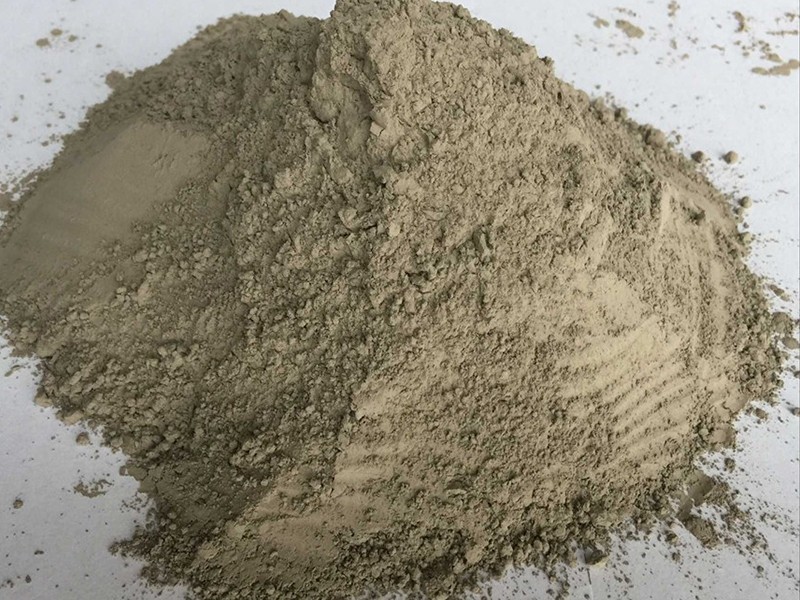
Henan Xintai Refractory Materials Co., Ltd. manufactures monolithic refractory materials that are constructed using ramming (manual or mechanical) and hardened by heating above room temperature. These materials are composed of graded refractory aggregate, powder, binder, and admixtures, mixed with water or other liquids. Ramming materials include high-alumina, clay, magnesia, dolomite, and zirconium.
Composition and properties of ramming material for glass kiln

There are many factors that affect the rheological properties of castable materials, such as the limit size, shape, distribution and water absorption rate of particles; the properties and dosage of binders and dispersants, the amount of water added, and the mixing and stirring process, etc. However, the most significant influences are the bonding system, particle size distribution and the properties and dosage of dispersants.
Five main factors affecting the rheological properties of refractory castables