
Beyond the Price Tag: The Hidden Costs of Choosing the Wrong Unshaped Refractory
author: XINTAI
2025-09-23
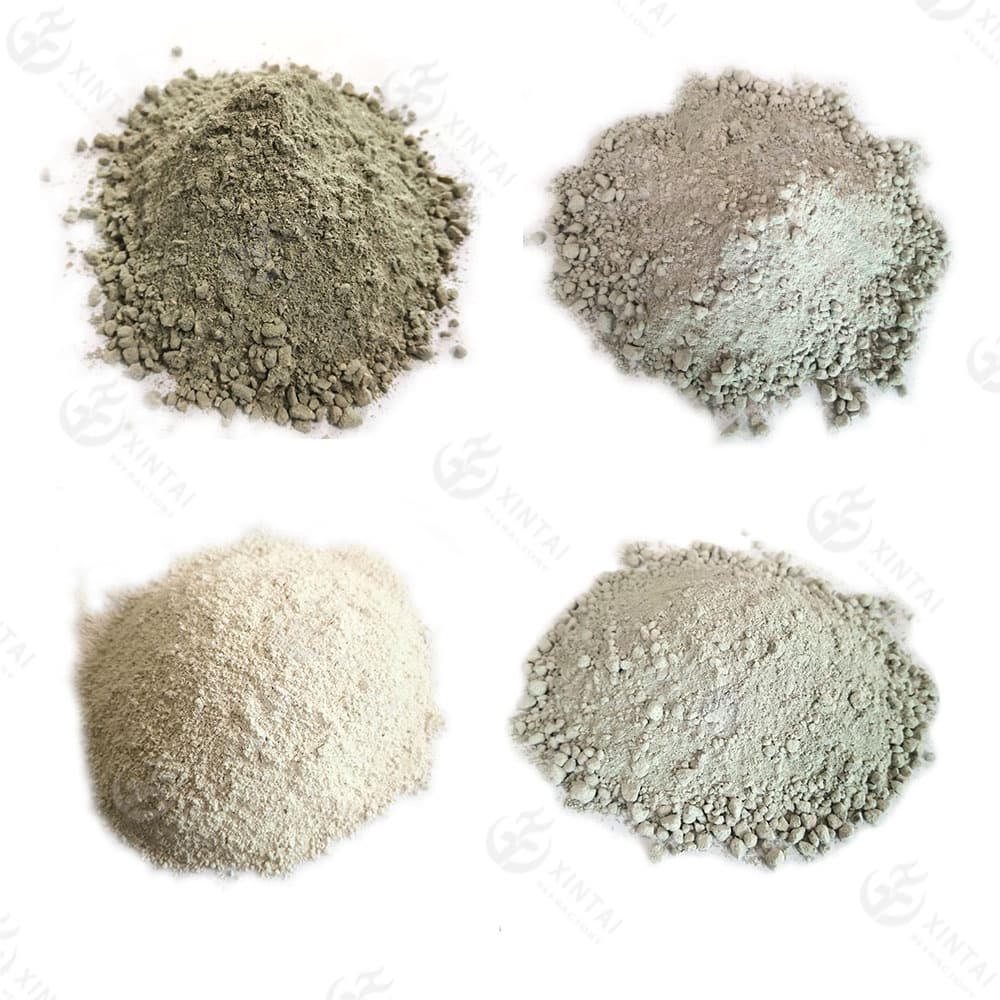
The Price Trap: When "Savings" Become Expensive Mistakes
In the high-stakes world of high-temperature industrial operations, one decision can mean the difference between years of reliable performance and catastrophic failure. Yet too many procurement decisions are still made based on one factor alone: price per ton.
At first glance, choosing the cheapest unshaped refractory material seems like smart economics. But experienced engineers know better. They've learned—often the hard way—that the initial purchase price represents only 10-15% of the total cost of ownership. The real costs lie hidden in performance, maintenance, and lost production.
Today, we're revealing the critical factors that separate smart refractory selections from expensive mistakes that can cost millions in unexpected downtime and repairs.
The Total Cost Equation: What You're Really Paying For
Factor #1: Service Life – The Multiplier Effect
The Reality Check: A refractory that lasts 3 years instead of 18 months doesn't just save replacement costs—it multiplies your ROI exponentially.
Real-World Example:
-
Cheap castable: $800/ton, 18-month life
-
Premium castable: $1,200/ton, 36-month life
-
Real savings: $400/ton over 3 years = 33% cost reduction
What to Evaluate:
-
Historical performance data in similar applications
-
Chemical compatibility with your process environment
-
Thermal shock resistance under your operating conditions
-
Mechanical strength requirements
Factor #2: Installation Speed – Time is Money
The Hidden Cost: Every hour your furnace is down costs $50,000-200,000 in lost production. Fast installation isn't convenient—it's critical.
Installation Time Comparison:
| Material Type | Installation Method | Time per m³ | Labor Cost |
|---|---|---|---|
| Traditional bricks | Manual laying | 8-12 hours | $800-1,200 |
| Castable refractory | Pouring/vibration | 2-3 hours | $200-300 |
| Gunning mix | Mechanical spraying | 1-2 hours | $150-250 |
| Self-flowing castable | Gravity flow | 1 hour | $100-150 |
The X-Factor: Self-flowing castables can reduce installation time by 80% compared to traditional brick laying.
The Technical Deep Dive: What Separates Good from Great
Factor #3: Thermal Performance – The Energy Equation
Beyond Insulation: The right unshaped refractory doesn't just withstand heat—it manages it intelligently.
Key Performance Indicators:
-
Thermal conductivity: Lower = better insulation (0.5-2.5 W/m·K typical range)
-
Heat capacity: Affects thermal cycling efficiency
-
Thermal shock resistance: Critical for temperature cycling applications
Case Study: A European steel plant switched to high-alumina low-cement castable with 15% better insulation properties. Result: $180,000 annual energy savings and 8% faster heat-up times.
Factor #4: Chemical Resistance – The Corrosion Battle
The Chemical Reality: Your refractory is at war with its environment every minute of every day.
Common Chemical Attack Mechanisms:
-
Alkali attack: Particularly severe in cement and glass industries
-
Acid corrosion: Common in chemical processing and waste incineration
-
Slag penetration: Critical in metallurgical applications
-
CO disintegration: Specific to carbon-rich atmospheres
Smart Selection Strategy: Match your refractory chemistry to your process environment:
-
Alkaline conditions: Magnesia-based materials
-
Acidic environments: Silica-rich compositions
-
Neutral/variable: High-alumina or chrome-alumina systems
Factor #5: Mechanical Properties – Strength Under Fire
The Stress Test: Your refractory must withstand mechanical loads, thermal expansion, and process vibrations simultaneously.
Critical Properties to Evaluate:
-
Cold crushing strength: >30 MPa for high-stress zones
-
Hot modulus of rupture: Strength retention at operating temperature
-
Abrasion resistance: <15 cm³ loss for severe wear applications
-
Creep resistance: Long-term deformation under load
The Practical Application Guide
Understanding Unshaped Refractory Categories
1. Castable Refractories – The Versatile Performers
-
Best for: Complex shapes, large areas, quick installation
-
Key advantage: Seamless monolithic construction
-
Application tip: Use vibration for dense castables, self-flowing for complex geometries
2. Plastic Refractories – The Problem Solvers
-
Best for: Repairs, irregular shapes, difficult access areas
-
Key advantage: Excellent workability and adhesion
-
Application tip: Proper ramming density critical for performance
3. Gunning Mixes – The Speed Demons
-
Best for: Maintenance repairs, quick installations
-
Key advantage: Minimal downtime, excellent adhesion
-
Application tip: Control moisture content for optimal adhesion
4. Ramming Materials – The Dense Defenders
-
Best for: High-wear areas, precise shapes
-
Key advantage: Maximum density and strength
-
Application tip: Layer-by-layer compaction essential
5. Spray Coatings – The Protective Shields
-
Best for: Surface protection, gas tightness
-
Key advantage: Thin, uniform protective layer
-
Application tip: Surface preparation critical for adhesion
The Maintenance Factor: Planning for the Inevitable
Factor #6: Repair Speed – Minimizing Downtime
The Reality: Even the best refractories will eventually need maintenance. Smart selection makes repairs fast and cost-effective.
Maintenance-Friendly Features:
-
Patch compatibility: Can new material bond to old?
-
Curing requirements: Room temperature vs. special heating
-
Application methods: Can repairs be done without complete shutdown?
-
Material availability: Standard vs. special-order materials
Pro Tip: Choose materials that can be repaired using the same installation method. This reduces training requirements and ensures consistent quality.
The Selection Framework: Making Smart Decisions
Step 1: Define Your Operating Environment
-
Temperature range: Maximum continuous, peak, cycling rates
-
Chemical environment: Gases, liquids, solids present
-
Mechanical stresses: Load, vibration, abrasion
-
Thermal cycling: Frequency, rate of change
Step 2: Establish Performance Requirements
-
Target service life: Based on maintenance schedules
-
Installation constraints: Time, access, equipment available
-
Performance priorities: Insulation, strength, corrosion resistance
-
Budget parameters: Total cost, not just material price
Step 3: Evaluate Material Options
-
Technical specifications: Match properties to requirements
-
Case studies: Performance in similar applications
-
Supplier capabilities: Technical support, consistency, delivery
-
Total cost analysis: Include installation, maintenance, replacement
Step 4: Validate Your Selection
-
Pilot testing: Small-scale trial if possible
-
Supplier references: Contact users in similar applications
-
Risk assessment: Consider consequences of premature failure
-
Performance monitoring: Establish metrics for success
The ROI Reality: When Premium Pays for Itself
Total Cost of Ownership Example
Scenario: 100m³ furnace lining, 3-year comparison
Option A: Budget Castable
-
Material cost: $80,000
-
Installation cost: $40,000
-
Service life: 18 months
-
Downtime cost: $300,000
-
3-year total: $840,000
Option B: Premium Castable
-
Material cost: $120,000
-
Installation cost: $40,000
-
Service life: 36 months
-
Downtime cost: $150,000
-
3-year total: $310,000
The Winner: Premium option saves $530,000 over 3 years!
Future-Proofing Your Investment
Emerging Technologies to Consider
-
Nano-enhanced formulations: 30% improved performance
-
Smart monitoring systems: Embedded sensors for condition tracking
-
Self-healing materials: Autonomous crack repair capabilities
-
3D printing compatibility: Complex geometries without molds
Sustainability Factors
-
Energy efficiency: Lower thermal conductivity reduces fuel consumption
-
Installation efficiency: Reduced waste and faster application
-
Service life extension: Fewer replacements mean less material waste
-
Recyclability: End-of-life material recovery options
Your Action Plan: From Analysis to Implementation
Immediate Steps
-
Audit current performance: Document failure modes and costs
-
Define requirements: Establish technical specifications
-
Consult experts: Leverage supplier technical knowledge
-
Calculate TCO: Include all cost factors, not just material price
-
Plan implementation: Consider timing, training, and validation
Long-term Strategy
-
Performance tracking: Monitor key metrics over time
-
Continuous improvement: Regularly evaluate new technologies
-
Supplier partnerships: Build relationships for ongoing support
-
Knowledge building: Stay current with industry developments
The Bottom Line: Invest in Performance, Not Just Price
Smart refractory selection isn't about finding the cheapest option—it's about finding the best value solution for your specific application. By considering service life, installation speed, thermal performance, chemical resistance, and maintenance requirements, you can make decisions that deliver real competitive advantages.
Remember: The cheapest refractory that fails prematurely is infinitely more expensive than the premium material that performs flawlessly for years.
Ready to optimize your refractory selection? Contact our technical team for a comprehensive analysis of your application requirements and total cost of ownership calculations.
Don't let price-driven decisions cost you millions in hidden expenses. Choose smart, choose performance, choose long-term success.
Key Takeaway: In the world of unshaped refractories, the sticker price tells only a small part of the story. Smart engineers evaluate the complete performance picture—from installation through disposal—to make decisions that deliver maximum value over the entire service life.
How to construct refractory castables that have been stored for a long time
Related Article

The service life of high-strength castables is usually 6 months, and that of alkali-resistant castables is 12 months. If the castable is found to be agglomerated, it should be discarded and no longer used normally. It can be downgraded, or the proportions can be modified appropriately, or the aggregate can be stored and the powder discarded.
How to construct refractory castables that have been stored for a long time
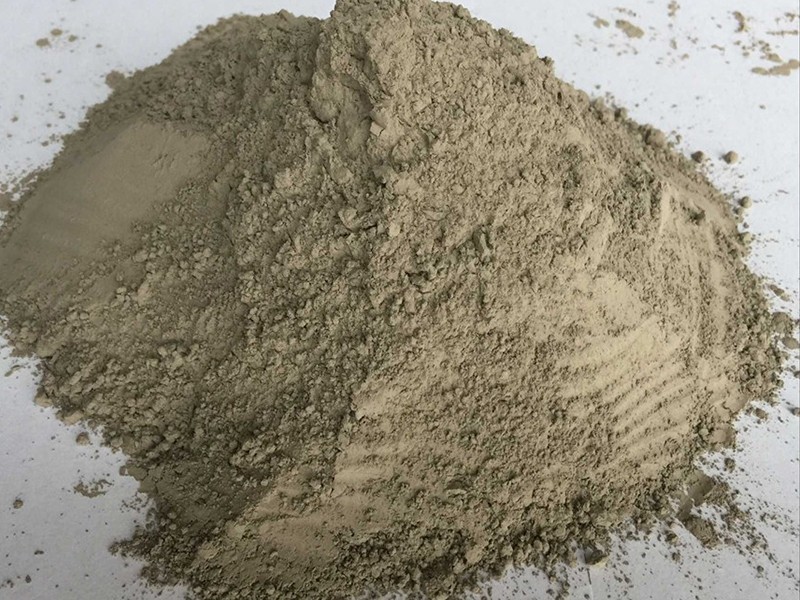
Henan Xintai Refractory Materials Co., Ltd. manufactures monolithic refractory materials that are constructed using ramming (manual or mechanical) and hardened by heating above room temperature. These materials are composed of graded refractory aggregate, powder, binder, and admixtures, mixed with water or other liquids. Ramming materials include high-alumina, clay, magnesia, dolomite, and zirconium.
Composition and properties of ramming material for glass kiln

There are many factors that affect the rheological properties of castable materials, such as the limit size, shape, distribution and water absorption rate of particles; the properties and dosage of binders and dispersants, the amount of water added, and the mixing and stirring process, etc. However, the most significant influences are the bonding system, particle size distribution and the properties and dosage of dispersants.
Five main factors affecting the rheological properties of refractory castables

Admixtures are substances that, when added in appropriate amounts to the batching of refractory materials, can improve the physical properties, formability or construction performance, and service performance of refractory materials. They are also known as additives.
Common admixtures for unshaped refractory materials