
Effect of graphite type on the properties of aluminium-magnesium refractory castables
author: Archie
2025-03-20
To solve this problem, researchers prepared carbide-coated graphite by the molten salt method to improve the water-wettability of graphite. In this paper, SiC@C powder was prepared by improving the molten salt isolation method using graphite and Si powder as raw materials, and heat-treated at 1350°C for 3h under air atmosphere, and then the flake graphite and the synthesised SiC@C were introduced into Al₂O₃-MgO castables respectively, and sintered at 1100 and 1600°C for 3h under the condition of submerged carbon, respectively. The effects of no graphite, added squamous graphite and added SiC@C on the water addition, room temperature and high temperature properties of Al₂O₃-MgO castables were compared, which are expected to provide a reference for the research and development of high-performance carbon-containing castables.
TESTIMONIALS
1.1 Raw materials
The main raw materials used in the test are: plate corundum particles, particle size 6~3, 3~1, ≤1 mm; white corundum powder, particle size <0.044 mm; electrofused magnesium sand powder, particle size <0.074 mm; alumina micropowder, d₅₀=2.2 μm; SiO₂ micropowder, w(SiO₂)=95%,particle size<1 μm; pure calcium aluminate cement, Secar 71,w(CaO)=28.5%,w(Al₂O₃)=71%;Si powder,w(Si)=98%,particle size<44 μm; flake graphite powder, w(C)=97%, particle size <0.088 mm; SL-DC20 dispersant.
1.2 Sample preparation
The preparation process of SiC@C powder: Si powder and graphite powder with the material quantity ratio of 1:2 were used as raw materials, and KCl was used as molten salt, and the raw materials and KCl were weighed according to m(Si powder+graphite):m(KCl) =1:1 and placed in the ball mill, and then dried at 100℃ for 10 h after mixing fully in anhydrous ethanol for 2h, and then passed through the sieve of 0.425 mm (40 mesh), and then the powder was pressed into φ50 mm × 50 mm blanks under 150 MPa, and then the blanks were put into the alumina crucible covered with KCl, and then the crucible was put into the electric crucible with the lid and covered with KCl, and then the blanks were put into the aluminium oxide crucible covered with KCl and put into the electric crucible. Then the powder was pressed into a φ50 mm × 50 mm billet at 150 MPa, then the billet was put into an alumina crucible covered with KCl, and the crucible was covered and put into an electric furnace and heated up to 1350 ℃ in an air atmosphere for 3 h, and then naturally cooled down to room temperature, and the <0.088 mm SiC@C powder was obtained by washing, filtration, drying, and milling for a number of times.
Firstly, the raw materials are mixed dry in the glue sand mixer for 2 min, then add appropriate amount of water and mix for 2 min to make the casting material, and then the mixed material is poured into the 25 mm × 25 mm × 150 Then the mixed material was poured into 25 mm×25 mm×150 mm quadruple test mould and φ70 mm×70 mm (the inner hole was φ35 mm×35 mm) crucible mould by vibration moulding, and then demoulded after room temperature maintenance for 24 h, and then baked at 110℃ for 24 h. Finally, the specimens were dried at 110℃ for 24 h. After that, the specimens were baked at 110℃ for 24 h. Finally, the specimens were heat-treated at 1100℃ and 1600℃ for 3 h under the condition of submerged carbon, respectively.
1.3 Performance characterisation
According to GB/T 2997-2015, GB/T5988-2007, GB/T3001-2017 to detect the apparent porosity and bulk density of the specimen after heat treatment, heating permanent line change, room temperature flexural strength; according to GB/T3002 -2017 test specimens of high-temperature flexural strength (1400 ℃ insulation 0.5h); GB/T30873-2014 test specimens of thermal shock resistance: 1600 ℃ heat-treated specimens by 1100 ℃ insulation for 20min after the rapid cooling with flowing water for 1 time after drying test water-cooled specimen residual flexural strength After drying, test the residual flexural strength of the specimen after water-cooling, calculate the flexural strength retention rate to characterise the thermal shock resistance of the specimen; according to GB/T 8931-2007, the static crucible method was used to test the slag resistance of the specimen: 20g of slag was added into the inner hole of the crucible, the crucible was placed in a high temperature furnace and held at 1550℃ for 3h, and then the slagged crucible specimen was sliced along the axes after cooling to measure the depth of the slag erosion, and the area of erosion was measured with the software of Image-Pro, and the percentage of the eroded area was calculated. The chemical composition of slag (w) was Al₂O₃13.19%, SiO₂11.79%, CaO42.35%, FeO 21.64%, MgO7.42%, MnO 1.03%, Na₂O 0.23%.
RESULTS AND DISCUSSION
2.1 Conventional properties
The amount of water addition required for moulding the specimens of the castables prepared without added carbon source and with flake graphite and SiC@C as carbon source respectively (the value of controlled vibratory flow is 120 mm). As can be seen from Fig. 1, the lowest amount of water added to the specimen NC without added carbon source is 4.40%, the highest amount of water added to the specimen GC with the addition of squamous graphite is 6.85%, and the middle amount of water added to the specimen SC with SiC@C as the carbon source is 5.25%. This is because: flake graphite and water wettability is poor, need more water to wet its surface, resulting in a significant increase in the amount of water required for castable moulding; SiC@C and water wettability is better, so the amount of water required for the moulding of specimen SC is significantly lower than that of specimen GC, but it is still higher than that of specimen NC.
With the increase of the heat treatment temperature, the apparent porosity of the three specimens increased significantly, of which the apparent porosity of the specimen SC was significantly lower than that of the specimen GC, but slightly higher than that of the specimen NC; the bulk density trend is the opposite of the trend, see Figure 2(b). From Fig. 2(c), it can be seen that the changes in the heating permanent line of the specimens after heat treatment at 1100 ℃ did not differ much, and the size of the changes in the heating permanent line of the three specimens after heat treatment at 1600 ℃ was in the following order: specimen GC> specimen NC> specimen SC. From Fig. 2(d), it can be seen that: specimen GC after drying at 110 ℃ had a significant decrease in heating permanent line compared with specimen GC, but slightly higher than that of specimen NC.
The room temperature flexural strengths of specimen GC and specimen SC after drying at 110°C are lower, respectively 1.1 and 2.1MPa, obviously lower than that of the blank specimen NC; the room temperature flexural strength of the specimen GC after heat treatment at 1100 and 1600 ℃ is still low, while the room temperature flexural strength of the specimen SC after heat treatment at 1100 and 1600 ℃ has been significantly improved to 15.3 and 16.9 MPa, but still lower than that of the blank specimen NC. The reasons for this are as follows: the free water in the sample GC after drying and high temperature heat treatment escapes and leaves pores, resulting in a significant increase in the apparent porosity, and the high apparent porosity also provides space for the growth of in situ Mg-Al spinel, which results in the largest change in the heating permanent line after firing; in addition, the incompatibility of graphite and oxides in the firing process results in the difficulty of forming ceramic bonding within the sample GC matrix, and the poor sintering performance of the specimen, which results in a significant decrease in the strength of the sample GC. significant decrease in the strength of the specimen GC. The SiC layer on the graphite surface in the specimen SC has a better combination with the oxide, and the SiC may be partially oxidised during high temperature firing to form SiO₂, which can react with alumina to promote sintering, and thus the specimen SC has a relatively high strength.
The room temperature flexural strengths of specimen GC and specimen SC after drying at 110°C are lower, respectively 1.1 and 2.1MPa, obviously lower than that of the blank specimen NC; the room temperature flexural strength of the specimen GC after heat treatment at 1100 and 1600 ℃ is still low, while the room temperature flexural strength of the specimen SC after heat treatment at 1100 and 1600 ℃ has been significantly improved to 15.3 and 16.9 MPa, but still lower than that of the blank specimen NC. The reasons for this are as follows: the free water in the sample GC after drying and high temperature heat treatment escapes and leaves pores, resulting in a significant increase in the apparent porosity, and the high apparent porosity also provides space for the growth of in situ Mg-Al spinel, which results in the largest change in the heating permanent line after firing; in addition, the incompatibility of graphite and oxides in the firing process results in the difficulty of forming ceramic bonding within the sample GC matrix, and the poor sintering performance of the specimen, which results in a significant decrease in the strength of the sample GC. significant decrease in the strength of the specimen GC. The SiC layer on the graphite surface in the specimen SC has a better combination with the oxide, and the SiC may be partially oxidised during high temperature firing to form SiO₂, which can react with alumina to promote sintering, and thus the specimen SC has a relatively high strength.
Specimen GC has the lowest high temperature flexural strength of 0.6 MPa, which is attributed to the poor sintering properties of specimen GC as well as its high porosity, which reduces its flexural strength at high temperatures. Specimen SC has the highest high-temperature flexural strength of 2.0 MPa, which may be attributed to the fact that the Si powder added during the high-temperature strength test reacts with C to form SiC, which has the potential to oxidise to form SiO₂, which reacts with alumina to form a mullite-bonded phase, which helps to improve the high-temperature strength of the specimen.
2.2 Thermal shock and slag erosion resistance
The room-temperature flexural strengths of the thermal shocked specimens all show a large decrease (the retention rate of flexural strength is <20%), and the order of thermal shock resistance of the three specimens is as follows: specimen GC>specimen SC>blank specimen NC, which is mainly due to the high porosity and loose structure of specimen GC, which is favourable for the thermal shock resistance; the specimen SC contains the good thermal shock resistance SiC@C powder, which is conducive to the improvement of the thermal shock resistance, but its porosity is lower than that of specimen GC, and its strength is obviously higher than that of specimen GC, which makes its flexural strength retention rate slightly lower than that of specimen GC, but its flexural strength is higher after thermal shock. The porosity is lower than that of specimen GC, and the strength is obviously higher than that of specimen GC, which makes the retention rate of flexural strength after thermal shock slightly lower than that of specimen GC, but the flexural strength after thermal shock is higher.
It can be seen that the specimen is divided into slag layer, erosion layer and original brick layer, the measured average depth of erosion of specimen NC, specimen GC, specimen SC is 3.50, 2.41, 2.13mm, respectively, corresponding to the percentage of the erosion area of 4.3%, 2.5%, 1.7%, the order of the specimen's resistance to the slag erosion is: specimen SC>specimen GC>specimen NC.This is due to the fact that: in the buried carbon condition specimen GC with 5% (w) flake graphite, the resistance of slag penetrating through the pores to diffuse into the material will increase due to the non-wetting of graphite and slag, and the slag fills the pores and reacts with the oxides in the matrix, which hinders the further penetration of slag [17], therefore, although specimen GC has a high apparent porosity (23.56%), which is conducive to the penetration of slag and will reduce the resistance to slag, but after the synthesis, the resistance of specimen GC is still better than specimen NC. The slag resistance of specimen GC is still better than that of specimen NC; specimen SC contains SiC@C with good slag resistance, and the apparent porosity is lower, so the erosion resistance of specimen SC is the best.
In conclusion, when 5%(w)SiC@C powder was added and the heat treatment temperature was 1600°C, the specimens had the best overall performance, with a room temperature flexural strength of 16.9 MPa, a visible porosity of 16.4%, a high temperature flexural strength of 2.0 MPa, and good thermal shock resistance and slag erosion resistance.
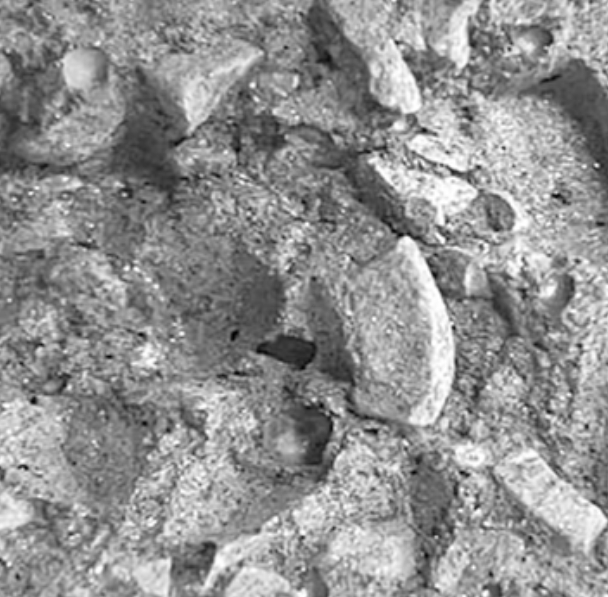
The fracture of the specimen NC without graphite addition is flat, and the aggregate and matrix are tightly combined in the microstructure; the fracture of the specimen GC is loose in structure, with large particles obviously pulling out, and the scaled graphite is isolated and distributed in the matrix, and a small amount of whiskers are generated on the surface of the graphite; the fracture of the specimen SC with the addition of SiC@C is flat, and the large particles of corundum are broken off, which indicates that its post-burning aggregate and matrix have high bonding strength, and the surface coating of the modified graphite in the matrix disappeared, but there are SiC small particles survived.
CONCLUDE
(1) Compared with Al₂O₃-MgO castables without graphite, the water addition required for the castables after adding scaled graphite increased significantly, the flexural strength at room and high temperatures decreased, the apparent porosity increased significantly, and the resistance to thermal shock and slag erosion improved, but the high porosity and lower strength of the scaled graphite-containing castables are not conducive to their application.
(2) Compared with Al₂O₃-MgO castables without graphite, after adding SiC@C, the amount of water addition required for specimen moulding increases slightly, the porosity increases slightly, the change of heating permanent line decreases, and the high-temperature flexural strength, thermal shock and slag erosion resistance of the specimen improves, and it can be used to make high-performance carbon-containing castables.
(3)When 5%(w)SiC@C powder is added and the heat treatment temperature is 1600 ℃, the comprehensive performance of the specimen is the best, and its room temperature flexural strength is 16.9 MPa, apparent porosity is 16.4%, high temperature flexural strength is 2.0 MPa, and the thermal shock resistance and slag erosion resistance are good.
(2) Compared with Al₂O₃-MgO castables without graphite, after adding SiC@C, the amount of water addition required for specimen moulding increases slightly, the porosity increases slightly, the change of heating permanent line decreases, and the high-temperature flexural strength, thermal shock and slag erosion resistance of the specimen improves, and it can be used to make high-performance carbon-containing castables.
(3)When 5%(w)SiC@C powder is added and the heat treatment temperature is 1600 ℃, the comprehensive performance of the specimen is the best, and its room temperature flexural strength is 16.9 MPa, apparent porosity is 16.4%, high temperature flexural strength is 2.0 MPa, and the thermal shock resistance and slag erosion resistance are good.
#Refractory castables#Effect of graphite#Corundum-spinel castables#Slag resistance#Thermal shock resistance#Aluminium oxide powder
Six basic materials that are commonly used as raw materials for refractory materials and thermal insulation materials
What is Mesh? How to Convert Mesh to Micrometers?
Related Article
Why smart engineers look at total cost of ownership, not just unit price, when selecting monolithic refractory materials
Beyond the Price Tag: The Hidden Costs of Choosing the Wrong Unshaped Refractory

The service life of high-strength castables is usually 6 months, and that of alkali-resistant castables is 12 months. If the castable is found to be agglomerated, it should be discarded and no longer used normally. It can be downgraded, or the proportions can be modified appropriately, or the aggregate can be stored and the powder discarded.
How to construct refractory castables that have been stored for a long time
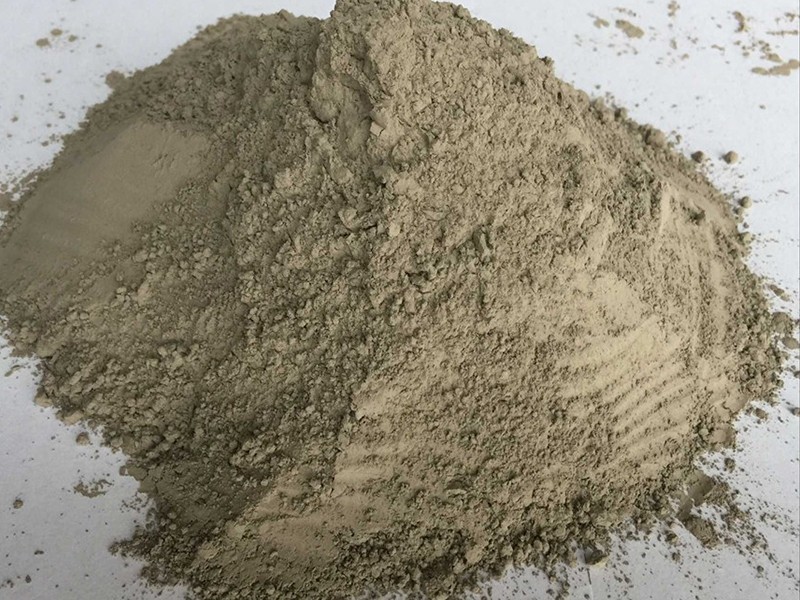
Henan Xintai Refractory Materials Co., Ltd. manufactures monolithic refractory materials that are constructed using ramming (manual or mechanical) and hardened by heating above room temperature. These materials are composed of graded refractory aggregate, powder, binder, and admixtures, mixed with water or other liquids. Ramming materials include high-alumina, clay, magnesia, dolomite, and zirconium.
Composition and properties of ramming material for glass kiln

There are many factors that affect the rheological properties of castable materials, such as the limit size, shape, distribution and water absorption rate of particles; the properties and dosage of binders and dispersants, the amount of water added, and the mixing and stirring process, etc. However, the most significant influences are the bonding system, particle size distribution and the properties and dosage of dispersants.
Five main factors affecting the rheological properties of refractory castables