
Common admixtures for unshaped refractory materials
author: XINTAI
2025-07-24

Admixtures can be used in both shaped refractory products and unshaped refractory materials, and are most commonly used in unshaped refractory materials. It is generally added during or before the mixing of unshaped refractory material ingredients. The amount of admixtures added varies with the nature and function of the admixtures, and the addition amount is generally very small.
Classification of admixtures
Admixtures for refractory materials are generally classified according to their chemical composition, properties and functions.
They are divided into inorganic substances and organic substances based on chemical composition and nature.
(1) Inorganic substances. There are various inorganic electrolytes, some metallic elements, inorganic minerals, oxides and hydroxides, etc.
(2) Organic substances. Most of them belong to surfactants, which have hydrophilic and hydrophobic groups. Surfactants whose hydrophilic groups can ionize in water are called ionic surfactants, while those that do not ionize are called nonionic surfactants. Ionic surfactants can be further classified into anionic, cationic and amphoteric types. In addition, there are also some high-molecular surfactants, organic acids, etc.
(1) Inorganic substances. There are various inorganic electrolytes, some metallic elements, inorganic minerals, oxides and hydroxides, etc.
(2) Organic substances. Most of them belong to surfactants, which have hydrophilic and hydrophobic groups. Surfactants whose hydrophilic groups can ionize in water are called ionic surfactants, while those that do not ionize are called nonionic surfactants. Ionic surfactants can be further classified into anionic, cationic and amphoteric types. In addition, there are also some high-molecular surfactants, organic acids, etc.
According to their functions and roles, there are the following five types:
(1) Altering rheological properties (operational) category. Including water reducers (dispersants), plasticizers (plasticizers), gelling agents (flocculants), and degelling agents (anti-flocculants).
(2) Regulating the setting and hardening speeds. Including coagulants, retarders, slow-acting coagulants, etc.
(3) Adjusting the internal organizational structure. Including foaming agents (air-entraining agents), defoamers, anti-shrinkage agents, expansion agents, etc.
(4) Maintaining the construction performance of materials. Including inhibitors (anti-swelling agents), preservatives, antifreeze agents, etc.
(5) Improving performance in use. Including sintering AIDS, mineralizers, quick-drying agents, etc.
(1) Altering rheological properties (operational) category. Including water reducers (dispersants), plasticizers (plasticizers), gelling agents (flocculants), and degelling agents (anti-flocculants).
(2) Regulating the setting and hardening speeds. Including coagulants, retarders, slow-acting coagulants, etc.
(3) Adjusting the internal organizational structure. Including foaming agents (air-entraining agents), defoamers, anti-shrinkage agents, expansion agents, etc.
(4) Maintaining the construction performance of materials. Including inhibitors (anti-swelling agents), preservatives, antifreeze agents, etc.
(5) Improving performance in use. Including sintering AIDS, mineralizers, quick-drying agents, etc.
The admixtures used in refractory materials, especially unshaped refractory materials, have diverse properties and a wide variety of types. Often, the role of an admixture varies due to differences in the amount added, the type of binder used, and the ingredients. That is, the same substance can function as either this admixture or that admixture depending on different conditions.
Five main factors affecting the rheological properties of refractory castables
The influence of curing temperature on the medium-temperature performance of corundum castable
Related Article
Why smart engineers look at total cost of ownership, not just unit price, when selecting monolithic refractory materials
Beyond the Price Tag: The Hidden Costs of Choosing the Wrong Unshaped Refractory

The service life of high-strength castables is usually 6 months, and that of alkali-resistant castables is 12 months. If the castable is found to be agglomerated, it should be discarded and no longer used normally. It can be downgraded, or the proportions can be modified appropriately, or the aggregate can be stored and the powder discarded.
How to construct refractory castables that have been stored for a long time
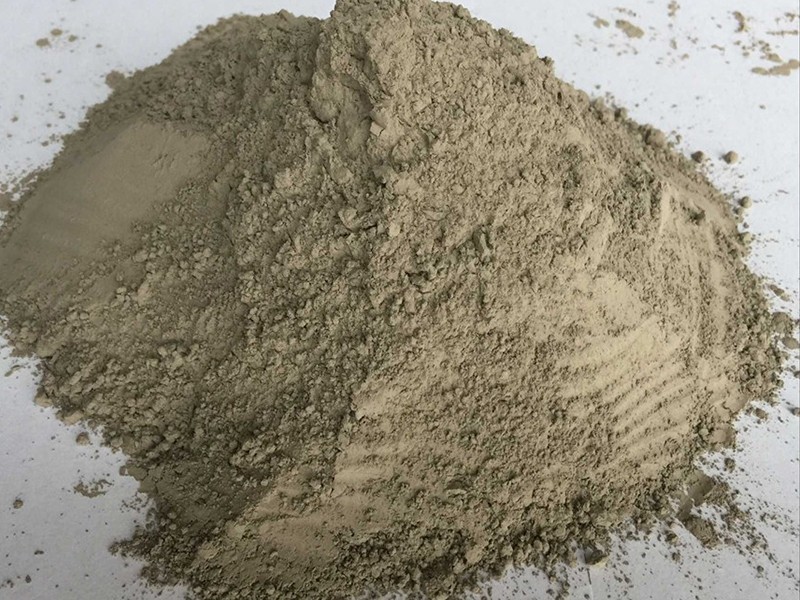
Henan Xintai Refractory Materials Co., Ltd. manufactures monolithic refractory materials that are constructed using ramming (manual or mechanical) and hardened by heating above room temperature. These materials are composed of graded refractory aggregate, powder, binder, and admixtures, mixed with water or other liquids. Ramming materials include high-alumina, clay, magnesia, dolomite, and zirconium.
Composition and properties of ramming material for glass kiln

There are many factors that affect the rheological properties of castable materials, such as the limit size, shape, distribution and water absorption rate of particles; the properties and dosage of binders and dispersants, the amount of water added, and the mixing and stirring process, etc. However, the most significant influences are the bonding system, particle size distribution and the properties and dosage of dispersants.
Five main factors affecting the rheological properties of refractory castables