
What is Mesh? How to Convert Mesh to Micrometers?
author: Archie Xintai
2025-02-20
What is Mesh?
Mesh is a unit used to describe the fineness of particles, particularly in the context of sieving and filtration. It refers to the number of openings or holes per inch in a sieve or screen. The higher the mesh number, the smaller the particle size that can pass through the sieve. For example, a 100-mesh sieve has 100 openings per inch, while a 300-mesh sieve has 300 openings per inch. This means that particles passing through a 300-mesh sieve are much finer than those passing through a 100-mesh sieve.
Significance of Mesh in the Refractory Industry
In the refractory industry, mesh is an important parameter for determining the particle size distribution of raw materials and finished products. The particle size of refractory materials affects their properties such as strength, thermal conductivity, and resistance to erosion. By controlling the mesh size, manufacturers can ensure that the refractory bricks meet the required specifications and performance standards.
How to Convert Mesh to Micrometers
The conversion between mesh and micrometers is not a straightforward one, as it depends on the specific sieve standards and the wire diameter of the sieve cloth. However, a commonly used formula for the conversion is:
Aperture (micrometers) = 25.4 / Mesh number - Wire diameter (micrometers)
For example, for a 325-mesh stainless steel sieve with a wire diameter of 0.030 mm (30 micrometers), the aperture can be calculated as follows:
Aperture (micrometers) = 2.54 / 325 - 30 ≈ 48 micrometers
It's important to note that this formula provides an approximate value, and the actual aperture size may vary slightly due to factors such as the manufacturing process and the material of the sieve cloth.
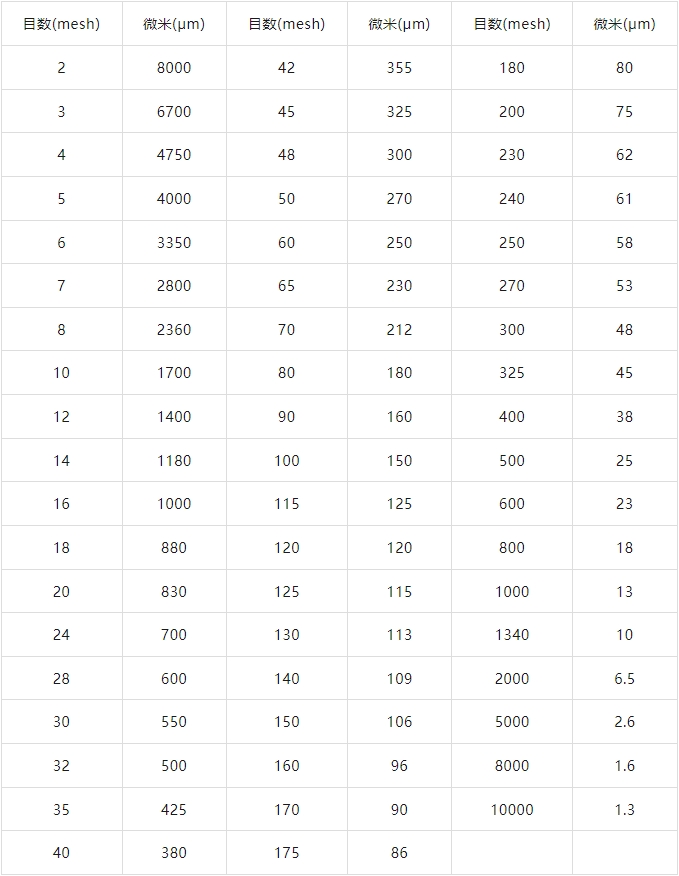
Mesh to Micrometer Conversion Table
Here is a table showing the approximate conversion between mesh and micrometers for some common mesh sizes:
Conclusion
Understanding the concept of mesh and its conversion to micrometers is essential for refractory brick manufacturers to ensure the quality and performance of their products. By using the appropriate mesh sizes and converting them to micrometers, manufacturers can control the particle size distribution of their raw materials and finished products, thereby meeting the specific requirements of their customers. We hope this article has provided you with valuable insights into the relationship between mesh and micrometers and how to perform the conversion accurately.
Effect of graphite type on the properties of aluminium-magnesium refractory castables
Related Article
Why smart engineers look at total cost of ownership, not just unit price, when selecting monolithic refractory materials
Beyond the Price Tag: The Hidden Costs of Choosing the Wrong Unshaped Refractory

The service life of high-strength castables is usually 6 months, and that of alkali-resistant castables is 12 months. If the castable is found to be agglomerated, it should be discarded and no longer used normally. It can be downgraded, or the proportions can be modified appropriately, or the aggregate can be stored and the powder discarded.
How to construct refractory castables that have been stored for a long time
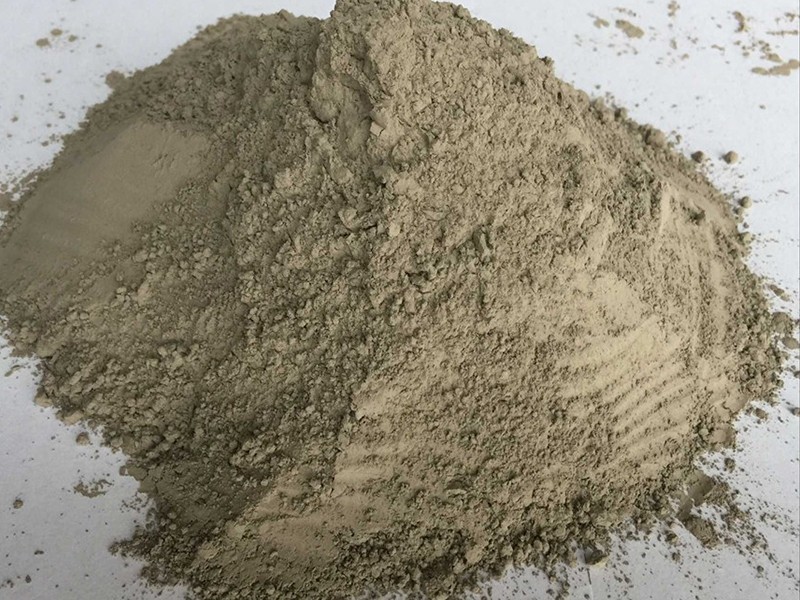
Henan Xintai Refractory Materials Co., Ltd. manufactures monolithic refractory materials that are constructed using ramming (manual or mechanical) and hardened by heating above room temperature. These materials are composed of graded refractory aggregate, powder, binder, and admixtures, mixed with water or other liquids. Ramming materials include high-alumina, clay, magnesia, dolomite, and zirconium.
Composition and properties of ramming material for glass kiln

There are many factors that affect the rheological properties of castable materials, such as the limit size, shape, distribution and water absorption rate of particles; the properties and dosage of binders and dispersants, the amount of water added, and the mixing and stirring process, etc. However, the most significant influences are the bonding system, particle size distribution and the properties and dosage of dispersants.
Five main factors affecting the rheological properties of refractory castables