
High-temperature energy-saving insulation material recommendation - Furnace door cover sealing insulation blanket
author: XINTAI
2025-09-04
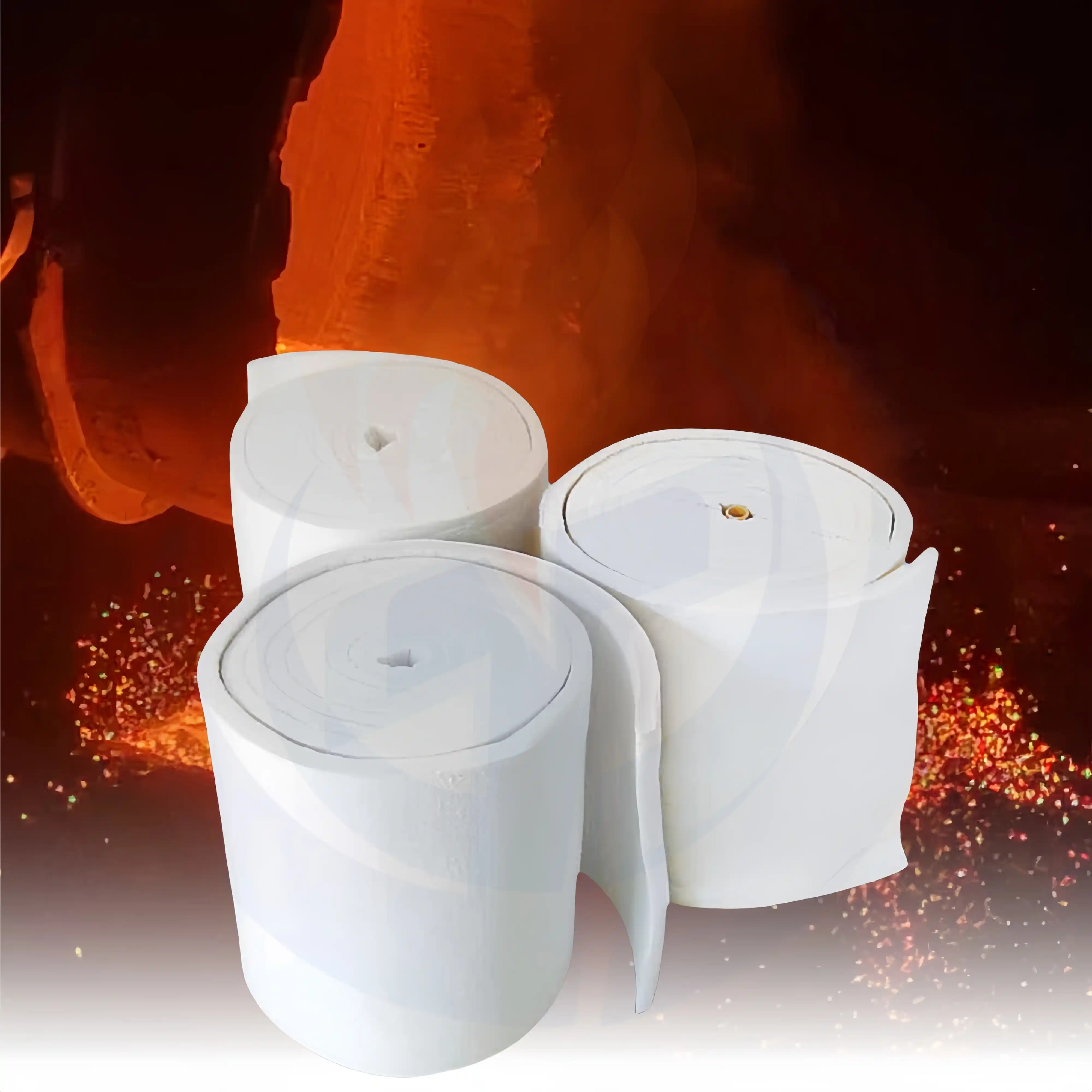
Product classification and process of furnace door cover sealing and insulation blanket
Aluminum silicate ceramic fiber blanket is made from common type, standard type, zirconium-aluminum type and zirconium-containing type aluminum silicate fiber cotton produced by blowing or spinning to form fibers through processes such as needling, heat setting, cross-cutting and winding. In addition to having the same excellent properties as the corresponding loose aluminosilicate fiber cotton, various aluminosilicate ceramic fiber blankets also have good tensile strength.
Aluminum silicate ceramic fiber blanket is made from common type, standard type, zirconium-aluminum type and zirconium-containing type aluminum silicate fiber cotton produced by blowing or spinning to form fibers through processes such as needling, heat setting, cross-cutting and winding. In addition to having the same excellent properties as the corresponding loose aluminosilicate fiber cotton, various aluminosilicate ceramic fiber blankets also have good tensile strength.
Product features of the furnace door cover sealing and insulation blanket
The needle-punched blanket has a uniform texture and a smooth surface. The long spun fibers combined with needling process produce tough, highly resilient and powerful fiber blankets that are not affected by most chemicals. Low bulk density and low heat capacity shorten the heating and cooling time of the kiln. Good thermal stability, excellent anti-powdering ability, and good heat insulation and sound absorption effects. Low heat storage capacity and resistance to thermal shock.

The product application of the furnace door cover sealing and insulation blanket
Ceramic fiber blanket is a kind of lightweight and flexible needled fiber blanket. The product is applied in various fields such as furnace lining of industrial kilns, internal insulation and external heat preservation of pipelines, electrical insulation and heat preservation, sealing of furnace doors and high-temperature flange connections, expansion filling of furnace doors and top cover sealing and heat preservation, etc.
Primary metal types: expansion joint sealing, aluminum transfer grooves, back insulation of heavy refractory linings, hot surface protection
Metal processing category: Pressure cushioning blankets, seals and gaskets
Petrochemical/power industry: Heat insulation pads can be used again for insulation of external boilers and pipelines
Ceramics and glass: Insulation and expansion joints for glass kiln tops
Ceramic fiber blankets/aluminosilicate needled blankets are used for high-temperature insulation and heat preservation in aerospace, steel, petrochemical and power industries. Fireproof and heat-insulating equipment; Thermal insulation for the wall and back linings of industrial kilns and heating devices; Thermal insulation for high-temperature equipment Thermal insulation for high-temperature pipelines Heat insulation and fire prevention for electrical components; High-temperature gasket Inorganic fireproof rolling shutter door fire-resistant layer; Raw materials for modules and folding blocks.
High-temperature energy-saving insulation material recommendation - Backing blanket for waste incinerator
Related Article

A waste incinerator is a device for incinerating and treating waste. The waste burns in the furnace chamber and turns into exhaust gas that enters the secondary combustion chamber. After being completely burned under the forced combustion of the burner, it then enters the spray-type dust collector. After dust removal, it is discharged into the atmosphere through the chimney.
High-temperature energy-saving insulation material recommendation - Backing blanket for waste incinerator
