
Advantages of Ceramic Fibre Modular Furnace Lining for Ring Tunnel Kiln Ceiling Insulation Foam
author: Archie
2025-04-17

The structure of the ring tunnel kiln and the selection of insulation wool
Kiln roof structure requirements: the material should withstand high temperatures for a long time (especially the firing zone), light weight, good heat preservation, its structure is tight, no air leakage, and is conducive to the reasonable distribution of airflow in the kiln.
General tunnel kiln kiln body from front to back is divided into preheating section (low-temperature section), firing section (high-temperature short), cooling section (low-temperature section), a total length of about 90m ~ 130m.
The low-temperature section (around 650 degrees Celsius) generally adopts 1050 ordinary type, and the high-temperature section (1000~1200 degrees Celsius) generally adopts the standard 1260 type or 1350 zirconium-aluminium type. With the use of ceramic fibre module and ceramic fibre blanket composite do ring tunnel kiln insulation cotton structure.
Selection of ceramic fibre module and layer paving blanket composite structure, can reduce the temperature of the outer wall of the furnace, to extend the service life of the furnace body lining; at the same time, can also level the unevenness of the furnace lining steel plate, reduce the cost of the insulation cotton lining; in addition, when the hot surface material was damaged and unexpected circumstances produce a gap, the paving layer can also play a temporary role in protecting the furnace body plate.
General tunnel kiln kiln body from front to back is divided into preheating section (low-temperature section), firing section (high-temperature short), cooling section (low-temperature section), a total length of about 90m ~ 130m.
The low-temperature section (around 650 degrees Celsius) generally adopts 1050 ordinary type, and the high-temperature section (1000~1200 degrees Celsius) generally adopts the standard 1260 type or 1350 zirconium-aluminium type. With the use of ceramic fibre module and ceramic fibre blanket composite do ring tunnel kiln insulation cotton structure.
Selection of ceramic fibre module and layer paving blanket composite structure, can reduce the temperature of the outer wall of the furnace, to extend the service life of the furnace body lining; at the same time, can also level the unevenness of the furnace lining steel plate, reduce the cost of the insulation cotton lining; in addition, when the hot surface material was damaged and unexpected circumstances produce a gap, the paving layer can also play a temporary role in protecting the furnace body plate.

Advantages of Ceramic Fibre Modular Furnace Lining for Ring Tunnel Kiln Insulation Foam
1. Low bulk density of ceramic fibre for furnace lining: more than 75% lighter than lightweight heat-resistant brick lining and 90%~95% lighter than lightweight castable lining. Reduce the load on the steel structure of the furnace and extend the service life of the furnace.
2. Ceramic fibre as furnace lining heat capacity (heat storage) is low: the heat capacity of ceramic fibre is only lightweight heat-resistant lining and lightweight castable lining l/10 or so, low heat capacity means that the furnace in the reciprocating operation of the heat absorbed by less, and at the same time the speed of warming up to reduce the furnace temperature operation and control of the energy consumption, especially on the start-up furnace, the furnace stops to play an obvious energy-saving effect.
3. Ceramic fibre furnace lining for low thermal conductivity: ceramic fibre furnace lining at an average temperature of 400 ℃, the thermal conductivity of less than 0.1 w/mk, an average of 600 ℃ is less than 0.l5 w/mk, an average of 1,000 ℃ is less than 0.25 w/mk, about lightweight clay bricks l/8, for lightweight heat-resistant lining of l/10.
4. Ceramic fibre for furnace lining construction is simple and easy to operate. Shorten the construction period of the furnace.
2. Ceramic fibre as furnace lining heat capacity (heat storage) is low: the heat capacity of ceramic fibre is only lightweight heat-resistant lining and lightweight castable lining l/10 or so, low heat capacity means that the furnace in the reciprocating operation of the heat absorbed by less, and at the same time the speed of warming up to reduce the furnace temperature operation and control of the energy consumption, especially on the start-up furnace, the furnace stops to play an obvious energy-saving effect.
3. Ceramic fibre furnace lining for low thermal conductivity: ceramic fibre furnace lining at an average temperature of 400 ℃, the thermal conductivity of less than 0.1 w/mk, an average of 600 ℃ is less than 0.l5 w/mk, an average of 1,000 ℃ is less than 0.25 w/mk, about lightweight clay bricks l/8, for lightweight heat-resistant lining of l/10.
4. Ceramic fibre for furnace lining construction is simple and easy to operate. Shorten the construction period of the furnace.
(1) Descaling: Before construction, the steel structure party needs to descale the copper plate of the furnace wall to meet the welding requirements.
(2) Drawing line: according to the ceramic fibre module layout position shown in the design drawings, put a line on the furnace wall plate, marking the intersection of the anchors at the bolt layout position.
(3) Welding bolts: according to the design regulations, the corresponding length of the bolt according to the welding requirements welded to the furnace wall plate, welding should be part of the bolt threads to take protective measures, shall not be welded slag spattered to the parts of the bolt threads, and to ensure the quality of welding.
(4)Installation of flat blanket: lay the layer of fibre blanket, then lay the second layer of fibre blanket, one or two layers of blanket seams should be staggered with each other not less than 100mm. for the convenience of the construction, the top of the flat roof needs to be fixed with a quick card to do temporary fixing.
(5) Module installation:
a. Tighten the guide casing in place.
b. Align the centre hole of the module with the guiding tube on the furnace wall plate, push the module perpendicular to the furnace wall with even force, and tighten the module to the furnace wall plate; then use the special sleeve to move the nut along the guiding sleeve to the bolt, and tighten the nut.
c. By analogy, install other modules.
(6) Compensation blanket installation: module according to the folding compression direction in the same direction in the same row, in order to avoid different rows of modules between the high temperature heating fibre contraction gap, must be in the two rows of non-expansion direction of the module placed in the same temperature level of the compensation blanket in order to compensate for the module's contraction. Furnace wall compensation blanket relies on the extrusion of the module fixed, the roof compensation blanket is fixed with u-shaped nails.
(7) Lining correction: the whole lining is installed and trimmed from top to bottom.
(8) Furnace lining surface and spraying: the whole lining installation is completed, spray a surface coating on the surface of the furnace lining (optional, can extend the service life of the lining).
(2) Drawing line: according to the ceramic fibre module layout position shown in the design drawings, put a line on the furnace wall plate, marking the intersection of the anchors at the bolt layout position.
(3) Welding bolts: according to the design regulations, the corresponding length of the bolt according to the welding requirements welded to the furnace wall plate, welding should be part of the bolt threads to take protective measures, shall not be welded slag spattered to the parts of the bolt threads, and to ensure the quality of welding.
(4)Installation of flat blanket: lay the layer of fibre blanket, then lay the second layer of fibre blanket, one or two layers of blanket seams should be staggered with each other not less than 100mm. for the convenience of the construction, the top of the flat roof needs to be fixed with a quick card to do temporary fixing.
(5) Module installation:
a. Tighten the guide casing in place.
b. Align the centre hole of the module with the guiding tube on the furnace wall plate, push the module perpendicular to the furnace wall with even force, and tighten the module to the furnace wall plate; then use the special sleeve to move the nut along the guiding sleeve to the bolt, and tighten the nut.
c. By analogy, install other modules.
(6) Compensation blanket installation: module according to the folding compression direction in the same direction in the same row, in order to avoid different rows of modules between the high temperature heating fibre contraction gap, must be in the two rows of non-expansion direction of the module placed in the same temperature level of the compensation blanket in order to compensate for the module's contraction. Furnace wall compensation blanket relies on the extrusion of the module fixed, the roof compensation blanket is fixed with u-shaped nails.
(7) Lining correction: the whole lining is installed and trimmed from top to bottom.
(8) Furnace lining surface and spraying: the whole lining installation is completed, spray a surface coating on the surface of the furnace lining (optional, can extend the service life of the lining).
High-temperature energy-saving insulation material recommendation - Backing blanket for waste incinerator
Related Article
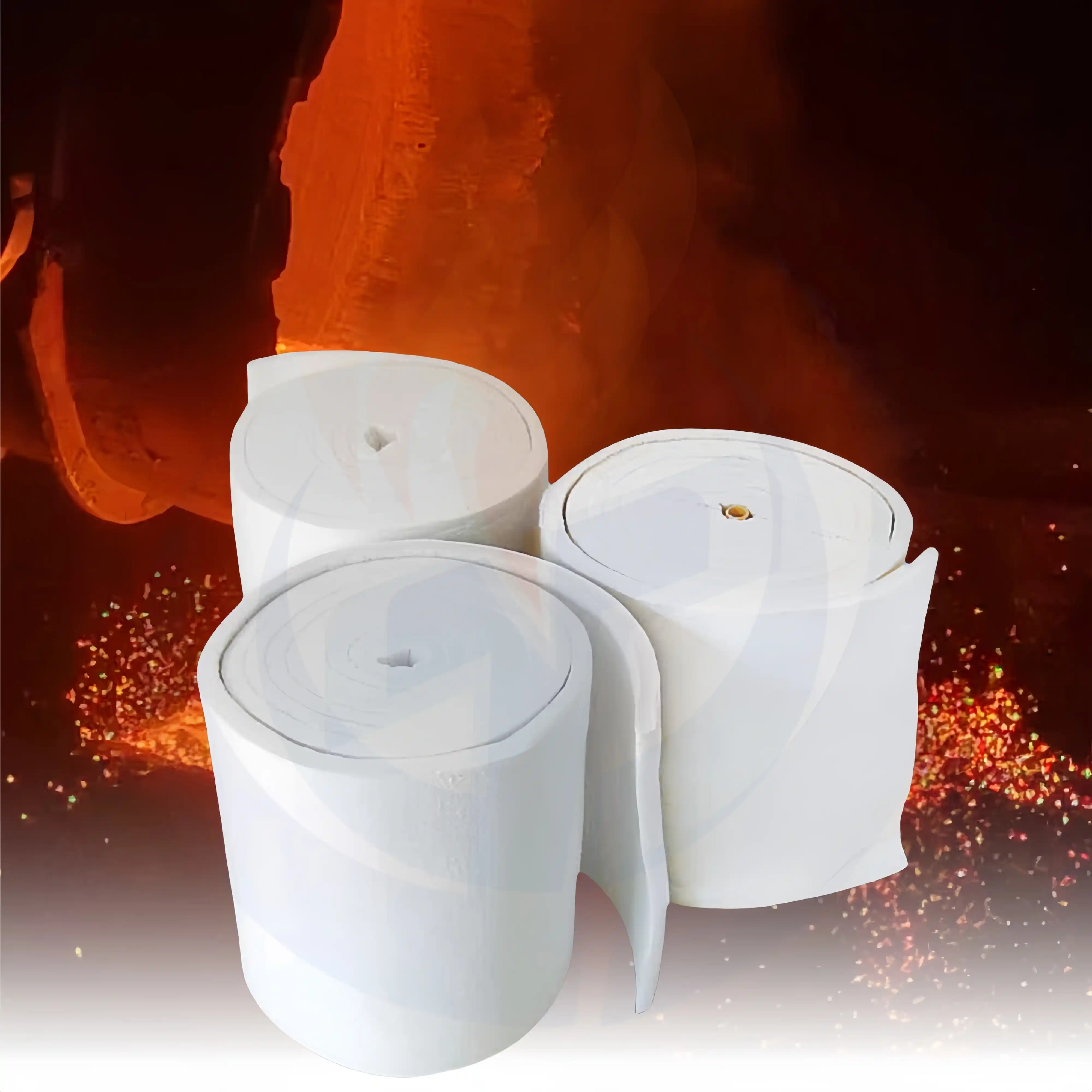
High-temperature resistant ceramic fiber blankets can be used as sealing materials for the inner furnace covers of heat treatment furnaces and some other furnaces (to replace sand seals). It is used for wrapping water pipes, lining the furnace top and furnace walls on heating furnaces. It is used as the outer cover material of the bell annealing furnace and the sealing material of the base on the heat treatment furnace, and is convenient for construction and easy to operate.
High-temperature energy-saving insulation material recommendation - Furnace door cover sealing insulation blanket

A waste incinerator is a device for incinerating and treating waste. The waste burns in the furnace chamber and turns into exhaust gas that enters the secondary combustion chamber. After being completely burned under the forced combustion of the burner, it then enters the spray-type dust collector. After dust removal, it is discharged into the atmosphere through the chimney.
High-temperature energy-saving insulation material recommendation - Backing blanket for waste incinerator