Is Your Kiln Lining Falling Short of Its Expected Lifespan?
01 Lifespan Assessment: Reliable Data Overrules Guesswork
1. The Gap Between Design Life and Actual Performance
The design life of refractory bricks is typically based on lab simulations (e.g., modulus of rupture decay curves at 1400°C) or industry benchmarks (e.g., 12–18 months in a cement kiln burning zone). However, real-world conditions—temperature fluctuations, material abrasion, and chemical corrosion—can drastically shorten this lifespan. Consider:
-
Excessive Temperatures: While lab tests assume 1400°C, actual kiln temperatures reaching 1450°C can triple the corrosion rate.
-
Liquid-Phase Corrosion: In cement clinker, CaO and SiO₂ form low-melting-point phases at 1450°C, corroding magnesia-iron spinel bricks at depths up to 0.5 mm/day.
-
Thermal Shock Damage: Frequent kiln start-ups and shutdowns create temperature gradients >200°C, causing cracks that may reduce service life by over 50%.
Case Example: A steel plant using high-alumina bricks in a shaft furnace saw actual service life drop from a projected 10 months to just 6 due to unplanned stoppages, increasing annual maintenance costs by ¥2 million.
2. Four Key Metrics for Lifespan Evaluation
Quickly assess whether your refractories are meeting expectations using:
-
Residual Thickness Measurement
-
Crack Depth & Density Analysis
-
Corrosion Layer Thickness
-
Chemical Composition Changes
Recommended Tools: Portable laser thickness gauges (±0.1 mm accuracy), industrial endoscopes, and X-ray fluorescence analyzers.
02 The Five Hidden Killers of Refractory Service Life
1. Temperature Fluctuations: The "Silent Killer"
Cyclical heating and cooling exceeding ±30°C induces microcrack propagation due to repeated expansion and contraction.
-
Cement Kiln: Irregular feed or burner misalignment can spike local temperatures from 1400°C to 1480°C.
-
Shaft Furnace: Gas pressure variations cause combustion instability with roof temperature swings up to ±50°C.
Data Insight: A cement plant measured a 40% reduction in brick life under ±50°C fluctuations versus stable operation.
2. Material Abrasion: The "Sandpaper Effect"
In rotary kilns, material flow speeds of 0.5–1.5 m/s combined with hard particles (e.g., clinker Mohs hardness 6–7) abrade linings:
-
Burning Zone: Clinker rolls and slides, "plowing" grooves into bricks.
-
Transition Zone: Partially calcified raw meal adheres and causes cyclic abrasion-spalling.
Solution: Install silicon carbide or corundum bricks in high-wear areas like kiln inlets and feed zones.
3. Chemical Attack: Dual Threats from Liquids & Gases
-
Liquid-Phase Corrosion: CaO and SiO₂ in clinker form low-melting-point phases (e.g., forsterite), softening the brick.
-
Gas-Phase Corrosion: SO₂ and Cl⁻ react with Al₂O₃/SiO₂, forming expansive minerals (e.g., ettringite) that crack the structure.
Case Example: A chemical kiln using high-alumina bricks saw 60% shorter life due to Cl⁻ contamination in feedstock.
4. Thermal Stress: The "Fatal Blow" of Cycling
During shutdowns, brick surfaces cool rapidly from 1400°C while interiors remain >800°C, generating tensile stress (σ=E·α·ΔT). If this exceeds the brick’s tensile strength (~5 MPa for magnesia-iron bricks), cracking occurs.
Optimization Tips:
-
Cool and heat gradually (<50°C/h and <30°C/h, respectively).
-
Avoid prolonged holds above 1000°C.
5. Installation Quality: The "Achilles' Heel"
-
Wide Joints: Gaps >3 mm allow infiltration, accelerating erosion.
-
Loose Bricks: Inadequate locking causes impact wear during rotation.
-
Uneven Mortar: Inconsistent application creates localized stress.
Data Point: A cement kiln with average joint widths of 4.2 mm saw 35% shorter brick life versus standard installation.
03 Four Optimization Strategies to Extend Service Life
1. Precision Temperature Control: From Guesswork to Data-Driven Management
-
Install distributed thermocouples or infrared sensors in key zones.
-
Implement smart PID control to limit fluctuations within ±15°C.
Case Example: A cement plant using intelligent temperature control extended brick life from 10 to 14 months, saving ¥1.8 million annually.
2. Process & Material Optimization
-
Adjust raw mix composition (e.g., reduce SiO₂ from 22% to 20%).
-
Control particle size distribution (>90% within 0–20 mm).
-
Adopt precalcination technology to reduce thermal load in the kiln.
3. Customized Brick Selection: Match the Brick to the Zone
| Kiln Zone | Recommended Brick Type |
|---|---|
| Burning Zone | Direct-Bonded Magnesia-Chrome |
| Transition Zone | Fused Rebonded Magnesia-Chrome |
| Decomposition Zone | High-Alumina Brick |
4. Proactive Maintenance: From Repairs to Prevention
-
Standardize Installation: Joints ≤2 mm, mortar thickness 2–3 mm, locking torque ≥300 N·m.
-
Regular Inspections: Use endoscopes every 3 months to track wear and cracking.
-
Localized Repair: Apply spray coatings for wear <20 mm to extend overall life.
Case Example: A steel plant extended shaft furnace brick life from 8 to 11 months and cut outage frequency by 40% through inspections and patching.
04 Conclusion: Maximizing Lifespan Through Precision & Adaptation
Achieving expected refractory life hinges on aligning "brick performance" with "operating conditions." By scientifically assessing weaknesses and implementing tailored strategies—temperature control, process optimization, brick selection, and maintenance—companies can maximize service life. With emerging technologies like digital twins, future kiln simulations and lifespan predictions will enable even smarter, more efficient decisions.
Your Next Step: Immediately measure brick thickness and inspect for cracks. Compare actual vs. design lifespan, and develop a customized optimization plan!
Need Help Diagnosing Your Refractory Challenges?
Contact our specialists for a free kiln lining inspection and customized solution proposal!
The Mystery of "Premature Aging" in Magnesia-Chrome Bricks: The Invisible Hand of Erosion Accelerating Decay in Copper Smelting Furnaces!
Related Article
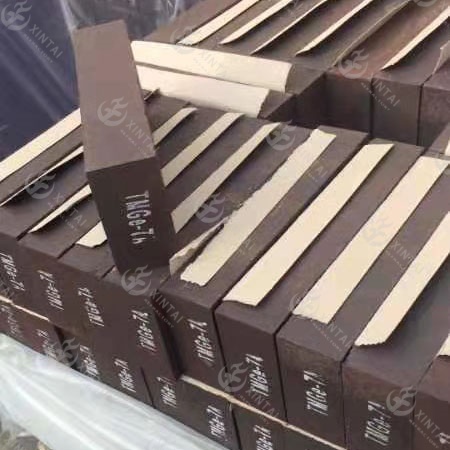
Behind this phenomenon lies an "invisible hand of erosion."